No spam. Just the latest market insights by Seguro in your inbox each week.
Cost of applying for constructionline
Cost of applying for Constructionline and the additional fees for enlisting the help of a consultant.
Here at Seguro we have fixed costs with no hidden fees, this helps you to budget for your Constructionline application right from the start.
We will need some information from you to make sure we give you the right quotation:
What level are you looking for?
How many employees have you got?
Do you already have an SSIP accreditation?
Is your training up to date?
Our fees are available on the website in our shop section or by getting in touch.
Constructionline fees
Applying for Constructionline and working out if it is going to be cost effective for you as a business can sometimes prove difficult as unlike many qualifications there is no set fee it is based on turnover.
The fee may seem daunting if you have a large turnover at the time you apply. We have included a sample of the costs (as of 17th March 2025) to give you a rough idea of how much you will need to pay for their assessment.
Fees start from:
Bronze £319
Silver £519
Gold £599
Platinum £2549
There is also a £99 one off joining fee
Part of the membership benefits include being able to see the opportunities board which alerts you with the latest projects that are relevant to your companies experience.
Which level do you need?
There are three main levels for Constructionline and your client is normally the one who specifies what you need. If your unsure which level we recommend Silver to start with as you can always upgrade but not downgrade in the first 12 months.
Bronze
Included in plan:
Secure Data Storage
Searchable Profile
Verified Membership
Acclaim SSIP included
Marketplace access
Silver
Included in plan:
Secure Data Storage
Searchable Profile
Verified Membership
Acclaim SSIP included
Corporate & Professional Standing
Marketplace access
Gold
Included in plan:
Secure Data Storage
Searchable Profile
Verified Membership
Acclaim SSIP included
Meets the Common Assessment standard
NEW! Building Safety Act Assessments
Marketplace access
Constructionline Support
Completing the Constructionline application takes time and resources, as well as completing lots of forms and health and safety documentation.
We can make it easy for you by doing all the leg work for you. We carry out over 500 applications a year.
For a small fee, we can take the pain away for you.
Complete the form, and we will tell you how it works and how much the whole process costs.
No spam. Just the latest market insights by Seguro in your inbox each week.
There are multiple reasons to join safe contractor:
Have you been asked to get the Safecontractor accreditation by one of your clients? Do you know what it is? Safe Contractor is one of the largest expanding health and safety accreditation schemes in the UK, it currently has more than 270 clients and over 24,000 contractor members.
Fully Qualified Assessor
Safecontractor has a unique level of specialist knowledge unrivalled by competitors, built on 10 years’ experience of delivering market leading accreditation services. This is further reinforced by engaging only directly employed, experienced and qualified assessors to carry out audits.
If you are a service supplier or contractor and want to show new and existing clients your health and safety competence, then you can register with the scheme as a contractor. Being a member of the Safecontractor scheme means you will not have to carry on filling in PPQ for every job you tender for as you can use the Safecontractor accreditation to show your compliance.
As part of the SSIP, Safe contractor can help you to satisfy other accreditations your client may need such as:
If you need any help with completing your application for Safecontractor or any of the SSIP accreditations we are on hand to provide quick professional support.
Safe Contactor Enquiry Form
Let us know how we can assist and we will be back to you within the hour.
No spam. Just the latest market insights by Seguro in your inbox each week.
Mesothelioma -Do You Know Enough About this Deadly Disease?
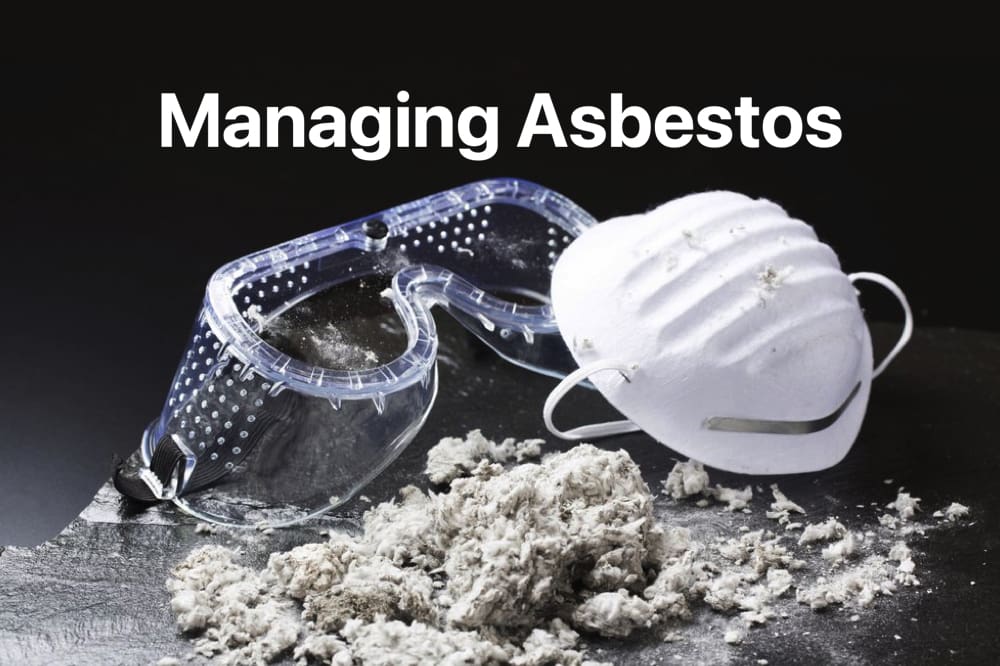
Managing Asbestos is a legal duty. Asbestos contains tiny fibres which are too small for the eye to see, yet they can do great damage to the lungs if breathed in. Mesothelioma is a cancer of the lining of the lung and is just one of the diseases associated with the material. The latency period for symptoms of the disease can be long – often 10 or more years – and there is currently no cure.
5 Key Points for Managing Asbestos
Asbestos could be present in any building either built or refurbished before the year 2000. Check building and renovation plans if you are unsure, as well as any asbestos surveys undertaken. Ceiling and floor tiles, older boilers, lagging and asbestos cement are often key areas to look at.
The material only poses a significant risk to health if it is accessible and in a poor or damaged condition. It is therefore important that you know what type of asbestos you have and the condition it is in.
Those most at risk are people who work on the fabric of the building – carpenters, plumbers, electricians and builders, for example, as well as any maintenance staff on site. There is therefore a duty to tell those who may be on your premises about any asbestos in the building before they undertake work. You should do this before they carry out a risk assessment/method statement so that all risks and control measures are factored in.
Some work with asbestos – either removing it or working with it – may require a licensed asbestos contractor. Check that any contractors you use have the correct licence to do the work.
Making others aware of the existence of asbestos is vital. As a visual prompt, label your asbestos with industry-recognised stickers so that it is clear that asbestos is in the vicinity should anyone be undertaking work in the area.
Asbestos is a killer and any amount of exposure can be dangerous – preventing exposure is therefore the key to limiting the number who develop asbestos-related diseases. Protect your staff, contractors and visitors so they never have to suffer.
The Differences Between Mesothelioma and Asbestosis
Both mesothelioma and asbestosis occur most often in people who were exposed to asbestos on the job. Second-hand asbestos exposure can also result in a diagnosis of either disease.
Asbestosis only affects the lungs and respiratory tract and cannot spread or develop elsewhere like mesothelioma cancer. The disease does not typically affect life expectancy. However, an asbestosis diagnosis can increase the risk of developing mesothelioma or another disease.
Although both caused by asbestos, mesothelioma and asbestosis develop differently from one another. Mesothelioma develops after asbestos fibers become lodged in the mesothelium lining of the chest, abdomen, or thoracic cavity rather than in various body cavities, asbestosis only develops in the air sacs of the lungs.
Managing asbestos online training
Our asbestos awareness online training is designed for your employees to be able to complete it when it is most convenient for them at work or home. The training is multiple choice and lasts for approx. 1 hour.
Why our Asbestos Online Training is different
Our course is priced for all businesses at £25 + vat per delegate
Mobile friendly
We have an online platform that businesses can create an account and allocate employees training purchased
Managers are able to see each employees progress
We allow up to two resets before the course is considered as a fail
A comprehensive risk assessment and method statement template for removal asbestos floor tiles risk assessment, developed by qualified health and safety professionals.
Our removal asbestos floor tiles risk assessment risk assessment and method statement document proactively identify, evaluate, and mitigate potential risks.
The document covers all the appropriate Control Procedures and Hazards for a typical job but can be easily edited to your needs. This is a ready-to-use document that can be implemented in your business straight away.
You can add your brand and adjust the content to fit your site constraints.
Includes:
12 pages of content
3,251 words
Additional Information:
The document covers all the appropriate Hazards and Control Procedures for a typical job
In “MS Word” format
Fully editable – include your company logo and details
The template should be changed to suit the specific job you are performing
No spam. Just the latest market insights by Seguro in your inbox each week.
What is CHAS Accreditation? (Simple Guide for UK Contractors)
Quick Answer
CHAS accreditation (Contractors Health and Safety Assessment Scheme) is a UK health and safety certification that proves a contractor meets recognised compliance standards.
It is widely used by public and private sector clients to assess whether a business is competent, safe, and suitable for work.
What CHAS Accreditation Means
CHAS is a pre-qualification scheme that evaluates your company’s:
Health and safety policies
Risk assessments and procedures
Competence and training
Overall compliance systems
In simple terms, CHAS shows clients you meet minimum safety standards and are ready to work.
CHAS accreditation (Contractors Health and Safety Assessment Scheme) is a UK certification that demonstrates a contractor meets recognised health and safety standards. It is used by clients to assess whether a business is competent and compliant before awarding work.
What does CHAS stand for?
CHAS stands for Contractors Health and Safety Assessment Scheme. It is a pre-qualification scheme used across the UK construction industry to verify health and safety compliance.
Who uses CHAS accreditation?
CHAS accreditation is used by local authorities, main contractors, housing associations and private sector organisations to shortlist contractors, suppliers and consultants who meet health and safety standards.
Why is CHAS important?
CHAS accreditation is important because it proves your business meets health and safety standards, helps you prequalify for work and reduces the need to complete multiple pre-qualification questionnaires. Many clients require it before allowing contractors to tender.
How does CHAS accreditation work?
To get CHAS accreditation, a business must submit an application and provide evidence of its health and safety systems. The submission is assessed, and if compliant, the company is approved and listed on the CHAS database for clients to verify.
Is CHAS part of SSIP?
Yes. CHAS is a founding member of SSIP (Safety Schemes in Procurement), which is a framework designed to standardise health and safety assessments and reduce duplication across the construction industry.
Who owns CHAS?
CHAS was originally developed by the local government and administered by the London Borough of Merton. It was acquired by Veriforce in 2022 and continues to operate as a recognised health and safety accreditation scheme.
Does CHAS accreditation prove competence under CDM regulations?
Yes. CHAS is recognised as a scheme that helps demonstrate contractor competence under the Construction (Design and Management) Regulations, which require clients to appoint competent contractors.
Growth of networked electronic controls is a safety issue
Insight by
Bob Evans
Published on
5 July 2015
Health and safety blog
Sign up for future insights
No spam. Just the latest market insights by Seguro in your inbox each week.
Growth of networked electronic controls is a safety issue.
No self regarding health and safety professional would disregard hazard evaluations and systems for Asbestos, work at height or manual handling; yet I’ll wager that the only risk assessment you have for IT is a display screen assessment. In any case, on the off chance that you have equipment in your business that connects with the web and to something important — from a central heating thermostat to a blast furnace — electronic health and safety ought to be on your radar.
Numerous organizations have an IT office and a health and safety division, whose sole contact is the point at which somebody needs another laptop or fails to remember their password. Some have an unclear dependence on Google or the gentleman in PC World for support. As of not long ago that didn’t do much for your possibilities of recuperating an erased email, however it wasn’t going to kill anybody.
When we discuss the web, a great many people think about the human-driven traffic it conveys: email messages, website pages, instant messaging and videos. In truth most activity is not between people, it’s between computers: automated, quiet packets of data containing database questions, records, sensor information and control signals.
At the beginning of ARPAnet, the web’s forerunner, this movement was under the control of the US military. The outcomes of somebody playing about in there were possibly spectacular. In spite of the fact that the thought that you could sign in and launch a nuclear missile was never true, it was worthy of a few film scripts.
Then the worldwide web arrived and the entire system became a means of pouring cat videos and niche adult entertainment into every home. But the undercurrent of the internet carried on regardless.
Next year the internet will carry a zettabyte (one trillion gigabytes) of data. By 2019, two-thirds of all traffic will be from non-PC devices, and there will be three devices connected to the internet for every person on the planet.
Wired world
Networked control systems are nothing new, but in the 1990s, when they consisted of ISDN lines to the company mainframe, they were point to point and secure, though slow and expensive.
Then the internet arrived, and everything changed. People wanting access to their emails and the web installed modems and broadband routers, and all those machines suddenly had access to, in effect, a cost free means of talking to one another; instead of renting a dedicated phone line, just plug it into the net.
Manufacturers stopped putting serial ports on their devices, and started adding ethernet sockets. Later, even those disappeared, replaced by wifi antennas. Volume sales drove research and development and, as the technology became smaller and cheaper it spread from hulking great computers and rack mounted servers into individual switches and sensors.
For the price of a decent lunch you can put a camera the size of a golf ball in your house. It will automatically register with your wifi router, stream the images through a server in China, and you can sit in the restaurant and on your iPhone watch your cat shred your curtains, live and in high definition. Most of the people who buy them have no idea about that Chinese detour by the data. If you missed it too, it’s time to put down your sandwich and say hello to the Internet of Things (IoT).
Chips in everything
The IoT includes every one of the devices that operate the internet to communicate with each other. They can be transmitting information for remote examination by PCs or people (as cameras, indoor regulators, wellness trackers), they can be receiving commands (valves, programmable logic controllers (PLCs), electronic locks) and they could be doing both, as on account of mobiles, smart TVs and remote hard drives. Frequently the end purposes of that information are inside of meters of one another, yet the traffic jumps around the world to get there.
Presently, the internet conveys the control signals for all things from petrol pumps to nuclear power stations. A large portion of the devices are a piece of supervisory control and data acquisition (SCADA) frameworks,a generic term for any network of sensors, controllers and actuators that can be operating numerous different types of hardware and software.
SCADA devices are designed to be simple and reliable inside a factory, but tend to be woefully ill-prepared for connection to the internet, thanks to lax security and poorly written software. It’s often trivially simple to reprogramme a petrol pump to say something rude — it happened in the US in February — or infect the control systems of a nuclear power station — achieved in South Korea in December. All you need is to find the plant on the net and ask nicely.
Spun out
The first contact with this type of cyber attack was Stuxnet (see graphic below), a PC virus identified in 2010 that was said to be created to destroy uranium enrichment centrifuges —and it was somewhat great at it.. The code searched networks for PLCs running a specific piece of software from Siemens, and changed it;in the case of the centrifuges, to spin them into oblivion.
The problem is that, as with any virus — electronic or biological — it was rather good at destroying other things too. The original code was targeted and time limited, but it opened the eyes of hackers, from state sponsored teams to bored kids, to the opportunities for mayhem if you could seek out and take over a logic controller.
Stuxnet was dissected and improved, and its code is still used today to attack networks around the world. The reason it’s so effective is that the manufacturers of these internet connected SCADA devices almost always used trivially simple default passwords or “back door” access codes for factory testing. Many systems run firmware that is impossible to upgrade without a soldering iron, so when a hacker finds the way in they can run riot for years, and are often very hard to detect. If a device has no display screen, how do you know what it’s really doing?
You’d imagine that device designers had taken in their lesson at this point, yet a long way from it. Near enough everything that you connect to the internet, from a broadband router to a baby monitor,will have at least one security gap that hackers about. Since every one of these devices are joined with one another, and the security in local networks is dependably at the edges, it’s exceptionally easy to break in through a weakly protected device then bounce around searching for something else.
If I know you run a manufacturing plant, then first I find the unique IP address of your broadband router, which will be in the header information of every email you send, and every web page you visit. I can try to connect to the router, using the default manufacturer password.
Most of the time I’ll get in; but if access is only possible from inside your local network, I can send you a virus by email or through a malicious piece of code on a website. I could send you a free brochure on DVD or USB drive, with a virus payload attached, and your computer can open the doors for me.
Once inside, my virus sees every device on the network, and all the data flowing between them. It can see which devices are laptops, sensors, cameras and PLCs. It can try sending a few commands for fun — open a valve or two or change a temperature limit. It can reprogramme them so the emergency stop buttons become emergency start buttons.
The German Federal Office for Information Security reported last December that an anonymous steel factory had endured “massive harm to plant” following a cyber-attack demolished parts of the control framework, leaving the engineers unable to close down a blast furnace.
Auto configured
Hackers are exploiting two simple facts: the average user of an IoT device is not a programmer, and it’s cheaper to write a program than to design a chip.
Devices have to be extremely simple to set up, often doing lots of automatic configuration without telling the user what’s happening, and 90% of the time users don’t even know how to change the default password or PIN.
We’re all familiar with automatic updates for Windows and mobile apps, yet updating the operating system on IoT devices can be difficult and is hardly done. This is despite the fact that, instead of custom made chips that can only do one thing, nearly almost every IoT device uses a tiny embedded computer, with an operating system and software.
Your broadband router uses Linux, and many PLC controllers use Windows. Both are capable of running other programs — including a tweaked version of the factory installed application that appears to be doing everything normally — until someone on the other side of the planet clicks a button and unleashes a SCADA worm to disable all your interlock switches.
Thanks to the ubiquity of Bluetooth and wifi, you don’t even need to plug in anything. Your attacker can be walking past with a mobile phone or sitting in a basement on the other side of the world.
As we’ve seen in the news many times, the value of things like credit card numbers and identity theft bundles drove hackers to seek out customer databases in big corporations, but the cost/benefit ratio for IoT hacks is potentially far greater and is receiving more attention.
Hackers get long term access because the devices are hard to patch, don’t run anti-virus software, and users are oblivious to what you’re doing.
The rewards are huge; stealing an out of date customer list is nothing compared with blackmailing someone with a fleet of wind turbines that you can disable at will from anywhere in the world. That’s exploit CVE-2015-0985, in which turbines made by XZERES would obligingly send anyone the admin password for their control systems if they connected on the default web page. It made life easy for the engineers; easier still for the hackers. There were lessons learned on both sides.
Under your nose
Apart from causing physical damage and putting lives in danger, hackers can re-purpose the embedded software to work on their behalves; some of the biggest cyber attacks in recent months were carried out using botnets; hundreds of thousands of compromised systems in homes and offices working together under the control of hackers. These weren’t computers; they were broadband modems and PLCs. Millions of little boxes with flashing lights that are always connected, always vulnerable, and never checked. What’s yours doing now?
You may not be in charge of a nuclear reactor, but an outdated PLC or embedded Windows XP system controlling a printer in some far flung site is the perfect place to hide the command and control software that attacks something else. Stuxnet infected computers in Iran mainly, but many businesses in other countries suffered because they happened to have the same model of PLC.
You’ll need the IT department to work in partnership. Auditing firmware isn’t yet part of the NEBOSH exam; but making sure nothing on the network has a default password is simple enough, and educating your staff about the real-world hazards of a cyber-attack should be as important as toolbox talks on manual handling because in many cases they are the chinks in your armour. The German blast furnace was taken out by a free gift USB drive sent to a random employee. Stuxnet was an email attachment.
The IoT isn’t just for industry. People are inseparable from their smartphones, smart watches, portable hard drives and memory sticks, all of which can be re-purposed to inject viruses and scan your internal networks, sniffing for passwords and reporting back to their unseen masters.
Your IT department should be all too aware of the need to scan emails and change wifi passwords regularly, but if the security camera in your car park is accessible from anywhere and answers to “Password123”, you’re one hop away from chaos.
In a few years time the IoT will invade every aspect of our lives, from internet-enabled swimsuits to wireless cat-feeding stations. Some of it will control your production line, filter your drinking water and keep your doors locked. It will be marketed as efficient and easy to use. It will be promoted at individuals who think SCADA is a brand of car. It will be hacked. It will be watching you. You ought to be watching it as well.
No spam. Just the latest market insights by Seguro in your inbox each week.
New style COSHH hazard labeling
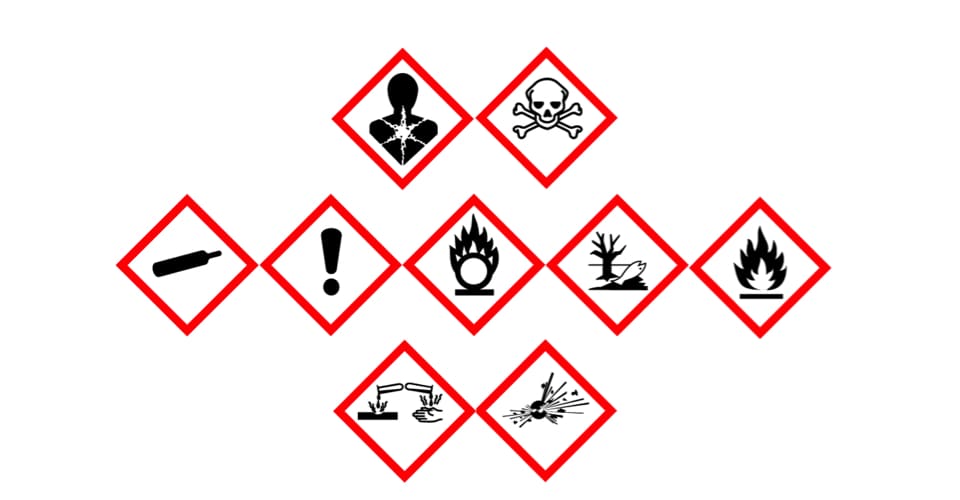
From this month, another phase of the EU Classification Labelling and Packaging of Substances and Mixtures Regulation (CLP) starts. All chemicals created from June must be packaged with the new red diamond cautioning signs Outlined on the accompanying pages.
For chemical blends, which will be the normal shape in which chemicals land at most working environments, new creation runs should likewise bear the CLP labels, however suppliers are permitted to exhaust existing stocks with the old hazard notices in orange squares until 2017.
Numerous manufactures have acquired the due dates and started utilizing the new labels in 2010 when all new load of single substances needed to start conveying the CLP labels — which bring Europe in line with the United Nations’ globally harmonised system for classifying and labelling chemicals.
The new framework, which likewise influences safety data sheets (SDSs) and different parts of chemicals hazard labelling, holds a significant number of the pictograms used to to signal types of hazard in the old system which followed the Chemicals (Hazard Information and Packaging for Supply) Regulations 2009 (CHIP, or all the more correctly, CHIP 4). These regulations have additionally been withdrawn for the current month.
An expression of caution
The new signs may be accompanied by one of two qualifiers:
Danger: for the most hazardous substances and mixtures
Warning: for less serious hazards.
“One new sign and pictogram is that for ‘Contains gases under pressure’ — the gas cylinder image resembles a wine bottle or cricket bat. This is a new category under CLP”
Beside the hazard diamond and pictogram and under the qualifying word, many CLP labels carry hazard statements, which replace the old risk phrases. So for respiratory sensitises, such as isocyanates or platinum salts, the statement “May cause allergy or asthma symptoms or breathing difficulties if inhaled” replaces the briefer but more technical phrase “May cause sensitisation by inhalation”.
Instead of old safety phrases, labels should now carry one or more of a prescribed set of precautionary statements.
These phrases are divided into three categories:
General: “if medical advice is needed, have product container or label at hand” “keep out of reach of children” and “read label before use”.
Prevention: “Keep container tightly closed” and “Use only outdoors or in a well ventilated area”.
Response: examples include “get medical advice/attention if you feel unwell” or “Fight fire remotely due to the risk of explosion”.
CPL specific
One new sign and pictogram is that for “Contains gases under pressure” – the gas cylinder image, resembling a wine bottle or a cricket bat. This is a new category under CPL with four sub-groups for compressed, liquefied, refrigerated liquefied and dissolved gases.
The first three of these have their own hazard statement: “Contains gas under pressure; may explode if heated. “Refrigerated liquefied gases are associated with the phrase “contains refrigerated gas: may cause cryogenic burns or injury”.
Another new symbol, showing a human torso fractured from the inside indicates the chemical may cause long term health effects and applies to carcinogens and mutagens, respiratory sensitises and substances that are toxic for specific organs or can affect the human reproductive system.
The pictogram replaces the former skull and crossbones for the most serious long term hazards, such as those posed by lead or chrome oxides.
For less serious health hazards, including irritants and skin senitisers, the old “X” symbol is replaced by the new “health effects” exclamation mark pictogram.
Acute toxicity, where chemicals could harm a worker after single exposure or multiple exposures in a few hours, will still be represented by a skull and crossbones in CLP’s new diamond configuration accompanied by the word “Danger”.
The CLP symbol for corrosive substances is essentially the same as the previous one, showing test tubes dropping the substance onto a hand or flat surface.
Explosive materials also retain a similar pictogram under CPL labelling, with a spherical object bursting apart. The two former risk phrases for risk or extreme risk of explosion “by shock, friction, fire or other sources of ignition” are replaced by seven hazard statements that should appear on labels, from “Unstable explosives” to “may mass explode in fire”.
Flammable gases, aerosols, liquids and solids have a similar pictogram to before – though the new version looks a little more like a stylised leaf – but is now accompanied by “Danger” for extremely flammable substances and “Warning” for less hazardous ones.
The symbol for oxidising liquids and solids, which give off oxygen easily and can accelerate combustion of other materials, remains a ring with a flame on top and will be accompanied by “Danger” for strong oxidises that can cause explosions and “warning” for weaker ones.
The final pictogram in the CLP classification is the lone symbol for environmental hazards, sharing the dead fish and blasted tree image of its predecessor. This symbol and its five accompanying hazard statements cover toxicity to the aquatic environment. Where the old orange symbol was also applied to chemicals that could damage the ozone layer, these will now be labelled with the exclamation mark pictogram and the signal word “warning”.
Full details of the new pictograms, their associated hazard classifications and statements and examples of how these are represented on SDSs can be found in the European commission guide chemicals at work – a New Labelling System, available at OSHA legislation guidelines exposure chemical agents
Before you go review our COSHH assessments pack below.
Where Do You Rank In The Health & Safety Top 500 Leaderboard?
Insight by
Amanda Lambert
Published on
23 June 2015
Health and safety blog
Sign up for future insights
No spam. Just the latest market insights by Seguro in your inbox each week.
Where Do You Rank In The Health & Safety Top 500 Leaderboard?
The Health and Safety Industry Top 500 Leaderboard is curated and managed by David Cant @DavidGCant, and published by Veritas Consulting Safety Services Ltd, in association with PPE.org – @PPEORG
The Leaderboard shows rankings in an association table-design for the Top 500 people, organizations and association worldwide in industry related parts. This leaderboard perceives the Top 500 dynamic Twitter users included in the Health and Safety Industry, working in Asbestos, Training, E-learning, PPE Suppliers, Safety Equipment, Road Safety, Environment and some more!
This time last year we ranked #217 in the Health & Safety Top 500 Leaderboard. With this in mind we are very proud to announce that we have jumped 138 places over the year and now rank #79. Over the past month alone we are up by 23 places from #102 and are hoping to continue to climb the ladder.
Rankings are in light of Social Media associations and impact over all online networking channels, for example, Google, Facebook and Linkedin, with the information measured by Klout. Rankings can go “Up or Down” contingent upon Social Media action in this way.
Where do you rank?
On the off chance that you are not on this Leaderboard and in the Health and Safety industry yourself or might want to designate somebody who ought to be incorporated tweet @DavidGCant the details with #HSTop500 and David will add you to the LeaderBoard to see where you Rank.