Close Navigation

Search

Changes to the CDM regulations

Insight by

amanda

Amanda Lambert

Published on

14 February 2017

CDM

Changes to the CDM regulations

There has been some recent changes to the CDM regulations which you can find below:

The HSE has now published a Q&A briefing document to help its own inspectors understand whether work falls under CDM. In doing so it has interpreted the technical wording of the construction definition in an unexpected way.

Good news!

A spokesperson told IOSH magazine that, “where maintenance activity involves construction processes, requires construction skills and uses construction materials, it is most likely to fall within the term construction work. General maintenance of fixed plant which mainly involves mechanical adjustments, replacing parts or lubrication is unlikely to be construction work.”

Note. As a result of this publication the following activities are not considered to be construction work and so are not covered by CDM 2015 :

  • treeworks, industrial cleaning, inspection/testing of services, cleaning solar panels, and similar: unless any of these works are associated with a building project
  • maintenance of fixed plant such as servicing boilers, lifts and gas appliances; and
  • minor repairs, e.g. to doors, floors, walls.

Tip. This work is still covered by other health and safety legislation, but by eliminating CDM from the equation, a more pragmatic approach can be taken.

SafeContractor fees

Insight by

amanda

Amanda Lambert

Published on

1 November 2016

Health and safety blog

SafeContractor Joining Fees: Costs, What’s Included, and What to Expect

What Are SafeContractor Fees?

SafeContractor fees are the costs a business pays to apply for and gain SafeContractor accreditation for the first time. The fee covers the assessment of health and safety systems, verification of documents, and access to the SafeContractor platform.

SafeContractor is an SSIP-recognised accreditation scheme widely used across construction, maintenance, engineering, and facilities management sectors.

How Much Does SafeContractor Cost to Join?

SafeContractor joining fees typically vary depending on:

  • Business size
  • Number of employees
  • Type and risk level of work
  • Turnover band

For most small and medium-sized contractors, fees are usually a few hundred pounds per year. Larger or higher-risk businesses may pay more due to the increased assessment scope.

SafeContractor fees are normally annual, meaning renewal fees apply each year to maintain accreditation.

What is Your Joining FEE?

Joining fees change periodically. To get an accurate, up-to-date price, contact us, and we will calculate the total fee for you, including all unforeseen costs, such as employee training.

Get a price

What Does the SafeContractor Joining Fee Include?

The joining fee usually covers:

  • Initial health and safety assessment
  • Review of policies and procedures
  • Verification of risk assessments and method statements (RAMS)
  • Insurance checks
  • SSIP-aligned assessment outcome
  • Access to the SafeContractor online portal
  • Listing on the SafeContractor database

The fee does not usually include the creation of documents, which must be provided by the contractor.

Why SafeContractor Fees Vary

There is no single fixed joining fee because SafeContractor assesses businesses based on risk and complexity.

Factors influencing cost include:

  • Trade type (e.g. electrical, construction, maintenance)
  • Site activities and hazards
  • Use of subcontractors
  • Management systems already in place

Higher-risk activities typically require a more detailed review.

Is SafeContractor Worth the Cost?

For many contractors, SafeContractor accreditation is commercially essential rather than optional.

Benefits include:

  • Meeting client and tender requirements
  • Access to approved contractor lists
  • Reduced duplication of health and safety assessments
  • Improved credibility with clients
  • SSIP recognition

Many organisations will not engage contractors without a valid SafeContractor accreditation.

SafeContractor Joining Fees vs Ongoing Costs

It’s important to understand that the joining fee is only part of the overall commitment.

Contractors must also:

  • Keep policies and RAMS up to date
  • Maintain valid insurance
  • Renew accreditation annually
  • Respond to periodic review requests

Failure to maintain documentation can lead to suspension.

Reducing Delays and Extra Costs

Joining SafeContractor is quicker and more cost-effective when:

  • Health and safety documents are current
  • RAMS are trade-specific
  • Insurance certificates are valid
  • Business details are accurate

Using professional compliance support can reduce resubmissions and delays.

Summary

SafeContractor joining fees cover the assessment and verification of a contractor’s health and safety management systems. Costs vary based on business size and risk profile, but accreditation provides significant commercial and compliance benefits. Understanding what the fee includes and preparing documents in advance helps streamline the process.

Get Started TODAY

  • Documents completed in 5 days
  • Fixed Fee
  • No fuss
Get Started Today
shape SafeContractor fees

CHAS Deem to satisfy – Everything you need to know

Insight by

amanda

Amanda Lambert

Published on

3 October 2016

CHAS

CHAS Deem to Satisfy: What It Means for Contractors (2026 Guide)

If you’ve seen “Deem to Satisfy” in CHAS, here’s the simple answer:

CHAS Deem to Satisfy means your existing accreditation can be recognised as meeting CHAS requirements, without repeating the full assessment.

It’s designed to reduce duplication, speed up approvals, and get you on site faster.

Quick Answer

  • Already accredited with another scheme? You may qualify for Deem to Satisfy
  • Saves time?  Yes (no full reassessment)
  • Still checked?  Yes (validation still required)

How CHAS Deem to Satisfy Works

CHAS is part of:

Safety Schemes in Procurement (SSIP). All SSIP schemes follow the same core health & safety criteria, which allows CHAS to:

  1. Review your existing SSIP certificate
  2. Verify it meets CHAS standards
  3. Grant CHAS status without a full reassessment

In practice, if you already meet SSIP standards, CHAS may accept them rather than requiring you to start from scratch.

When Can You Use Deem to Satisfy?

You can typically use it if you already hold accreditation from another SSIP scheme, such as:

  • Constructionline
  • PQS
  • SMAS Worksafe
  • SafeContractor

Common scenario:

  • A client specifically asks for CHAS
  • You already have another SSIP certificate
  • You use Deem to Satisfy to get CHAS quickly

What CHAS Still Checks

Even with Deem to Satisfy, CHAS will still verify:

  • Your accreditation is valid and current
  • Your business details match
  • Your scope of work is appropriate
  • Any additional CHAS specific requirements

It’s not automatic approval; it’s streamlined approval.

Benefits of CHAS Deem to Satisfy

  • Avoid duplicate assessments
  • Faster route to CHAS accreditation
  • Lower admin burden
  • Maintain compliance across multiple clients
  • Stay competitive in tenders

Common Misunderstandings

“I’m already SSIP accredited, so I’m automatically CHAS approved.”

Not true: you must still apply via Deem to Satisfy.
Incorrect: CHAS still validates your status

When You Should Use It

Use Deem to Satisfy if:

  • A client specifically requests CHAS
  • You already hold a valid SSIP accreditation
  • You want to avoid repeating the full process

Simple Takeaway

Deem to Satisfy = Faster CHAS approval using your existing SSIP accreditation.

If you are looking for a CHAS accreditation, use this link: How to get CHAS accreditation

CALL Amanda on 0800 031 5404 to ask a question

Get Started
shape Ask Amanda

Frequently Asked Questions

What does Deem to Satisfy mean?

Deem to Satisfy means CHAS may recognise an existing valid SSIP accreditation as meeting the CHAS health and safety assessment requirements, helping contractors avoid repeating the full assessment process.

Can I get CHAS if I already have another SSIP accreditation?

Yes. If you already hold a valid SSIP accreditation from another recognised scheme, you may be able to apply for CHAS using the Deemto Satisfy route instead of completing a full CHAS assessment. Check out CHAS v Constructionline.

Is CHAS Deem to Satisfy automatic?

No. Deem/Satisfy is not automatic. CHAS still needs to verify your existing accreditation, business details, scope of work and whether your current certificate meets the required standard.

Which accreditations can be used for Deem to Satisfy?

Contractors may be able to use another valid SSIP accreditation, such as Constructionline, SafeContractor, SMAS, CQMS or PQS, to support a CHAS Deem to Satisfy application.

Why would a contractor use Deem to Satisfy?

A contractor may use Deem to Satisfy when a client specifically asks for CHAS, but the contractor already holds another SSIP accreditation. This can reduce duplication, save time and help meet client requirements faster.

Does Deem to Satisfy mean I do not need documents?

No. You may still need to provide evidence, including your existing SSIP certificate and business information. CHAS may also request additional documents if your current accreditation does not fully cover the required scope.

How long does Deem to Satisfy take?

CHAS Deem to Satisfy can be quicker than a full CHAS assessment because the core health and safety assessment has already been completed by another SSIP scheme. The timescale depends on validation and any additional information requested.

Is CHAS Deem to Satisfy the same as full CHAS accreditation?

Deem to Satisfy can provide a route to CHAS recognition based on an existing SSIP accreditation. However, CHAS still validates the application and may require additional information before approval.

Related CHAS Guides

Contractors working on domestic premises

Insight by

amanda

Amanda Lambert

Published on

23 August 2016

CDM

Contractors working on domestic premises

Contractors working on domestic premises involves contractors building extensions, alterations, new heating systems, rewiring the house, repairing or reroofing premises, etc.

Although the domestic construction sector is not as scrutinised as the larger construction sector that the main contractor controls, they are just as important to the HSE as large projects.

The general public is very aware of health and safety as everyone is subject to it at work. Today, it is common for the general public to video and take images of poor health and safety practices and submit them to the HSE, which will inspect the site.

Domestic construction phase plan CDM

In this article, we will explain the domestic construction phase plan for CDM. Does your project require a CDM plan?

Domestic projects involving only you as a contractor

On these projects, the client’s duties are transferred to you, who must carry out the client’s duties as well as your own. In practice, this will involve you doing no more than they have done in the past to comply with health and safety legislation. Compliance with your own duties as a contractor will be taken as compliance with the relevant client duties to the extent necessary, given the risks involved in the project. As a result of you taking on the client duties, any designers involved in the project will work with you in their role as the ‘client’.

Domestic projects involving more than one contractor

For projects involving more than one contractor, the Principal Contractor will normally assume the client’s duties. The domestic client can choose to appoint the Principal Designer for the project. If, however, they do not make this appointment, the first Designer appointed during the pre-construction phase is the Principal Designer for the project. If so, the Principal Designer will be answerable to the Principal Contractor in their role as ‘Client’ for the project and will be responsible for liaising with them.

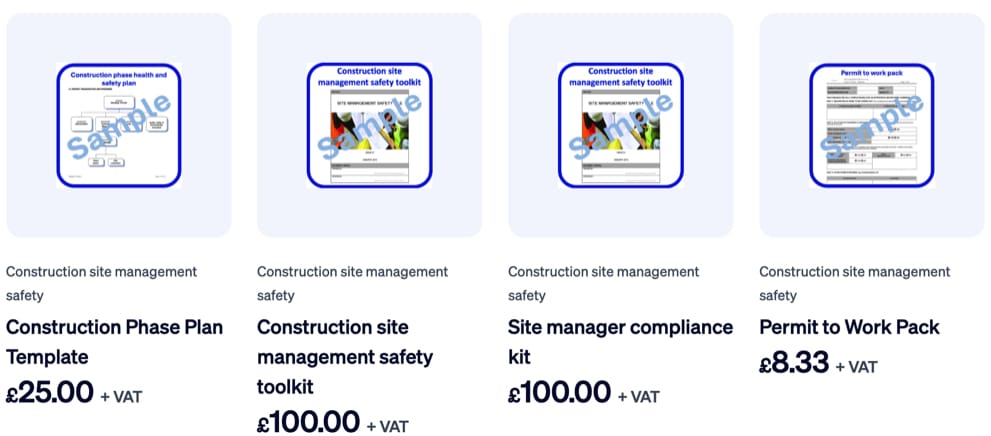
Buy a completed construction phase CDM plan

You can buy a completed construction phase CDM plan that is full editable, together with other site management documents, systems and tool.

Click on the link or image to buy.

CDM construction phase template

HSE publish the latest workplace fatality statistics

Insight by

amanda

Amanda Lambert

Published on

19 July 2016

Health and safety blog

HSE workplace stats 

The HSE has released provisional figures indicating that 144 people were killed while at work in 2015/2016 – up from 142 in 2014/5.

The figures have been broken down to key sectors:

  • 43 workers deaths in construction
  • 27 deaths in agriculture
  • 27 deaths in manufacturing
  • 6 deaths in waste and recycling
  • 41 in various other sectors

There was a further 103 deaths for members of the public connected to work in 2015/16.

Although these may seem high compared with other statistics available for the rest of Europe the UK to be one of the safest places to work.

Mesothelioma, one of the few work related diseases where deaths can be counted directly, contracted through past exposure to asbestos killed 2,515 in Great Britain in 2014 compared to 2,556 in 2013.

A more detailed assessment of the data will be provided as part of the annual Health and Safety Statistics release in early November.

Further information on these HSE workplace stats can be found at http://www.hse.gov.uk/statistics/fatals.htm


CHAS new E form process

Insight by

amanda

Amanda Lambert

Published on

12 July 2016

CHAS

CHAS new E form Process

In 2016 CHAS have introduced a new system where you can apply for your CHAS direct on their online portal. Previously you were only able to pay online and had to submit your documents separately.

The online E form Process is not available for groups or for other members of the SSIP umbrella group they need to contact chas.admin@chas.co.uk. You will also need to use the old way of applying if you a Designers or Principal Designer.

The new  process is different as you will need to pay for your CHAS on submission. Before you start your application you need to make sure you have everything you need to hand in electronic format:

  • Examples of Risk assessments and Method Statements in situ on previous jobs
  • COSHH Assessments specific to your business
  • Evidence of Health & Safety Training specific to your business and employees
  • Evidence of Contractor Management & Competence Assessment
  • plus other necessary documents
  • valid payment method

Once you have everything in place start the process by clicking here:

CHAS

Once you have made payment your application will  be assigned to an assessor and they will login and commence the assessment. The assessment can take up to 10 working days and this can result in a pass or feedback requiring more information. All updates will be sent to you via the E Forms system.

The assessment process remains the same whereby, if more information is needed you will need to provide this to get your certificate.

Using the E Forms system means that once you have been passed by the assessor a confirmation letter and an electronic copy of your certificate will be uploaded to your account.  You will then receive a hard copy of the certificate & accreditation pack post within 10 working days.

If you are unsure if you have the right information or would like some support to complete the accreditation please get in touch.

New Fast Track Safe Contractor Service

Insight by

amanda

Amanda Lambert

Published on

31 May 2016

Health and safety blog

New Fast Track Safe Contractor Service

Applying and renewing your Safe Contractor accreditation has never been easier. Safe Contractor have introduced a new fast track service to help to speed up the assessment of your application:

  • Standard turnaround – 4-6 weeks
  • Fast Track – 3-5 working days
  • Fast Track Premium – 2 working days

There are additional benefits to the new service as well as the response time, these are:

  • Dedicated support officer
  • Advice and Assistance
  • Priority audit and certificate
  • Partial Completion

What are the benefits?

The accreditation is a recognised in the industry and will save you time completing multiple pre-qualification questionnaires (PPQ’s) for your clients.

  • Compliance – The accreditation shows compliance with health & safety law.
  • More opportunities – More organisations will work with you.
  • Commercial benefits – Opens the door for bigger & better contracts.
  • Time and resources – Helps improve your business’ productivity.
  • Health & Safety Standards – Improve company health & safety practice.
  • Communication – A standardised process helps improve communication.

There are additional business benefits that can be found on their website.

Why apply for your Safe Contractor accreditation?

When you undertake your Safe Contractor registration, you will be demonstrating that you meet the recognised standards required by any organisation looking to employ you as a contractor. Having your Safe Contractor accreditation is almost certain to open more doors and lead to more opportunities – in turn generating more business and profit for you, ensuring your own workforce is protected by robust health and safety practices.

Ticking all the boxes to be Safe Contrctor approved

With over 20 years experience here at Seguro we can assist you from start to finish with the minimum amount of input from yourselves.

Our job is make sure that we provide you with the information and assistance to complete the submission and to ensure you can use the documents created moving forward.

The benefits of using Seguro for your Safe Contractor application

We have over 20 years experience in the industry and successfully complete over 500 applications every year.

  • Save time and money. We fill out all the forms for you.
  • Win more work. Many organisations require businesses to be registered.
  • Health & safety standards. Improve company health & safety practice.
  • Competitive edge. Stay ahead of your competitors.
  • Communication. A standardised process helps improve communication.
  • Freedom. Focus on your core business activities.

We can help you to complete all the paperwork needed as well as helping you to implement the process into your business moving forward.

There are associated costs involved, to find out the latest fees get in touch and we will give you all the insights you need to make a decision.

If you are unsure if Safe Contractor is what you need and would like some advice on which accreditation would be best for your company please get in touch and we will be happy to help.

SafeContractor Alcumus & SafeContractor Login

Insight by

amanda

Amanda Lambert

Published on

5 January 2016

Health and safety blog

SafeContractor Alcumus & SafeContractor Login: Complete Guide for Contractors

SafeContractor login – How to get accredited, manage your account, and stay compliant

What Is the SafeContractor Scheme?

The SafeContractor Scheme, operated by Alcumus, is one of the UK’s leading health & safety accreditation programmes. It provides independent verification that your business meets essential standards in:

  • Health & safety management

  • Competence and training

  • Insurance and risk control

  • Environmental and ethical practices (with SafePQQ)

For contractors, subcontractors, and service providers, SafeContractor is a powerful way to demonstrate compliance, meet client requirements, and win more work.

SafeContractor is widely used in sectors such as:

  • Construction

  • Facilities management

  • Engineering

  • Cleaning & maintenance

  • Manufacturing

  • Local authority and public sector

How can we help?

We can complete the application, gather all required documents and answers to questions, and compile all necessary evidence, allowing you to focus on your job. We are efficient, economical and have a 100% success rate.

Get your accreditation within a few days with zero pain!

Why SafeContractor Accreditation Matters

SafeContractor Alcumus accreditation benefits contractors in several ways:

1. Helps You Win More Work

Many principal contractors, FM companies, and large clients require SafeContractor as part of their onboarding and procurement process. Having it increases your chances during PQQs and tendering.

2. Reduces Repetitive Paperwork

SafeContractor acts as a verified pre-qualification, meaning you won’t need to complete lengthy safety questionnaires for each new contract.

3. Demonstrates Legal Compliance

The assessment aligns with key UK legislation including:

  • Health and Safety at Work Act

  • Management of Health & Safety Regulations

  • CDM Regulations

4. Builds Trust With Clients

Displaying the SafeContractor badge signals professionalism, competence, and strong safety culture.

5. Improves Your Safety Systems

The scheme encourages businesses to maintain up-to-date policies, RAMS, training records, and incident procedures.

What SafeContractor Assesses

To gain accreditation, companies must provide evidence of:

Health & Safety Documentation

  • H&S policy

  • Risk assessments (RAMS)

  • COSHH documents

  • Contractor control procedures

  • Workplace safety arrangements

Competence & Training

  • CSCS/CPCS proof

  • Certificates of training

  • Induction procedures

  • Toolbox talks

Insurance Requirements

  • Employer’s liability

  • Public liability

  • Professional indemnity (if required)

Environmental & Ethical Standards (SafePQQ)

  • Environmental policy

  • Equality & diversity

  • Anti-bribery

  • Modern slavery

How to Get SafeContractor Accreditation

Follow these steps to achieve approval:

Step 1 – Register Online

Visit the SafeContractor website and create an account.

Step 2 – Complete Your Company Profile

Provide details on:

  • Business activities

  • Trades and competencies

  • Employee numbers

  • Contact information

Step 3 – Upload Required Evidence

Submit your:

  • RAMS

  • Policies

  • Training records

  • Insurance certificates

  • Relevant compliance documents

Step 4 – Assessment Review

An Alcumus auditor reviews your documents and may request additional evidence (known as a “further information request”).

Step 5 – Approval & Certification

Once approved, you can access your:

  • SafeContractor certificate

  • Accreditation badge

  • Listing in the SafeContractor directory

Accreditation lasts for 12 months.

STOP THINK

There is a quick way to get your accreditation. We have a 100% success rate for completed accreditations and complete over 1,000 per year; we can do it for you. CALL 0800 031 5404 during office hours or complete the form on the link below:

Get your Accreditation within a few days with zero pain! From £300

How to Use the SafeContractor Login – Step-by-Step Guide

Once registered, you can manage everything from your SafeContractor portal.

1. Visit the SafeContractor Login Page

Go to the official SafeContractor Alcumus website and click “Login” at the top right.

2. Enter Your Email and Password

Use the credentials you created during registration.

3. Access Your Dashboard

From your dashboard, you can:

  • Upload documents

  • Respond to auditor requests

  • Renew your accreditation

  • Update insurance details

  • Download your certificate

  • Edit your business profile

4. Manage Accreditation Renewal

Renewals are handled through the same login area and typically require updated:

  • RAMS

  • Policies

  • Training certificates

  • Insurance documents

5. SafePQQ Login (Optional)

If you’re using SafePQQ for extended PQQ compliance, access it through the same portal.

Common Login Issues & How to Fix Them

Forgotten Password

Click “Forgot password?” to reset it via email.

Dashboard Locked

This may happen if documents are overdue—contact support or update your information.

Document Upload Errors

Ensure files are:

  • PDF or JPG

  • Under the allowed size

  • Clearly scanned

Accreditation Not Showing

This usually appears once the audit team completes their final review.

SafeContractor vs Other SSIP Schemes

Accreditation Focus Best For
SafeContractor Health & safety + PQQ Contractors wanting strong buyer recognition
CHAS Safety & compliance Construction sector
SMAS Health & safety Trades & subcontractors
Constructionline PAS91 compliance Larger contractors & supply chain

Many companies hold multiple SSIP accreditations for wider client acceptance.

Conclusion: Is SafeContractor Worth It?

Yes, it’s one of the most recognised and respected SafeContractor Alcumus accreditations in the UK. It helps businesses:

✔ Win more work
✔ Strengthen credibility
✔ Reduce paperwork
✔ Stay legally compliant
✔ Improve safety performance

If your business wants to grow in construction, facilities management, engineering, or the public sector, SafeContractor accreditation is a strategic investment.

Get your Accreditation within a few days with zero pain! from £300

How to make sure you are compliant in 2016

Insight by

amanda

Amanda Lambert

Published on

22 December 2015

Competent person

How to make sure you are compliant in 2016 – Health & Safety Legislation

Throughout the year the HSE release various updates to existing legislation in order to ensure that the legislation stay current and suitable for the changing workplaces we all work in.

There are various ways for you find this information out:

  • Periodically visit the HSE website to see if there are any changes posted.
  • Search online to see if you can find anything.
  • Become a member of a professional body
  • Sign up to various magazines.
  • Outsource your Competent Safety Advisor resource.

As part of our Competent Safety Advisor service we ensure that on a monthly basis you are provided with all changes should they affect you or not. That way you are fully informed and up to date on all changes and can make the business decision yourselves if you need to be aware.

There are additional benefits to our service that can ensure that going into 2016 Health & Safety isnt something yo need to worry about you can concentrate on your business.

  • A comprehensive Health and Safety Management System – complete with policies, procedures, forms, checklists, etc to ensure compliance with legislation
  • Development of your company Health and Safety Policy
  • Development of a company employee handbook
  • Development of an Environmental Policy
  • Assistance in Accident Reporting to Enforcing Authorities/Accident Investigation
  • Liaison with Enforcing Authorities on your behalf
  • Access to telephone advice on an unlimited number of occasions
  • Updates on any changes in Health and Safety legislation

Below is a copy of our latest legislation updates, if you think we may be able to help you on a monthly basis please get in touch.

Legislation/Consultation In Force/
Closes
Need to Know Applies In Resource
Construction (Design and Management) Regulations 2015 23rd Dec 15 Transitional period for projects started before April 2015 ends. Works with more than one contractor must have appointed a principal designer. GB hse.gov.uk
Transportation of Directive 2013/35/EU on exposure to electromagnetic fields (EMFs) 3rd Dec 15 Proposed Control of Electromagnetic Fields at Work Regulations will require duty holders to assess exposure to EMFs GB hse.gov.uk
Deregulation Act 2015 3rd Dec 15 Turban wearing Sikhs do not have to wear head protection in any industries. GB hse.gov.uk
The Health and safety at Work ect. Act 1974 (General Duties of Self-Employed Persons ) (Prescribed Undertakings) Regulations 2015 Oct-15 Changes the law to exempt self-employed people whose work activity poses no potential risk to other workers or the public. GB hse.gov.uk
Offshore Installations (Offshore Safety Directive) (Safety Case ect) Regulations 2015 Jul- 15 Applies to offshore oil and gas operators, interoperating additional requirements of directive 2013/30/EU GB External Waters hse.gov.uk
Control of Major Accident Hazards Regulations (COMAH) 2015 Jun-15 Main Duties unchanged from 1999 regs; lower tier operators must provide public information about their site and its hazards for the first time; both upper tier and lower tier operators must provide public information electronically. GB hse.gov.uk
Control of Asbestos Regulations 2012 May-15 Workers undertaking non-licensed work for the first time must have a medical examination before they start. England and Wales legislation.gov.uk
Construction (Design and Management) regulations 2015 Apr-15 CDM coordinator replaced with principal designer, prescriptive requirements for duty holders to check contractors’ competence removed, CDM duties extended to domestic clients. GB hse.gov.uk
Road Traffic Act 1988 Mar-15 Section 5 amended to include an offence of driving under the influence of a controlled drug – including some prescription medications. England and Wales lexisurl.com

CHAS Accreditation Cost Breakdown (Guide Prices)

Insight by

amanda

Amanda Lambert

Published on

24 November 2015

CHAS

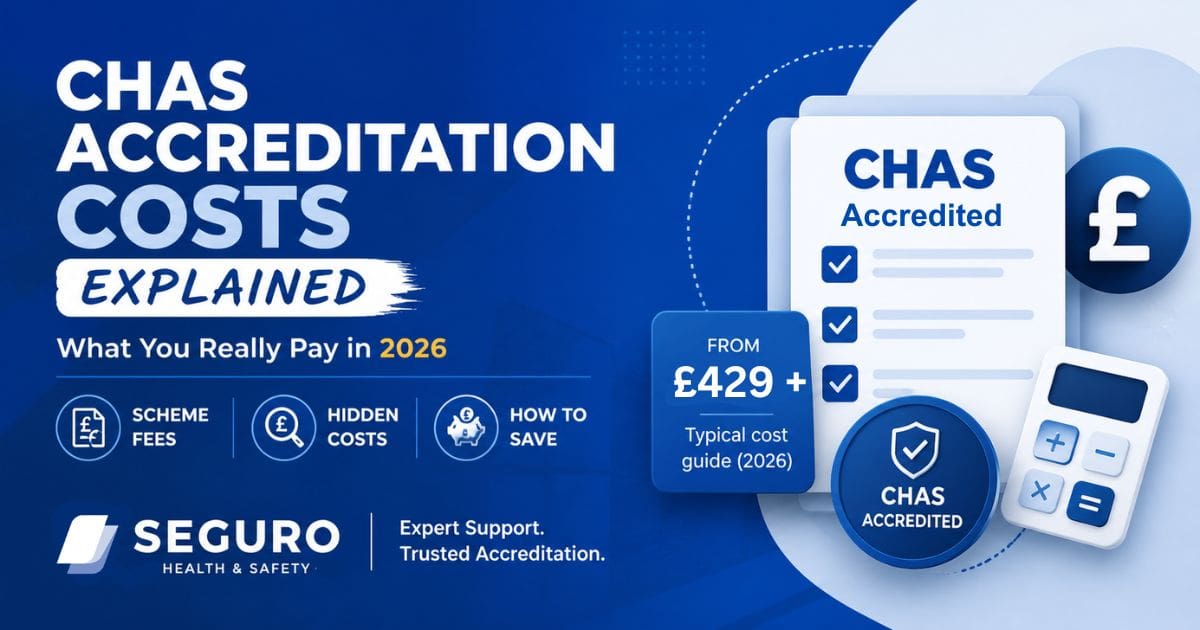
CHAS Accreditation Cost (2026): Full Breakdown for UK Contractors

CHAS accreditation typically costs between £400 and £3,500+ per year, depending on your company size and the level you choose (Standard, Advanced, or Elite).

Additional costs may include training, documentation, and health & safety support.

What Affects CHAS Accreditation Cost?

CHAS pricing is based on:

  • Number of employees
  • Level of accreditation
  • Risk profile of your business

The larger your business and the higher the level, the more you will pay.

CHAS Accreditation Levels Explained

CHAS Standard (Entry Level)

  • Health & safety assessment
  • SSIP accreditation

Suitable for most small contractors

CHAS Advanced

  • Includes Standard
  • Adds PAS 91 requirements

Often needed for larger contracts.

CHAS Elite (Highest Level)

  • Includes Advanced
  • Aligns with Common Assessment Standard (CAS)
  • Covers 13 areas, including:
    • Health & safety
    • Environmental
    • Quality
    • Financial and governance

Required for many public sector frameworks

CHAS Accreditation Cost Breakdown (Guide Prices)

CHAS Standard:

  • 1 person: ~£429+ VAT
  • 2–4 people: ~£499+ VAT
  • 5–9 people: ~£829+ VAT
  • 9–15 people: ~£1009+ VAT
  • 16–30 people: ~£1179+ VAT

CHAS Advanced:

  • 1 person: ~£659+ VAT
  • 2–4 people: ~£799+ VAT
  • 5–9 people: ~£1259+ VAT
  • 9–15 people: ~£1539+ VAT
  • 16–30 people: ~£1809+ VAT

CHAS Elite:

  • 1 person: ~£909+ VAT
  • 2–4 people: ~£989+ VAT
  • 5–9 people: ~£1479+ VAT
  • 9–15 people: ~£1879+ VAT
  • 16–30 people: ~£2279+ VAT

All CHAS certifications must be renewed annually


Other CHAS accreditation Costs

Training

To comply with the standard, you may be required to train your personnel in the following courses if you have not already done so.

  • Asbestos: The Control of Asbestos Regulations
  • Working at Height The Work at Height Regulations CHAS 2013 Ltd –
  • First Aid The Health and Safety (First-Aid) Regulations
  • Fire precautions: The Regulatory Reform (Fire Safety) Order 2005 and the Dangerous Substances and Explosive Atmospheres Regulations
  • Noise and vibration: The Control of Noise at Work Regulations (NAW Regs) and The Control of Vibration at Work Regulations
  • Personal Protective Equipment Personal Protective Equipment at Work Regulations (PPE Regs)
  • Substances hazardous to Health Control of Substances Hazardous to Health Regs (COSHH)
  • Electricity Electricity at Work Regs
  • Manual Handling Operations Regulations (MHO Regs)
  • Work Equipment Provision and Use of Work Equipment (PUWE) Regs

Competent person safety advisor

You must employ a competent safety advisor if you employ more than five people. If you are a large organisation, you may already have one. Employing a qualified safety advisor may be prohibitive if you are a small contractor.

We are the remote competent person safety advisor for over eight hundred companies. We can offer this service to you for a fraction of the cost.

Additional Costs to Consider

CHAS is not just the fee—you may also need:

Training Costs

Depending on your work:

  • Working at height
  • Asbestos awareness
  • First aid
  • COSHH
  • Manual handling

Documentation Costs

If you don’t already have:

  • RAMS
  • Health & safety policy
  • Procedures

Competent Person (Safety Advisor)

UK law requires access to a competent health & safety advisor

This can be:

  • In-house (expensive)
  • Outsourced (more cost-effective)

How to Reduce CHAS Costs

To keep costs down:

Choose the correct CHAS level

Prepare documents before applying

Keep training up to date

Avoid failed applications (costs time + delays)

Use expert support to get it right first time

Can You Save Money with Other SSIP Schemes?

CHAS is one of several SSIP schemes.

Alternatives include:

Some schemes are cheaper, especially for small businesses.

Please note:

  • All SSIP schemes follow the same core criteria.
  • Many clients still specify CHAS by name.

Is CHAS Worth the Cost?

CHAS is not legally required…

But it is often commercially essential.

Without it, you may:

  • Lose contract opportunities
  • Fail pre-qualification
  • Be excluded from tenders.

With it, you can:

  • Demonstrate compliance
  • Win more work
  • Reduce repeated assessments

Final Thought

CHAS accreditation costs are not just fees…

It’s an investment in:

  • Compliance
  • Credibility
  • Business growth

CALL Amanda on 0800 031 5404 to get started

Get a price
shape Ask Amanda

Related CHAS Guides

Frequently asked questions

How much does CHAS accreditation cost?

CHAS accreditation costs vary depending on your company’s size and the level selected. Smaller contractors usually pay less, while larger businesses and higher levels, such as CHAS Advanced or CHAS Elite, cost more.

What affects the cost of CHAS accreditation?

The cost of CHAS accreditation is mainly determined by the number of employees, the chosen accreditation level, your business risk profile, and whether you need additional support with documents, training, or competent person advice.

What are the CHAS accreditation levels?

CHAS offers different levels, including CHAS Standard, CHAS Advanced and CHAS Elite. Standard focuses on health and safety and SSIP. Advanced includes wider checks such as PAS 91. Elite is aligned with the Common Assessment Standard.

Are there extra costs besides the CHAS fee?

Yes. Additional CHAS costs may include training, RAMS, health and safety policies, procedures, insurance updates and competent person support if your current documents or evidence are missing or out of date.

Do I need a competent person for CHAS accreditation?

Yes. CHAS applicants normally need to show they have access to competent health and safety advice. This may be provided by an in-house safety advisor or an outsourced competent person service.

Can I reduce the cost of CHAS accreditation?

You can reduce CHAS accreditation costs by choosing the correct level, preparing documents before applying, keeping training up to date, avoiding failed submissions and considering whether another SSIP scheme is more suitable for your client’s requirements. Get support.

Is CHAS accreditation legally required?

CHAS accreditation is not a legal requirement, but many public sector organisations, main contractors and commercial clients require it before allowing contractors to tender or work on their sites.

Is CHAS worth the cost?

CHAS can be worth the cost if your clients ask for it or if it helps you access tenders and win work. For many contractors, the value lies in proving compliance and being accepted by clients more quickly. If you are not sure, ask.