
Close Navigation

Search

Construction Phase Plan

Insight by

amanda

Amanda Lambert

Published on

7 June 2022

Construction phase plan

CDM Construction Phase Plan

Know your responsibilities

As potential Contractors under the Construction (Design and Management) Regulations 2015, you need to be aware of your responsibilities. The CDM Regulations require all construction projects to have a construction phase plan (CPP), you will need to ensure this is in place before any works commence.

Buy CDM construction phase plan template

You will need to produce a construction phase plan describing how you will manage the various safety aspects of the works. The Managing Director in conjunction with the Supervisor shall be responsible for the preparation and maintenance of secured contracts Health and Safety documentation. The Site Supervisor shall co-ordinate the activities of all operatives to ensure they comply with the construction phase plan including contract Health and Safety requirements and legislation, plus check on the provisions of information and training of all employees, where appropriate, as well as subcontractor’s health and safety, when appointed.

When/if acting as Principal Contractor the following protocol will be adopted:

  • Develop and maintain a Construction Phase Plan as required by The Construction (Design and Management) Regulations 2015
  • Through on-site management ensure that every contractor complies with the rules set out in the health and safety plan.
  • Ensure co-operation between all contractors;
  • Taken steps to ensure that only authorised persons are allowed onto the construction site area.
  • Ensure that the particulars of the F10 Notification are displayed in a prominent location on the site where they can be read by any person working on the project;
  • Keep the up-to-date with any information required to go into the health and safety file;
  • Oversee and ensure compliance with Management of Health & Safety at Work Regulations 1999 and The Provision and Use of Work Equipment Regulations 1998 (PUWER).
  • Monitor and ensure all work is carried out in accordance with approved/agreed Risk Assessments and Method Statements and ensure that staff and sub-contractors are appropriately qualified/certified to carry out the work;
  • Undertake regular site inspection and feed forward to regular toolbox talks with contract staff and sub-contractors.
  • Manage the interface between the construction and the site operations to ensure minimum disruption to operations.

If your looking for help with the Construction Phase Plan and purchasing templates get in touch

What is a Risk Assessment

Insight by

amanda

Amanda Lambert

Published on

25 May 2022

Health and safety blog

What Is a Risk Assessment

What is a risk assessment? A clear, practical explanation for contractors, builders, and construction SMEs.

A construction risk assessment is a legal requirement under the Management of Health and Safety at Work Regulations 1999. It identifies the hazards associated with construction work, evaluates who may be harmed, how serious the risks are, and the control measures required to keep people safe.

In simple terms:
👉 A risk assessment explains what could go wrong — and how you will stop it from happening.

Risk assessments form the backbone of your wider RAMS (Risk Assessments & Method Statements) and ensure safe, compliant, and well-managed construction sites.

Why RAMS Matter in Construction

Construction is one of the highest-risk industries in the UK. Without structured RAMS, accidents become more likely — especially involving:

  • Working at height

  • Manual handling

  • Machinery and plant

  • Lifting operations

  • Excavations and groundworks

  • Noise, dust, vibration, and hazardous substances

A RAMS helps contractors:
✔ Reduce accidents and injuries
✔ Stay compliant with UK law
✔ Protect workers, clients, subcontractors & the public
✔ Avoid costly delays, fines, or enforcement
✔ Win more work (clients now ask for RAMS upfront)

Do You Legally Need a Construction Risk Assessment?

Yes — every construction business must carry out risk assessments, regardless of size.

And if you have 5 or more employees, you must write them down.

Even sole traders are responsible for completing RA for higher-risk tasks.

SHOP For Your Method and Risk Assessments Here

Who Should Carry Out a Risk Assessment and Method Statement?

RAMS must be completed by a competent person, meaning someone with:

  • Experience in the type of construction work

  • Knowledge of site hazards

  • Training in health & safety principles

Many small contractors use:
🔹 A health & safety advisor
🔹 A site manager or supervisor
🔹 An external consultant

Five Steps to Risk Assessment

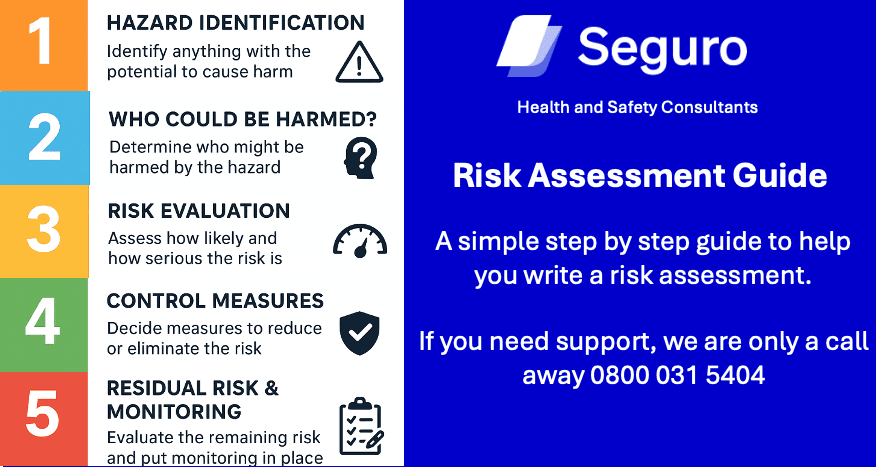
There are five steps to a risk assessment. A strong, HSE-compliant risk assessment should cover the following:

1. Hazard Identification

Anything with the potential to cause harm, such as:

  • Working at height

  • Ladders

  • Electricity

  • Tools and equipment

  • Moving vehicles

  • Materials handling

  • Excavations

  • Hot works

2. Who Could Be Harmed?

For example:

  • Workers

  • Subcontractors

  • Visitors

  • Members of the public

  • Delivery drivers

  • Neighbours

3. Risk Evaluation (Severity + Likelihood)

This determines how dangerous the activity is and how urgently controls are needed.

4. Control Measures

This is where you state how risks will be reduced, such as:

  • Scaffold with guardrails

  • Machine guarding

  • Dust suppression

  • PPE

  • Training and supervision

  • Permit systems

  • Signage

5. Residual Risk & Monitoring

Even after controls, some risk remains — this must be evaluated and monitored.

Examples of Construction RAMS

Common types include:

  • Working at Height

  • Manual Handling

  • COSHH (cement, silica dust, adhesives, solvents)

  • Excavation & Groundworks

  • Use of Power Tools

  • Lifting Operations

  • Traffic Management

  • Noise & Vibration

  • Hot Works

  • Confined Spaces

These normally sit within your RAMS pack.

When Must a RAM Be Reviewed?

RAMS should be reviewed:

  • At the start of every project

  • If the work changes

  • After an accident or near-miss

  • If new equipment or materials are used

  • When site conditions change (weather, environment, layout)

A RAM is not a one-off document — it’s a living, working safety tool.

Risk Assessment vs Method Statement (RAMS)

Many contractors confuse the two, but the difference is simple:

  • Risk Assessment → identifies hazards & risks

  • Method Statement → explains how the work will be done safely

Together, they form your RAMS.

Benefits of Doing Proper Construction RAMS

For contractors and SMEs, the benefits go beyond compliance:

✔ Fewer accidents

✔ Stronger reputation with clients

✔ Better productivity

✔ Lower insurance claims

✔ A safer workforce

✔ Easier onboarding of subcontractors

✔ Higher-quality tenders and bids

Shop for your RAMS

It’s Quicker and more economical to buy RAMS that are written by professional health and safety experts. Some of our RAMS are twelve pages long and contain over 10,000 words. Save time and buy, they are only £10 each.

SHOP For Your Method and Risk Assessments Here

Conclusion: Construction RAMS Are Essential

A RAM is more than a form — it’s the foundation of a safe, compliant and efficient construction site. By identifying hazards, understanding the risks, and putting strong controls in place, you protect your workers, your business and your reputation. Learn the five steps to risk assessments and teach others.

Five Steps to Risk Assessment Infographic

Risk Assessment Guide, What is a Risk Assessment


HSE Video on Risks

Top Tips for Manual Handling

Insight by

amanda

Amanda Lambert

Published on

12 April 2022

Health and safety blog

Top Tips for Manual Handing

Did you know Manual handling causes over a third of all workplace injuries?

Top Tips for Manual Handling. These injuries can include pain and injuries to arms, legs and joints, and repetitive strain injuries of all varieties.

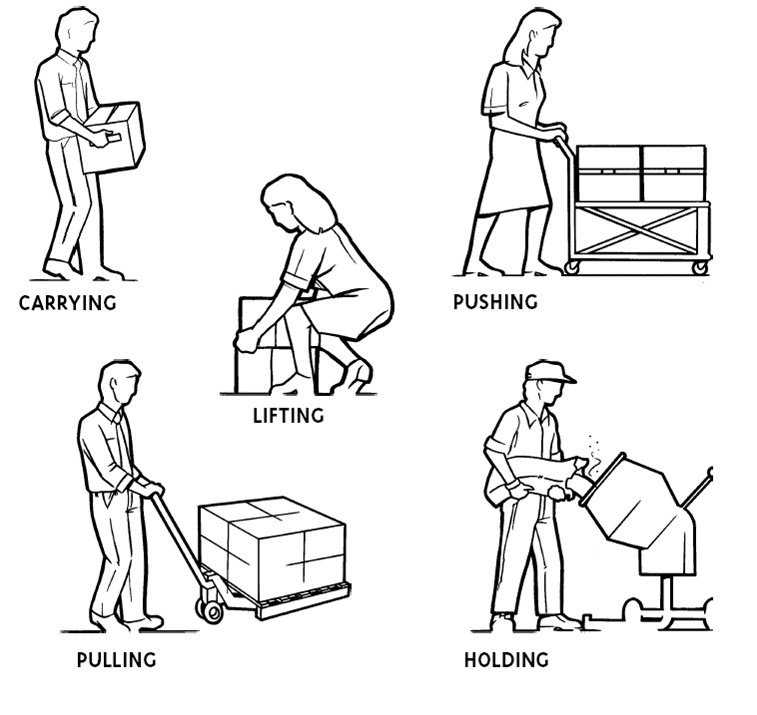
Manual handling covers a wide variety of activities including lifting, pushing, pulling, lowering and carrying. If any of these tasks are not carried out correctly there is a risk of injury.

Here are the top tips to make sure you ensure you handle correctly:

  • Keep your back straight and bend your knees.
  • Lift with your legs and body weight.
  • Use handles or lift aids where appropriate.
  • Have a good grip on the load.
  • Stand close to the load and face the direction you intend to move.
  • Lift load as close to the center of your body as possible.
  • Lift smoothly without Jerking.
  • Avoid lifting, side bending and carrying loads with one hand.

If you need any help with Manual Handling why not visit our site:

Manual Handling Elearning

Manual Handling Training Presentation 

Manual Handling Risk Assessment

More top tips for manual handling can be discovered in our training programs.

What documents are needed for CHAS?

Insight by

amanda

Amanda Lambert

Published on

8 March 2022

CHAS

What documents are needed for CHAS?

Find out what documents are needed for CHAS?  CHAS is an assessment of your Health & Safety documentation, so you will need to provide evidence that this is carried out correctly. Depending on the size of your business depends on the information you need to provide. The details below are for 5 employees or less you will need more for 5+ employees.

Examples of documentation needed will include:

  • Toolbox Talks attendance sheets
  • COSHH assessments
  • Risk Assessment and Method Statement for job specifics
  • Sub contractor induction documentation
  • Agreements to show evidence of your safety advisor.
  • COVID 19 procedures and processes
  • Evidence of training requirement for your industry this can include:
    • CSCS cards
    • Manual Handling
    • Working at heights
    • Asbestos awareness
    • Abrasive Wheel Training

CHAS assessment criteria

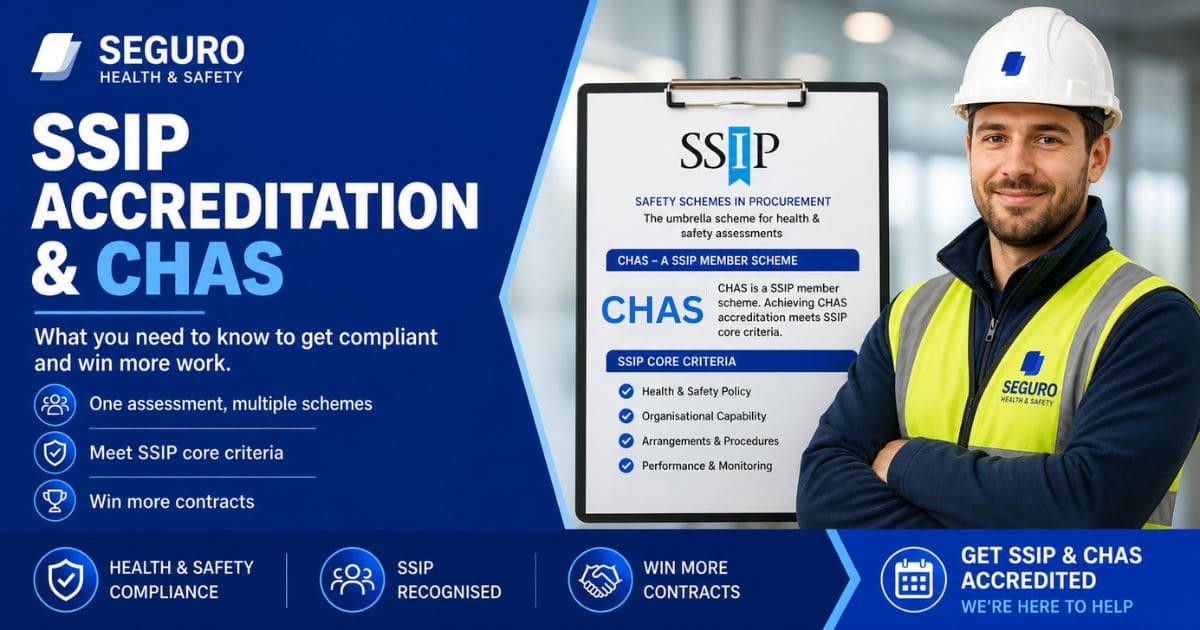
The CHAS assessment criteria are the same as those of all SSIP suppliers. SSIP (Safety Schemes in Procurement) is an umbrella organisation formed in 2009 to reduce the duplication of health and safety assessments.

The CHAS assessment standards and requirements are listed below.

  • Policy
  • Arrangements
  • Occupational Health
  • Behavioural Management
  • Enforcement Actions
  • Accident Reporting and Investigation
  • Fleet Operations / Management Scheme
  • Competent Advice – Corporate and Construction
  • Drug and Alcohol Policy
  • Training and Information
  • Individual Qualifications and Experience
  • Monitoring, Audit and Review
  • Risk Assessment Leading to a Safe System of Work
  • Workforce Involvement
  • Co-operation and Co-ordination
  • Welfare Provision
  • Subcontractors and Sub-consultants
  • Contractor
  • Principal Contractor
  • Designer

Below is a flavour of the detail required for the first five parts of the CHAS application.

Policy

The Health and Safety Policy should be:

  • In the correct company name (As listed on the CHAS 2013 Ltd application)
  •  Dated within the last 12 months
  • Approved by the appropriate company director / responsible person
  • Lists the persons with health and safety responsibilities and sets out the responsibilities of H&S management throughout the organisation.

We can make the process of the CHAS application easy for you by doing it for you.

Arrangements

The arrangements section of the Health and Safety policy should include but not limited to the following:

  • Accident reporting, including RIDDOR, first aid and work-related ill health 
  • Training
  • Information, instruction & supervision
  • Communication
  • Risk assessment
  • Monitoring
  • Emergency procedures
  • Asbestos
  • COVID -19

Occupational Health

The policy or arrangements should include the following:

• Measures to raise awareness of these issues such as posters and toolbox talks

• How the workforce can access help and support if suffering from these issues Health & Safety Assessment Guidance v1.0 (website) 05/07/2023 Uncontrolled document when printed Page 2 of 13 Classification: PUBLIC • How the workforce is trained to handle these issues such as access to accredited mental health first aid training.

Behavioural Management

The supporting evidence must confirm that there are documented arrangements in place for a behavioural management or behavioural safety programme.

Enforcement Actions

Details of any enforcement notices (Prohibition, Improvement or Crown) or prosecutions served on your company in the last five years by the HSE or Local Authority and the remedial actions taken to prevent a reoccurrence. A prosecution or notice will not debar the business from registration but a failure to declare one could – please note that CHAS will check the HSE public register of convictions.

Accident Reporting and Investigation

Supporting Information:

Find out what documents are needed for CHAS arrangements.

• Documented arrangements for the recording, reporting, and reporting of accidents (Including RIDDOR reportable accidents).

  • Records of all RIDDOR-reportable and other incidents for at least the last three years, including remedial actions to prevent a reoccurrence.
  • Records of any other accidents within the last three years, including the remedial actions to prevent a reoccurrence. The accident statistics for the last three years incorporating the following categories: Health & Safety Assessment Guidance v1.0 (website) 05/07/2023 Uncontrolled document when printed Page 3 of 13 Classification: PUBLIC
  • Deaths
  • Specified Injuries
  • Over 3 days incapacitated
  • Over 7 days Incapacitated
  • Injuries to non-workers
  • Occupational Diseases
  • Dangerous Occurrences
  • Gas Incidents

Chas assessment standards


Learn more about CHAS

We have a series of articles where you can learn more about CHAS. The list of articles is below:

CHAS Support

Completing the CHAS application takes time and resources, as well as completing lots of forms and health and safety documentation.

We can make it easy for you by doing all the leg work for you. We carry out over 500 applications a year with 100% success.

For a small fee, we can take the pain away for you.

Complete the form, and we will tell you how it works and how much the whole process costs, including the CHAS fee for your circumstances.


    I confirm I have read and agree to the Seguro Health and Safety Consultants Privacy Policy.

    What is Safe Contractor?

    Insight by

    amanda

    Amanda Lambert

    Published on

    11 January 2022

    Health and safety blog

    SafeContractor Accreditation: What It Is & How to Get Approved

    Everything contractors, trades, and construction businesses need to know

    What Is SafeContractor?

    SafeContractor is one of the UK’s leading health & safety accreditation schemes, operated by Alcumus. It provides independent verification that your business meets essential health & safety, risk management, and compliance standards.

    For construction companies, subcontractors, and trades, SafeContractor is often required by:

    • Principal contractors

    • Facilities management companies

    • Local authorities

    • Developers

    • Public sector buyers

    It helps clients confirm that you operate safely, legally, and professionally.

    Why SafeContractor Accreditation Matters

    Safe Contractor is more than a badge—it’s a competitive advantage.

    1. Win More Work with Bigger Clients

    Many large companies only work with contractors who are Safe Contractor approved. Accreditation instantly elevates your credibility.

    2. Shows You Take Health & Safety Seriously

    Your policies, procedures, and training records are independently checked—giving buyers confidence in your competence.

    3. Reduces Repetitive Paperwork

    Instead of completing multiple PQQs for every tender, Safe Contractor acts as a pre-qualification shortcut, saving valuable admin time.

    4. Proves Legal Compliance

    Safe Contractor aligns with UK legislation such as:

    • The Health and Safety at Work Act

    • Management of Health and Safety at Work Regulations

    • CDM Regulations

    This shows your business understands and manages risk properly.

    5. Enhances Your Reputation

    Displaying the Safe Contractor logo instantly reassures clients and partners that your business meets high safety standards.

    Get Accredited and Win More Work!

    What SafeContractor Checks (Accreditation Requirements)

    When you apply, Safe Contractor reviews your:

    Health & Safety Documentation

    • Health & safety policy

    • Risk assessments & method statements (RAMS)

    • COSHH assessments

    • Accident/incident reporting procedures

    Training & Competence

    • CSCS/CPCS qualifications

    • Toolbox talks

    • Staff induction processes

    • Evidence of ongoing training

    Insurance

    • Public liability

    • Employer’s liability

    • Professional indemnity (if required)

    Management Systems

    • Safety arrangements

    • Site management systems

    • Contractor control

    • Equipment inspection records

    Environmental & Ethical Standards (for SafePQQ)

    • Environmental policy

    • Modern slavery

    • Anti-bribery

    • Equality & diversity

    How to Get SafeContractor Accreditation (Step-by-Step)

    Step 1: Register Online

    Create your Safe Contractor account and select your membership level.

    Step 2: Complete the Questionnaire

    Provide business details, trade categories, and scope of works.

    Step 3: Upload the Required Documents

    Submit your policies, training records, RAMS, insurance, and evidence.

    Step 4: Assessment Review

    SafeContractor auditors review your submission and may request more information.

    Step 5: Approval & Certification

    Once approved, you receive:

    • Your digital certificate

    • SafeContractor logo for marketing

    • Listing in the SafeContractor online directory

    Accreditation lasts 12 months.

    Common Reasons Safe Contractor Applications Fail

    Avoid these frequent issues:

    ❌ Out-of-date policies
    ❌ Missing training certificates
    ❌ No recent RAMS
    ❌ Insurance not uploaded correctly
    ❌ Missing evidence of safety arrangements
    ❌ Incomplete questionnaire sections

    Fixing these before submission dramatically improves success.

    SafeContractor vs. Other Accreditation Schemes

    Scheme Focus Best For
    SafeContractor Health & safety & PQQ Contractors, FM, engineering
    CHAS Safety & compliance Construction businesses
    Constructionline Supply chain verification Contractors needing PAS91 compliance
    SMAS Worksafe Health & safety Trades & subcontractors


    Many companies hold multiple accreditations to maximise opportunities.

    Conclusion: Is SafeContractor Worth It?

    Absolutely. SafeContractor accreditation helps you:

    ✔ Win more work
    ✔ Prove you’re safe and compliant
    ✔ Reduce tendering admin
    ✔ Build trust with major clients
    ✔ Strengthen your brand reputation

    If you operate in the construction or FM sector, Safe Contractor is a powerful asset for your business in 2025.

    Get a price for Safe Contractor

      Construction Site Safety Documents

      Insight by

      amanda

      Amanda Lambert

      Published on

      14 September 2021

      Health and safety blog

      Construction Site Safety Documents

      Setting up a construction site and making sure that you have all the necessary documentation and details can be a laborious and time consuming task. Specialising in Construction and having experience on site we have been providing information to our clients for a number of years.

      Based on the frequency we were asked to provide the details we decided to provide them as a product to help everyone who may need it.

      Our Construction Site Safety Documents provide you with everything you need in one place allowing you to comply with the latest legislation.

      The Safety Software includes

      • 65 completed risk assessments
      • 41 COSHH Assessments
      • Construction Phase Health and Safety Plan (CDM 2015), which can be easily amended and edited for specific projects
      • 70 Toolbox Talks
      • Site inspection Check Sheets – Scaffold, Dumper, Excavator etc
      • Permits to Work – Confined Space, Excavation, Hot Work, Asbestos, etc
      • Site Setup Check Sheet
      • Site Induction
      • Site Rules
      • Registers

      STOP AND THINK

      Our site management tools where designed to set up our own site many years ago. We put the files onto a laptop for our site managers. It saved us a fortune over the years both in time and money. The purchase of this site management toolkit is a great investment. Click on the link to buy.

      Construction site safety documents and tools


      SSIP Accreditation and CHAS

      Insight by

      amanda

      Amanda Lambert

      Published on

      23 August 2021

      CHAS

      SSIP Accreditation and CHAS

      Have you recently been asked for an SSIP accreditation?

      SSIP Accreditation and CHAS – SSIP (Safety Schemes in Procurement) is an umbrella group which sits above a number of accreditations you can get which assess your companies Health & Safety. There are a number of assessments you can go for and we have highlighted the most popular ones below:

      CHAS

      The majority of our clients go for CHAS accreditation as this seems to be the popular one within the industry. CHAS have recently gone online with their submissions so customers can upload their documentation and then pay for the assessments once they are ready to submit.

      This makes it easier for customers to see progress and communicate with their assessor.

      If you are looking to get CHAS accreditation but are having trouble with the necessary documentation we can help with the preparation of these, we also provide a safety advisor service for companies with less than 5 employees so we can stay with you and help to implement the new documentation.

      Impartial advise

      Feel free to call us 0800 031 5404, and we can advise you on the best selection for your needs. We have completed thousands of applications and understand the market inside out. We don’t mind which company you select; the assessment process is the same, thanks to SSIP.

      Who is Seguro

      Seguro Health and Safety Management employs qualified health and safety consultants who complete the application to obtain accreditation from all the assessment companies. Seguro removes the pain of completing all the documentation and ensuring you comply. Feel free to contact us.

      Learn more about CHAS

      We have a series of articles where you can learn more about CHAS. The list of articles is below:

      If you have any questions on what is CHAS accreditation please get in touch.

      Tips for working at height

      Insight by

      amanda

      Amanda Lambert

      Published on

      10 June 2021

      Health and safety blog

      Working at heights course

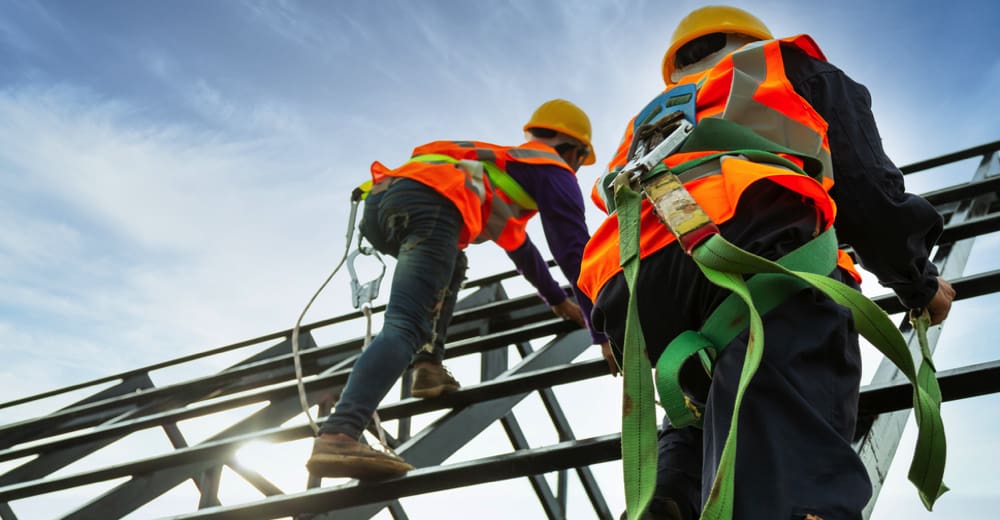
      Working in the construction industry can make it difficult to avoid working at heights on a daily basis our working at heights course addresses this issue. Although it may not be possible to avoid the risk you can ensure that you manage it by being aware of how to work safely.

      Working at height safely is the responsibly of your employer as well as yourself. You should always be aware of the risks and ensure these are managed correctly. Every new job you are asked to work on will have been fully risk assessed and you should see a copy of this before you start. These risks have been measured on the sequence of events you are working too, if these change you need to be aware of what to look out for to ensure your safety.

      1. Where possible try to use extendable tools or mechanical assistance to avoid you working at height.
      2. Try to identify a safe place to work that is already in place, e.g  a concrete flat roof or guarded mezzanine floor.
      3. Never work on a surface that is vulnerable such as glass roof. If this is not possible explore the use of machinery such as  an elevated work platform or a tower scaffold.
      4. Try and minimise the distance of a possible fall, there are numerous ways to do this safely
      5. For jobs requiring a small distance form the ground, Stepladders and Platform Ladders are a suitable option. These can only be used where the risk has been deemed as low.

      Working at heights training course

      If you are still unsure and would like to look at refreshing your knowledge we offer an e-learning course for you to sit whenever is convenient for you.

      5 common questions asked regarding Constructionline

      Insight by

      amanda

      Amanda Lambert

      Published on

      19 January 2021

      Constructionline

      Constructionline is the largest pre-qualification database in the UK

      Being a member of Constructionline can be beneficial for all sized companies you just need to know what you want to get out of it to make sure it can deliver an ROI for your company.  Constructionline is used by the big contractors and public bodies to pre qualify your business and your ability to carry out a project in terms of financials as well as operational process including Health & Safety. Constructionline has  over 8,000 key decision makers from over 2,000 buying organisations. They  use Constructionline to select quality suppliers so constructionline can be a great tool to promote your services and gain new work opportunities.

      Constructionline is a UK compliance and procurement platform used by contractors, suppliers, and public sector buyers. It helps businesses prove they meet industry standards for:

      • Health & Safety (SSIP)
      • Insurance
      • Financial standing
      • Environmental & quality management
      • Workforce credentials

      Your login dashboard is where you manage all of this information.

      1. Will being registered on Constructionline guarantee me work?

      Constructionline’s primary objective is to streamline the tender process and reduce duplication of work for everyone involved.  The aim is to reduce the amount of paperwork you face at the tender stage. Constructionline cannot guarantee that you will win contracts as a result of your membership. Although having your details available to over 8,000 buyers, membership can act as a sales and marketing tool for your business. Constructionline is widely recognised within the construction industry, and meeting their criteria is only a good thing. Getting accredited will help you win more work by leveraging your sales skills.

      Get Accredited and Win More Work!

      2. Can I check which buyers have viewed my company details?

      You can see a full history of your views by clicking on the Log In button in the top right-hand corner of this page. Enter your user name and password. Select the Reports tab and the report you require. Enter the Date From and Date To dates and select Run Report. Either print the report or save it to your desktop.

      3. Will buyers be interested in my company if I register as i am only a small contractor?

      Alot more buyers are looking for small, local contractors to employ because they are keen to re-invest in the local communities. The Constructionline system itself enables buyers to put in fairly complex search criteria so they are able to specify what size of company they would prefer to use. Therefore, if you are a small company it would be a great asset to join Constructionline and already, over 50% of our contractors are suppliers with a turnover of less than £1 million and 29% have a turnover of less than £250,000.

      4. How much does it cost to register with Constructionline?

      Constructionline is free to procurers. Suppliers pay an annual fee based on their turnover. Fees start at £90 plus VAT and you can register for an unlimited number of work categories and work locations.

      5. How to Log In to Constructionline – Step-by-Step Guide

      1. Go to the Constructionline Login Page

      Use the official Constructionline portal to access your account.

      2. Enter Your Email and Password

      Use the email address registered with your membership.

      3. Complete the Security Verification (if prompted)

      Constructionline may request authentication for added account security.

      4. Click “Sign In”

      You will be taken to your dashboard, where you’ll see:

      • Membership status
      • SSIP or Acclaim Accreditation progress
      • Renewal deadlines
      • Document upload sections
      • Tasks you must complete
      • Buyer opportunities

      Constructionline Login Problems & How to Fix Them

      1. Forgotten Password

      If you can’t remember your password:

      • Click “Forgot Password?”
      • Enter your registered email
      • Check your inbox for a reset link
      • Create a new password

      Tip: Check spam/junk folders if the email doesn’t arrive.

      2. Email Not Recognised

      If Constructionline says your email isn’t valid:

      • Make sure you’re using the correct business email
      • Ask your admin if they changed login details
      • Contact Constructionline support to verify the account owner

      3. Two-Step Verification Not Working

      Possible fixes:

      • Try another browser
      • Enable pop-ups
      • Use a different device
      • Request a new verification code

      4. Can’t Access the Dashboard

      This usually means:

      • Your membership is expired
      • A payment is overdue
      • The system is updating

      Try logging in again after 5–10 minutes or contact support.


      What You Can Do After Logging In

      The Constructionline dashboard gives you access to several areas essential for compliance:

      ✔ Upload RAMS, policies & documents

      Health & Safety Policy
      Risk assessments
      Insurance certificates
      Environmental policy
      Quality management documents

      ✔ Manage Acclaim Accreditation (SSIP)

      Upload evidence for:

      • H&S competence
      • Training records
      • Workplace safety procedures

      ✔ Track Renewal Deadlines

      Never miss an annual assessment or SSIP renewal.

      ✔ Update Business Profile

      Buyers see:

      • Services you offer
      • Trade categories
      • Experience
      • Regions you cover

      ✔ Access Buyer Opportunities

      Some buyers only work with Constructionline members.


      Tips to Make Your Constructionline Account Work Harder for You

      1. Keep Documents Up to Date

      Expired insurance or missing policies can suspend your profile.

      2. Complete Every Section

      A 100% complete profile ranks better in buyer searches.

      3. Add Case Studies & Testimonials

      These increase your attractiveness to buyers.

      4. Use the Email Alerts

      You’ll receive notifications for:

      • Missing documents
      • Buyer interest
      • Renewal reminders

      5. Download Your SSIP Certificate

      You can show clients you meet UK H&S requirements.

      How can we help?

      We can complete the application, gather all required documents and answers to questions, and compile all necessary evidence, allowing you to focus on your job. We are efficient, economical and have a 100% success rate. Get accredited and win more work.

      Get Accredited and Win More Work!

      CHAS renewal forms

      Insight by

      amanda

      Amanda Lambert

      Published on

      23 November 2020

      CHAS

      Looking for CHAS renewal forms?

      CHAS adopt the same system for their renewals as they do for new registrations, all registrations are now online and you can register on CHAS website. When you go to the website you will be given the following options at the top of the right hand side of the screen:

      • Renew
      • Apply
      • Login

      If you click on renew you will be taken to a log in screen where you are required to add email address and password. There is a forgot password option if you have forgotten the details you used last year. If you don’t have the same email address you will need to call CHAS on 0208 545 3838 and they will help you.

      Once you have logged in, you will be able to complete your CHAS renewal application online and once complete you can submit for assessment.

      STOP THINK

      There is a quick way to get your CHAS renewed. We renew over 1,000 CHAS application per year, we can do it for you CALL 0800 031 5404 during office hours or complete the form on this link telling us you are looking for a CHAS renewal.

      CHAS renewal costs

      CHAS offers three membership packages with different levels of accreditation:

      CHAS Standard

      The entry-level package includes a health and safety assessment and SSIP accreditation. CHAS membership fees

      CHAS Advanced

      The mid-range package includes all the Standard package benefits, plus helps you achieve SSIP and PAS 91 accreditation. CHAS membership fees

      CHAS Elite

      The highest level of accreditation includes all the benefits of the other packages, plus access to the Common Assessment Standard. CHAS membership fees

      Learn more about CHAS

      We have a series of articles where you can learn more about CHAS. The list of articles is below:

      If you have any questions on what is CHAS accreditation please get in touch.