Close Navigation

Search

Health & Safety when you have 5 employees or more

Insight by

amanda

Amanda Lambert

Published on

14 April 2026

Competent person

Health & Safety when you have 5 employees or more

As soon as you have 5 employees or more, you have a legal requirement to comply with all work-related health and safety legislation.

Your obligations are outlined in the Safety at Work Regulations 1974.

How this changes from less than five employees is you now need to ensure you have:

  • Written Health and Safety Policy
  • Written Health and Safety Policy Statement
  • Written Risk Assessments
  • COSHH assessments
  • Toolbox talks
  • A competent person either within your business or a consultant.

We act as competent people for over 800 companies. When we act as your competent person, we will complete all the documents you need to comply and keep the documents up to date as legislation changes. You also have access to over 1,000 documents including risk and method statements, COSHH data, toolbox talks, and more. We charge a small monthly fee. 

If you are not sure exactly what your business will require, you can find details on it by visiting the HSE website. Every business is different, and a competent person will be able to cover all aspects for you.

If you wish to employ your own competent person, they should be fully qualified in all aspects of Health & Safety; this can prove to be an expensive requirement if you employ them full-time. 

A more competitive way is to use a remote competent person service. We offer this service using one of our safety consultants as your competent person. We will make sure all your documents and training are up to date today, and be there to answer any questions. You also get free access to over 1,000 safety documents including RAMS.

There are a number of resources on the HSE website that can help you with any changes that may affect you as you continue to grow.

We are a friendly and professional team working in the background to help and support like-minded people get on with their work.

Request a call back for more information or call 0800 031 5404

Request a call back
shape Safety Advisor, Safety Consultant

Health & Safety Compliance in Construction – A Complete Guide for UK SMEs

Insight by

amanda

Amanda Lambert

Published on

9 April 2026

Health and safety blog

What Is Health & Safety Compliance in Construction?

Health and safety compliance in construction refers to the systems, processes, and documentation required to ensure that work is carried out safely and in line with UK regulations.

This typically includes:

In the UK, compliance is not optional. It is a legal requirement under legislation such as the Health and Safety at Work etc. Act 1974.

Why Is Health & Safety Compliance Important for Construction Companies?

For small and medium sized construction businesses, health and safety compliance is essential not only for legal protection but also for commercial success.

Key Benefits of Compliance

1. Access to More Work
Many clients and principal contractors require businesses to hold recognised accreditations before they can tender for projects.

2. Improved Credibility
Demonstrating compliance shows that your business operates professionally and responsibly.

3. Reduced Risk
Effective health and safety systems help prevent accidents, delays, and costly legal issues.

4. Stronger Tender Submissions
Pre qualified and compliant companies are more likely to pass initial screening stages.

Contact us to start your journey to compliance

Common Health & Safety Accreditations in the UK

To work on larger or higher-value projects, construction companies are often required to obtain third party accreditation.

The most widely recognised schemes include:

These accreditations assess a company’s health and safety policies, procedures, and track record.

What Are RAMS (Risk Assessments and Method Statements)?

Risk Assessments and Method Statements (RAMS) are essential documents in construction.

  • Risk Assessments identify potential hazards on-site
  • Method Statements explain how work will be carried out safely

Well prepared RAMS are often required before work can begin and are frequently reviewed by clients or principal contractors.

Poorly written or non compliant RAMS are a common reason for project delays or rejected tenders.

The Role of a Competent Person in Health & Safety

UK law requires businesses to appoint a “competent person” to manage health and safety responsibilities.

A competent person must have:

  • Sufficient training and experience
  • Knowledge of relevant regulations
  • The ability to implement effective safety measures

Many SMEs choose to outsource this role to specialist consultancies to ensure full compliance without hiring in-house.

How Seguro Health & Safety Supports Construction Businesses

Seguro Health & Safety provides practical, hands on support to help construction companies achieve and maintain compliance.

Their services include:

  • Accreditation support (CHAS, Constructionline, SafeContractor)
  • RAMS preparation and review
  • Acting as your competent person
  • Ongoing compliance advice and documentation support

This approach helps businesses stay compliant while focusing on delivering projects and growing their operations.

Is Health & Safety a Cost or a Growth Strategy?

Health and safety is often seen as a necessary expense. However, in today’s construction industry, it is better understood as a growth enabler.

The Commercial Impact of Compliance

  • Compliance builds credibility → Clients trust your business
  • Credibility creates access → You qualify for more tenders
  • Access drives revenue → More opportunities to win work

Companies that treat health and safety as part of their business strategy, not just a tick box exercise are better positioned to scale.

Frequently Asked Questions (FAQ)

Do I need health and safety accreditation to win construction work in the UK?

In most cases, yes. Many clients require accreditation such as CHAS or SafeContractor as part of their pre qualification process.

What happens if my business is not compliant?

You may be unable to tender for projects, fail pre qualification checks, or face legal and financial penalties.

Can I outsource health and safety management?

Yes. Many SMEs outsource to specialist consultants who act as their competent person and manage compliance requirements.

How long does it take to get accredited?

This depends on your current documentation and processes, but with expert support, accreditation can often be achieved quickly.

Conclusion

Health and safety compliance is no longer just about meeting legal requirements. For UK construction SMEs, it is a critical factor in winning work, building credibility, and achieving sustainable growth.

By taking a structured and proactive approach, businesses can turn compliance into a competitive advantage.

Contact me today we are here to help 0800 0315404

shape

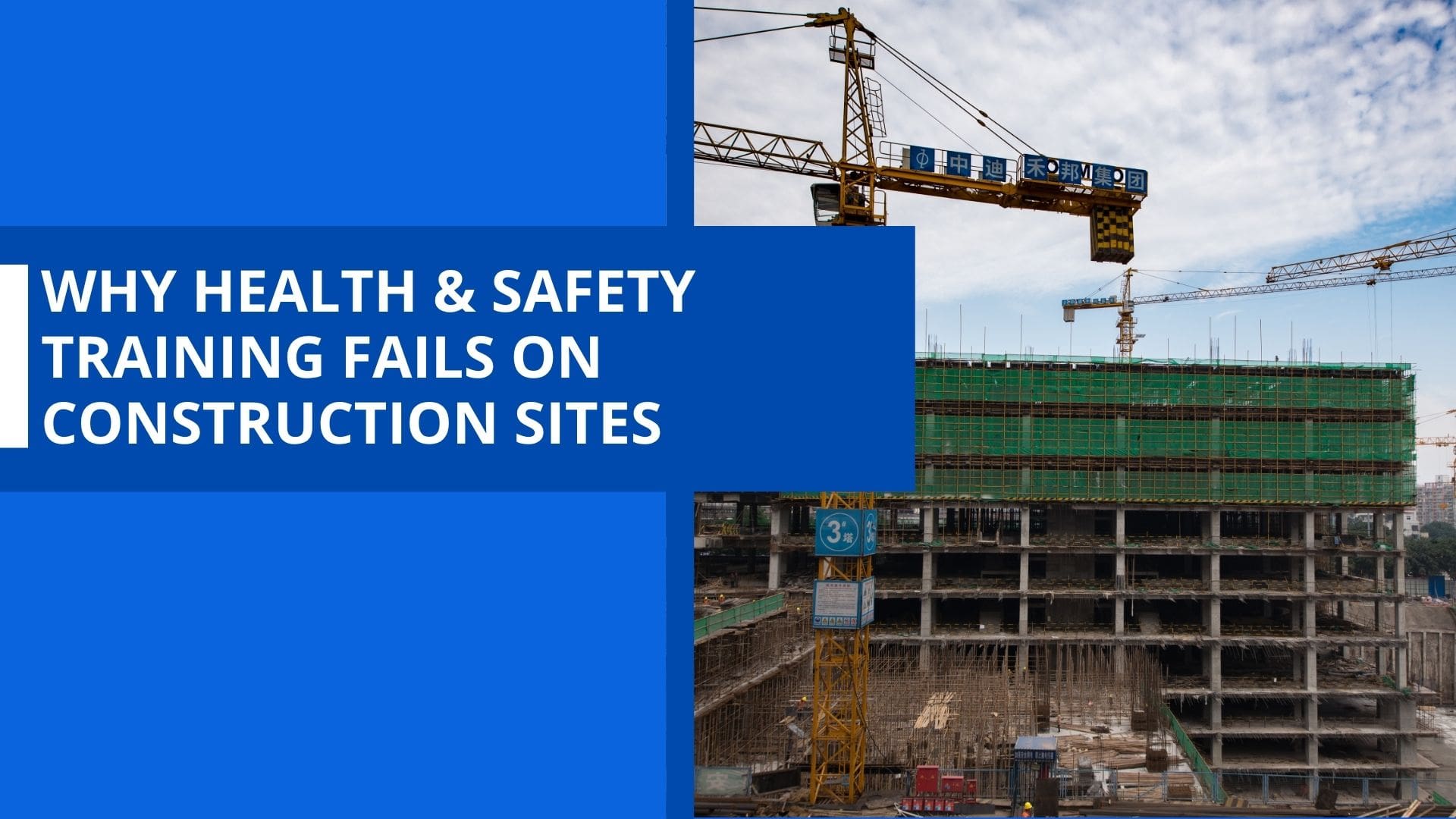
Why Health & Safety Training Fails on Construction Sites — And How eLearning Is Changing It

Insight by

amanda

Amanda Lambert

Published on

27 March 2026

Health and safety blog

Why Health & Safety Training Fails on Construction Sites — And How eLearning Is Changing It

In the construction industry, Health & Safety isn’t optional, it’s critical.

Yet despite ongoing training, incidents still happen. Near misses go unreported. Procedures get forgotten.

Why?

Because most traditional training isn’t designed for how construction actually works.

A typical scenario, operatives pulled off site, sat in a room, run through slide decks, and asked to sign a register.

Compliance achieved.

But safer behaviour? Not guaranteed.

Because in construction, what people remember on site matters far more than what they hear in a classroom.

eLearning is transforming how Health & Safety is delivered across construction, making training more relevant, accessible, and effective in real working environments.

1. Built for Site Based Work

Construction doesn’t happen at desks.

With multiple sites, rotating teams, subcontractors, and tight deadlines, pulling workers into classrooms isn’t always practical.

eLearning allows operatives, supervisors, and contractors to complete training:

  • On site
  • Between tasks
  • On any device

Training fits around the job, not the other way round.

2. Consistency Across Sites and Teams

On large projects or across multiple sites, inconsistent messaging is a real risk.

Different trainers. Different interpretations. Outdated materials.

eLearning standardises delivery so that:

  • Every worker receives the same guidance
  • Content aligns with current UK regulations
  • Site inductions remain consistent across locations

3. More Engaging, More Memorable

Construction is hands on, training should be too.

Modern eLearning uses:

  • Real-life site scenarios
  • Hazard recognition exercises
  • Short, focused modules

This approach helps workers recognise risks in real situations, not just in theory.

4. Cost Effective Without Slowing Projects

Taking teams off site for training can delay work and increase costs.

eLearning reduces:

  • Travel and venue expenses
  • Lost productivity
  • Scheduling disruptions

It also gives site managers visibility over:

  • Who has completed training
  • Knowledge gaps
  • Compliance status in real time

5. Keeps Up With Changing Regulations

Construction regulations and best practices evolve regularly.

With eLearning:

  • Updates can be rolled out instantly
  • Workers stay aligned with current standards
  • No need to wait for the next scheduled training session

The Bigger Picture: Creating Safer Sites

eLearning isn’t just about meeting compliance requirements.

It’s about creating a culture where:

  • Workers actively recognise risks
  • Safe behaviours become routine
  • Accountability is shared across every level of the site

In an industry where environments change daily and risks are high, training needs to be continuous, practical, and accessible.

Final Thought

In construction, safety doesn’t come from ticking boxes.

It comes from what workers remember, and apply, when it matters most.

eLearning helps make that happen.

Use our code EL20 and purchase your eLearning today

Save 20%
shape

How a Health & Safety Consultancy Can Make Your Business Safer

Insight by

amanda

Amanda Lambert

Published on

10 March 2026

Competent person

What Does a Health & Safety Consultancy Do?

Many people assume a safety advisor simply quotes legislation and fills out forms. In reality, a skilled advisor from a health & safety consultancy goes far beyond that. They can:

  • Translate legal requirements into practical measures: Regulations are often written in complex legal language. A consultancy turns these into clear, actionable steps that your team can implement.

  • Identify hazards before they cause harm: By assessing processes, equipment, and work habits, they spot risks that could lead to incidents, injuries, or downtime.

  • Support managers to make informed decisions: Safety isn’t about slowing work, it’s about making sure work is done smartly and safely. Consultants advise managers so they can act confidently.

  • Foster a positive safety culture: A good consultancy helps embed safety into your company’s DNA, so it’s not an afterthought but a standard part of how work is done.

By partnering with a professional health & safety consultancy, businesses gain more than compliance,  they gain proactive protection for their teams and operations.

Why Timing and Engagement Matter

The real impact of a health & safety consultancy depends on how and when it is used. If an advisor is brought in too late, ignored, or only asked to “sign off” paperwork, the benefits are limited.

When consulted early, empowered to challenge unsafe practices, and listened to by leadership, the results are clear:

Fewer workplace incidents – catching risks before they escalate reduces injuries and claims.
Reduced downtime – safer operations mean fewer stoppages caused by accidents.
Improved compliance – staying ahead of regulations protects your business from fines and legal issues.
More confident teams – employees trust a workplace that actively prioritises safety, boosting morale and productivity.

Early engagement ensures that safety isn’t just a reactive process but an active, integrated part of your business strategy.

Safety as an Enabler, Not a Roadblock

One common misconception is that safety slows down work. The opposite is true. By partnering with a health & safety consultancy, businesses can:

  • Enable smoother operations: Safe processes are more efficient processes.

  • Reduce risk without slowing production: Proper planning prevents accidents that cause major delays.

  • Meet legal obligations confidently: Staying compliant is no longer a burden, it becomes part of your operational standard.

In short, safety isn’t about stopping work, it’s about enabling work to be done well, safely, and legally.

Partnering With the Right Health & Safety Consultancy

Choosing the right consultancy is key.

A professional consultancy offers tailored advice, practical solutions, and ongoing support to ensure safety isn’t a one-time fix but a continuous improvement process.

The right consultancy helps businesses:

  • Protect employees and visitors

  • Reduce operational risk

  • Improve regulatory compliance

  • Build a culture of proactive safety

When leadership actively applies the expertise of a health & safety consultancy, safety becomes an asset, not just a requirement.

Conclusion

A safety consultant doesn’t make your business safer by merely existing. Its real value comes from early involvement, practical guidance, and being empowered to influence operations.

Safety isn’t about stopping work, it’s about enabling it to be done efficiently, confidently, and without risk.

If your business wants fewer incidents, reduced downtime, better compliance, and more confident teams, partnering with a professional  is the step that transforms workplace safety from a tick box exercise into a core part of your business success.

Contact Colin today and see how we can become your Health & Safety Partner

Call Direct now
shape Safety Advisor, Safety Consultant

The Importance of online training for health and safety

Insight by

amanda

Amanda Lambert

Published on

25 February 2026

Health and safety training

Why is online training in Health & Safety so important

In today’s fast-paced work environment, maintaining strong Health & Safety (HSE) standards is not optional—it’s essential.

Organisations must ensure that employees understand safety procedures, regulatory requirements, and best practices to prevent accidents and promote well-being.

Online Training has emerged as one of the most effective and efficient ways to deliver Health & Safety training, offering flexibility without compromising quality.

Buy Your Online Training Here

Top reasons to use online training

1. Accessible Training for a Diverse Workforce

Health & Safety training must reach everyone—from office staff to field workers to remote teams. Online Training makes this possible by allowing employees to access training anytime and anywhere, whether they’re on a job site, at home, or traveling. This accessibility ensures that critical safety knowledge is delivered consistently across the entire workforce.

2. Consistent, Standardised Safety Messaging

Traditional, in-person training can vary from instructor to instructor. Online Training ensures consistent and standardised content, meaning every employee receives the same essential safety information. This uniformity is crucial for maintaining compliance with regulations and minimizing risks.

3. Engaging, Interactive Learning Improves Retention

Health & Safety topics can sometimes feel procedural or routine, but online Training transforms them into interactive and engaging experiences. Through videos, animations, real-life simulations, quizzes, and scenario-based modules, employees better understand hazards and remember how to respond effectively. Higher engagement leads to safer behaviour on the job.

4. Scalable and Cost-Effective for Organisations

Training large teams, especially across multiple locations, can be expensive and time-consuming. eLearning reduces these challenges by eliminating travel costs and minimizing downtime. Organisations can train hundreds—or thousands—of employees simultaneously at a fraction of the cost, making compliance more efficient and scalable.

5. Keeps Pace With Changing Regulations

Health & Safety regulations evolve frequently. online Training enables companies to update content quickly and distribute changes immediately. This agility ensures that employees always have access to the most current guidelines, reducing the risk of violations and maintaining industry compliance.

6. Safe, Risk-Free Practice Through Digital Simulation

Some safety procedures are too dangerous or costly to practice in real-life scenarios. Online Training solves this by offering virtual simulations where employees can learn how to handle emergencies—like chemical spills, fire events, or equipment failures—without real-world risk. This builds confidence and preparedness.

7. Supports Continuous Safety Culture

A strong safety culture requires ongoing learning—not just one-time instruction. Online Training platforms allow organizations to provide continuous refresher courses, microlearning modules, and regular assessments, reinforcing safe habits year-round. When learning is accessible and engaging, safety becomes part of daily behaviour, not just an annual requirement.

Why use Seguro?

Online Training is reshaping Health & Safety training by making it more accessible, engaging, scalable, and adaptable.

It ensures employees understand crucial safety protocols, reduces training costs, and helps organisations meet regulatory requirements with confidence. Most importantly, it builds a culture where safety becomes second nature—leading to fewer accidents, healthier workplaces, and greater organisational resilience.

Our courses start from as little as £25 + vat, discounts are available for multiple courses. We have over 5000 certificates issued on a yearly basis


Buy Your Online Training Here

Improving UK construction safety

Insight by

amanda

Amanda Lambert

Published on

17 February 2026

Accreditations

Building a Strong Safety Culture On Site

Creating a strong safety culture starts with shared responsibility:

  • Every team member, from site managers to operatives, must understand their role in keeping the site safe.
  • Open communication, regular safety briefings, and visible leadership commitment encourage workers to report hazards without fear.
  • Practical, ongoing training reinforces safe behaviours, turning compliance into everyday practice.

Over time, this culture reduces accidents, improves morale, and builds trust across the workforce.

Benefits of Prioritising Safety Productivity, Morale, and Trust

Prioritising safety delivers measurable benefits beyond simply reducing incidents. Sites with robust safety practices often see higher productivity because work can proceed without delays caused by accidents or near misses.

Team morale improves when workers feel valued and protected, fostering loyalty and collaboration. Clients and contractors gain confidence in your operations, enhancing your reputation in the competitive UK construction sector. Ultimately, safety becomes a strategic advantage that supports project success and long-term growth.

Taking Steps to Improve Safety Today

Investing in SSIP accreditation and engaging professional safety advisors is a crucial first step. Start by:

  • Conducting thorough risk assessments and site inspections

  • Integrating safety planning from project inception

  • Delivering practical, ongoing training tailored to site needs

  • Encouraging open communication and reporting of hazards

  • Leading by example to reinforce safe behaviours

Continuous improvement is key. Even small steps, like updating toolbox talks, reviewing near misses, or involving teams in safety discussions, can have a significant impact on overall site safety.

Accepting the inherent risks of construction doesn’t mean accepting harm, with expert guidance, practical processes, and a strong safety culture, every site can move closer to zero harm.

Conclusion

Building safer construction sites in the UK requires more than regulatory compliance, it demands a culture where safety is embedded into every task, decision, and interaction. SSIP accreditation, HSE aligned practices, and dedicated safety advisors help transform safety from paperwork into real world impact.

By prioritising people, communication, and continuous improvement, construction teams can protect their workforce, boost productivity, and raise the bar for safety across the industry.

Myth: “SSIP accreditations mean a company is safe.”

Insight by

amanda

Amanda Lambert

Published on

5 February 2026

Accreditations

Does a SSIP accreditation mean a company is safe?

SSIP accreditation does not mean a company is safe to work with. It only verifies that a business has achieved a minimum health and safety standard based on documentation reviewed at a specific moment.

SSIP assessments are primarily desktop audits. They focus on policies, procedures, and written risk assessments rather than how work is actually carried out on site.

As a result, a company may hold valid SSIP certification while still having poor supervision, inadequate training, unsafe behaviours, or weak safety leadership.

What it doesn’t measure:

  • Ongoing compliance
  • Safety culture
  • Site-specific risk control
  • Competence of individual workers
  • Real-world performance over time

To properly assess whether a company is safe, SSIP should be used as a baseline entry check, not a seal of approval.

Meaningful safety assurance requires

  • active monitoring
  • site inspections
  • performance data
  • accident trends
  • evidence that health and safety is managed in practice, not just on paper.

Conclusion

Getting accredited is a starting point, not proof of safety.

Get in touch

Questions and Answers

Does SSIP accreditation mean a contractor is safe?

No accreditation confirms that a contractor meets a basic health and safety documentation standard. It does not prove that the contractor operates safely on site or maintains good safety performance.

What does SSIP actually assess?

SSIP assesses written health and safety policies, procedures, and management systems through a desktop review. It does not normally include site inspections or observation of work activities.

Can a company with SSIP still be unsafe?

Yes. A company can hold valid accreditation and still have unsafe working practices, poor supervision, or inadequate training if these issues are not visible in documentation.

Is SSIP enough for contractor selection?

No it should be treated as a minimum requirement. Clients should also review accident history, carry out site audits, monitor performance, and assess competence and safety culture.

Top Safety Advisor Tip

Carry an annual safety audit and work out your strengths, weaknesses, opportunities and strengths.

Then work on your weakness and make them into your strengths, and seek out new opportunities.

We are here to support you.

How to get PQS Approved

Insight by

amanda

Amanda Lambert

Published on

20 January 2026

Accreditations

How to Get PQS Approved

PQS approval (Pre-Qualification Scheme approval) is used by clients and principal contractors to assess whether a business meets required standards for health & safety, financial stability, insurance, and compliance. Getting PQS approved allows contractors to tender for work without repeatedly completing lengthy pre-qualification questionnaires.

What Is PQS Approval?

A PQS (Pre-Qualification Scheme) is a system used to verify that contractors are competent, compliant, and suitable to carry out work. Common PQS platforms in the UK include Constructionline, CHAS, SafeContractor, SMAS and PQS itself.

PQS approval confirms that your business meets recognised industry standards.

Start your PQS accreditation today

Step-by-Step: How to Get PQS Approved

1. Choose the Right PQS Scheme

Select a PQS that matches your target clients and contracts. Many contractors choose schemes aligned with SSIP core criteria to maximise acceptance.

2. Prepare Your Health & Safety Documentation

You will need evidence, not just statements. This typically includes:

  • A current Health & Safety Policy

  • Risk assessments and method statements (RAMS)

  • Training and competence records

  • Accident and incident procedures

3. Appoint a Competent Person

Under Regulation 7 of the Management of Health and Safety at Work Regulations 1999, businesses must have access to competent health & safety advice. This can be:

  • An internal competent person, or

  • An external health & safety consultant

4. Submit Company and Financial Information

Most PQS schemes require:

  • Company details and structure

  • Employers’ and public liability insurance

  • Financial information or turnover declaration

5. Complete the Assessment and Respond to Queries

Once submitted, your application may be reviewed with follow-up questions. Prompt, accurate responses help avoid delays or rejection.

How Long Does PQS Approval Take?

  • Simple applications: 5–10 working days

  • More complex applications: 2–4 weeks, depending on documentation readiness

Preparation is the key factor.

Common Reasons PQS Applications Fail

  • Out-of-date or generic policies

  • Missing training records

  • No evidence of a competent person

  • Applying for a scheme above your current capability

These issues are common but avoidable.

Is PQS Approval Worth It?

For most UK contractors, yes.

PQS approval:

  • Reduces repeated PQQ paperwork

  • Improves credibility with buyers

  • Increases access to tender opportunities

  • Demonstrates legal and safety compliance

Many clients now treat PQS approval as a minimum requirement.

Conclusion

  • PQS approval verifies contractor competence and compliance

  • Health & safety evidence is essential

  • A competent person is legally required

  • Preparation reduces delays and failures

  • PQS approval helps contractors win more work

Benefits of using Elearning

Insight by

amanda

Amanda Lambert

Published on

21 October 2025

Health and safety blog

What are the benefits of using Elearning?

There are a number of benefits to Elearning whether you choose to use it on its own, or to enhance any existing in house training you may provide.

It saves time and is cost effective

Instead of having to arrange a training session at a set time and place you can carry out Elearning at a time and place that suits you. This helps to reduce the time taken away from the office, removes travel costs and increases workplace productivity.

Learning with 24/7 access

Many traditional training courses operate within normal 9-5 office hours. Meaning you and your staff have to leave your jobs and take time out of the office to attend. This can also mean additional hassle of travel to and from the venue. Most Elearning courses have an average completion time of an hour, and CPD approved courses allow once completed, to print out certificates of proof.

It’s discreet

Not every employee will feel comfortable learning in a large group. We all learn at different speeds and levels and may find some topics harder to understand than others. Elearning allows your staff to learn on their own and to tackle the subject at their own pace.  The interactive tasks that are set ensure a thorough understanding throughout each module.

If your looking for any Health & Safety Elearning courses we have some that you may be interested in.

Available health and safety online training courses

You can also select a course you are interested in and click on the FREE trial button on the course. Select any courses from the list below:

The courses available are:

Need support

Once you have seen what we offer, don’t hesitate to get in touch, and we will be happy to set you up with your health and safety online training solution.

If you get stuck or need some help feel free to get in touch.

Do i need a Health & Safety Policy

Insight by

amanda

Amanda Lambert

Published on

19 October 2025

Health and safety blog

Do I need a Health & Safety Policy

It is a legal requirement to have a Health & Safety Policy in place in you have more than 5 employees. Employees are defined as someone who you pay through the PAYE system, this does not include anyone who you use as a subcontractor.

Health and Safety at Work etc Act 1974. Often referred to as HASAW or HSW, this Act of Parliament is the main piece of UK health and safety legislation. It places a duty on all employers “to ensure, so far as is reasonably practicable, the health, safety and welfare at work” of all their employees.

Less than 5 employees

There may also be a time when you have less than 5 employees and you are asked for a Health & Safety Policy. This can occur if you want to become a supplier to a large company who expect a policy no matter how many employees you have. If this is their policy they will expect it from every supplier with no exception, we can help you to develop a company policy at a reasonable price.

How to write the policy

A policy is a written statement which has three essential parts:

1) Health & Safety Policy

The health and safety policy details a statement of intent. The statement of intent details your aims and objectives, health and safety policy, processes and systems to prevent accidents, train your employees, supply PPE, etc. The policy is signed and dated by the most senior person, the managing director.

(2) Organisation of Health and Safety – Roles and Responsibilities

The organisation of health and safety is best done by developing an organisation chart, with the most senior person at the top, then detailing the people who are responsible for the day-to-day running of all matters concerning health and safety. An example is:

  • Managing director
  • Health and safety advisor
  • Fire safety manager
  • Health and safety training manager
  • Risk assessments and method statements manager
  • PPE manager
  • Control of substances hazardous to health COSHH manager

In small businesses, one person may have many roles

3) Arrangements for health and safety – How are risks managed?

The arrangements for health and safety should detail how the organisation aims to achieve its aims. For example:

  • Develop risk assessments
  • Training of people
  • Consulting with people
  • Fire and emergency arrangements
  • First aid arrangements
  • Reporting of accidents, injuries and dangerous incidents
  • Arrangements for working at height, manual handling, etc.

Buy a policy

We have written several health and safety policies. Click on the link to review them: Health and safety policies.

We will write a bespoke policy for you if you can’t see your company type above.

Please get in touch if you would like some free advise. Complete out contact form or call 0800 031 5404.