Close Navigation

Search

Health & Safety when you have 5 employees or more

Insight by

amanda

Amanda Lambert

Published on

14 April 2026

Competent person

Health & Safety when you have 5 employees or more

As soon as you have 5 employees or more, you have a legal requirement to comply with all work-related health and safety legislation.

Your obligations are outlined in the Safety at Work Regulations 1974.

How this changes from less than five employees is you now need to ensure you have:

  • Written Health and Safety Policy
  • Written Health and Safety Policy Statement
  • Written Risk Assessments
  • COSHH assessments
  • Toolbox talks
  • A competent person either within your business or a consultant.

We act as competent people for over 800 companies. When we act as your competent person, we will complete all the documents you need to comply and keep the documents up to date as legislation changes. You also have access to over 1,000 documents including risk and method statements, COSHH data, toolbox talks, and more. We charge a small monthly fee. 

If you are not sure exactly what your business will require, you can find details on it by visiting the HSE website. Every business is different, and a competent person will be able to cover all aspects for you.

If you wish to employ your own competent person, they should be fully qualified in all aspects of Health & Safety; this can prove to be an expensive requirement if you employ them full-time. 

A more competitive way is to use a remote competent person service. We offer this service using one of our safety consultants as your competent person. We will make sure all your documents and training are up to date today, and be there to answer any questions. You also get free access to over 1,000 safety documents including RAMS.

There are a number of resources on the HSE website that can help you with any changes that may affect you as you continue to grow.

We are a friendly and professional team working in the background to help and support like-minded people get on with their work.

Request a call back for more information or call 0800 031 5404

Request a call back
shape Safety Advisor, Safety Consultant

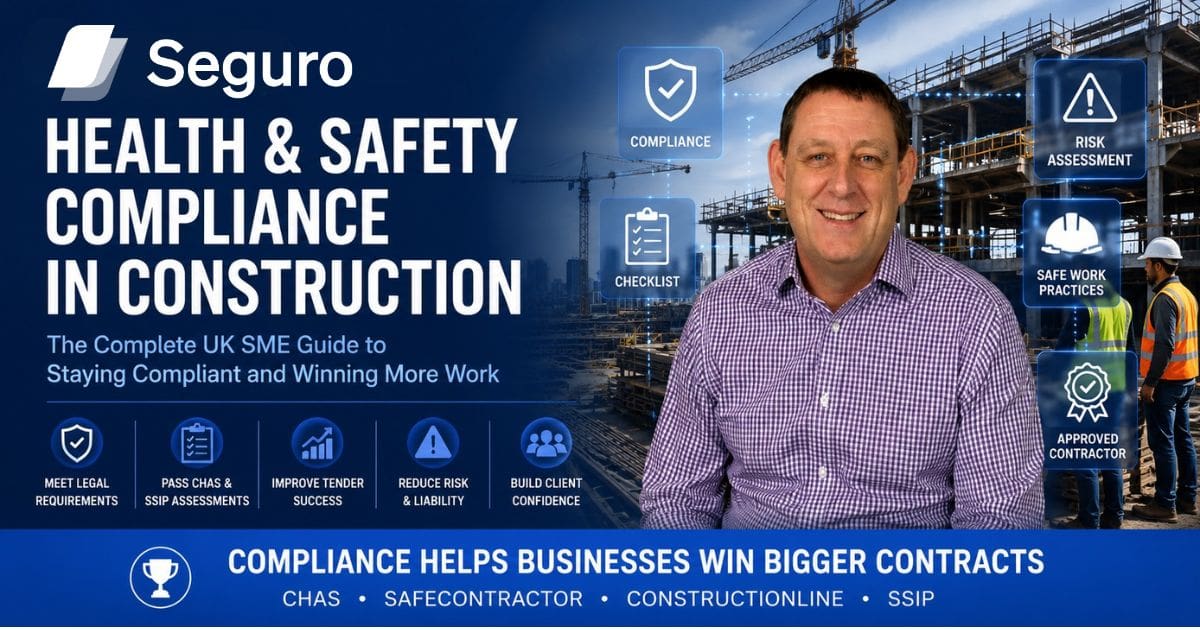
Health & Safety Compliance in Construction – A Complete Guide for UK SMEs

Insight by

amanda

Amanda Lambert

Published on

9 April 2026

Health and safety blog

What Is Health & Safety Compliance in Construction?

Health and safety compliance in construction refers to the systems, processes, and documentation required to ensure that work is carried out safely and in line with UK regulations.

This typically includes:

In the UK, compliance is not optional. It is a legal requirement under legislation such as the Health and Safety at Work etc. Act 1974.

Why Is Health & Safety Compliance Important for Construction Companies?

For small and medium sized construction businesses, health and safety compliance is essential not only for legal protection but also for commercial success.

Key Benefits of Compliance

1. Access to More Work
Many clients and principal contractors require businesses to hold recognised accreditations before they can tender for projects.

2. Improved Credibility
Demonstrating compliance shows that your business operates professionally and responsibly.

3. Reduced Risk
Effective health and safety systems help prevent accidents, delays, and costly legal issues.

4. Stronger Tender Submissions
Pre qualified and compliant companies are more likely to pass initial screening stages.

Contact us to start your journey to compliance

Common Health & Safety Accreditations in the UK

To work on larger or higher-value projects, construction companies are often required to obtain third party accreditation.

The most widely recognised schemes include:

These accreditations assess a company’s health and safety policies, procedures, and track record.

What Are RAMS (Risk Assessments and Method Statements)?

Risk Assessments and Method Statements (RAMS) are essential documents in construction.

  • Risk Assessments identify potential hazards on-site
  • Method Statements explain how work will be carried out safely

Well prepared RAMS are often required before work can begin and are frequently reviewed by clients or principal contractors.

Poorly written or non compliant RAMS are a common reason for project delays or rejected tenders.

The Role of a Competent Person in Health & Safety

UK law requires businesses to appoint a “competent person” to manage health and safety responsibilities.

A competent person must have:

  • Sufficient training and experience
  • Knowledge of relevant regulations
  • The ability to implement effective safety measures

Many SMEs choose to outsource this role to specialist consultancies to ensure full compliance without hiring in-house.

How Seguro Health & Safety Supports Construction Businesses

Seguro Health & Safety provides practical, hands on support to help construction companies achieve and maintain compliance.

Their services include:

  • Accreditation support (CHAS, Constructionline, SafeContractor)
  • RAMS preparation and review
  • Acting as your competent person
  • Ongoing compliance advice and documentation support

This approach helps businesses stay compliant while focusing on delivering projects and growing their operations.

Is Health & Safety a Cost or a Growth Strategy?

Health and safety is often seen as a necessary expense. However, in today’s construction industry, it is better understood as a growth enabler.

The Commercial Impact of Compliance

  • Compliance builds credibility → Clients trust your business
  • Credibility creates access → You qualify for more tenders
  • Access drives revenue → More opportunities to win work

Companies that treat health and safety as part of their business strategy, not just a tick box exercise are better positioned to scale.

Frequently Asked Questions (FAQ)

Do I need health and safety accreditation to win construction work in the UK?

In most cases, yes. Many clients require accreditation such as CHAS or SafeContractor as part of their pre qualification process.

What happens if my business is not compliant?

You may be unable to tender for projects, fail pre qualification checks, or face legal and financial penalties.

Can I outsource health and safety management?

Yes. Many SMEs outsource to specialist consultants who act as their competent person and manage compliance requirements.

How long does it take to get accredited?

This depends on your current documentation and processes, but with expert support, accreditation can often be achieved quickly.

Conclusion

Health and safety compliance is no longer just about meeting legal requirements. For UK construction SMEs, it is a critical factor in winning work, building credibility, and achieving sustainable growth.

By taking a structured and proactive approach, businesses can turn compliance into a competitive advantage.

Contact me today we are here to help 0800 0315404

shape Ask Amanda

Why health & safety training fails on construction sites, and how eLearning is changing It

Insight by

amanda

Amanda Lambert

Published on

27 March 2026

Health and safety blog

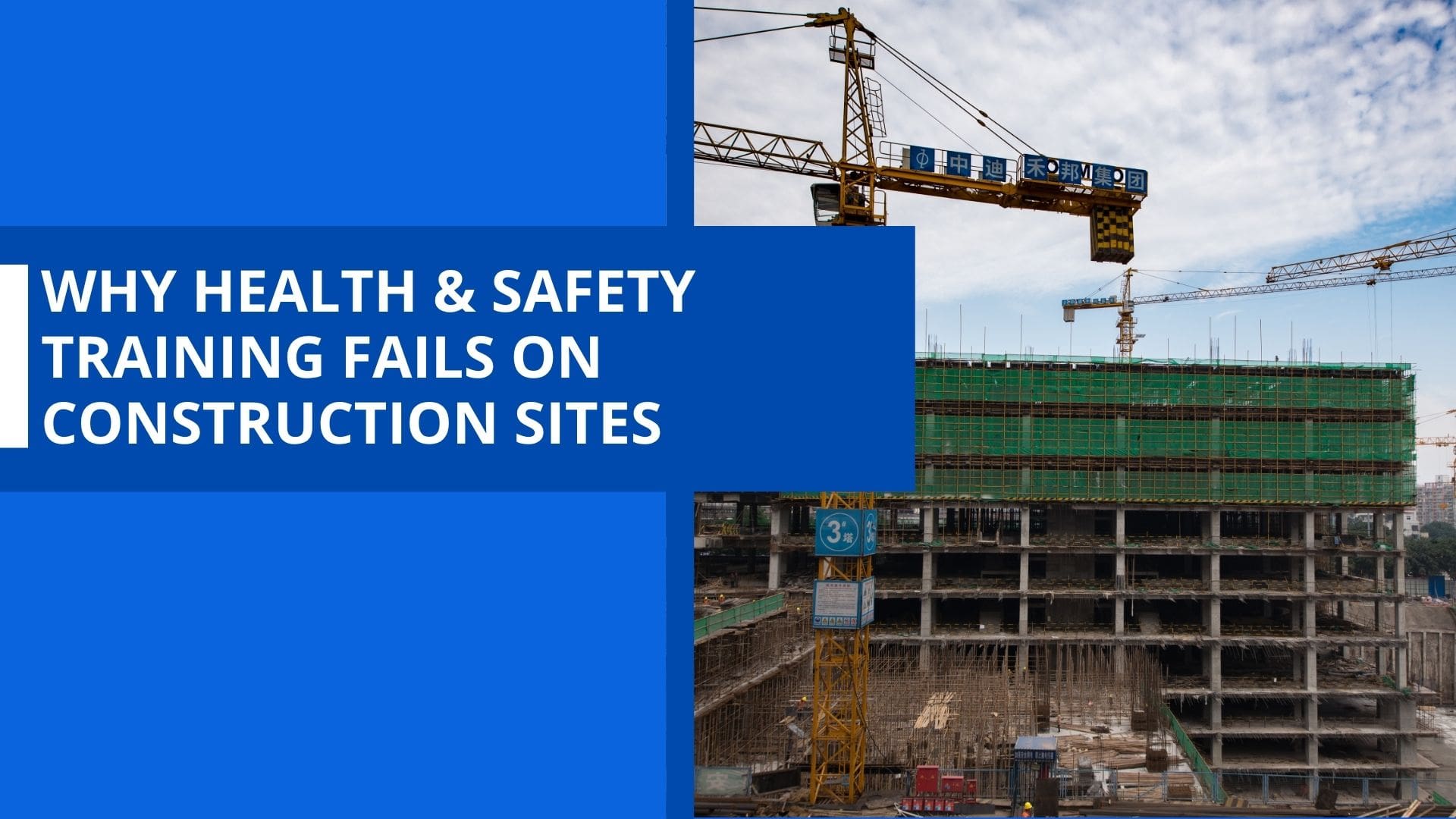
Why Health & Safety Training Fails on Construction Sites, and How eLearning is Changing It

In the construction industry, Health & Safety isn’t optional, it’s critical.

Yet despite ongoing training, incidents still happen. Near misses go unreported. Procedures get forgotten.

Why?

Because most traditional training isn’t designed for how construction actually works.

A typical scenario, operatives pulled off site, sat in a room, run through slide decks, and asked to sign a register.

Compliance achieved.

But safer behaviour? Not guaranteed.

Because in construction, what people remember on site matters far more than what they hear in a classroom.

eLearning is transforming how Health & Safety is delivered across construction, making training more relevant, accessible, and effective in real working environments.

1. Built for Site Based Work

Construction doesn’t happen at desks.

With multiple sites, rotating teams, subcontractors, and tight deadlines, pulling workers into classrooms isn’t always practical.

eLearning allows operatives, supervisors, and contractors to complete training:

  • On site
  • Between tasks
  • On any device

Training fits around the job, not the other way round.

2. Consistency Across Sites and Teams

On large projects or across multiple sites, inconsistent messaging is a real risk.

Different trainers. Different interpretations. Outdated materials.

eLearning standardises delivery so that:

  • Every worker receives the same guidance
  • Content aligns with current UK regulations
  • Site inductions remain consistent across locations

3. More Engaging, More Memorable

Construction is hands on, training should be too.

Modern eLearning uses:

  • Real-life site scenarios
  • Hazard recognition exercises
  • Short, focused modules

This approach helps workers recognise risks in real situations, not just in theory.

4. Cost Effective Without Slowing Projects

Taking teams off site for training can delay work and increase costs.

eLearning reduces:

  • Travel and venue expenses
  • Lost productivity
  • Scheduling disruptions

It also gives site managers visibility over:

  • Who has completed training
  • Knowledge gaps
  • Compliance status in real time

5. Keeps Up With Changing Regulations

Construction regulations and best practices evolve regularly.

With eLearning:

  • Updates can be rolled out instantly
  • Workers stay aligned with current standards
  • No need to wait for the next scheduled training session

The Bigger Picture: Creating Safer Sites

eLearning isn’t just about meeting compliance requirements.

It’s about creating a culture where:

  • Workers actively recognise risks
  • Safe behaviours become routine
  • Accountability is shared across every level of the site

In an industry where environments change daily and risks are high, training needs to be continuous, practical, and accessible.

Final Thought

In construction, safety doesn’t come from ticking boxes.

It comes from what workers remember, and apply, when it matters most.

eLearning helps make that happen.

Use our code EL20 and purchase your eLearning today

Save 20%
shape

Download our FREE Toolbox talks

Insight by

Bob Evans

Bob Evans

Published on

16 March 2026

Health and safety blog

70 FREE Toolbox Talks

Toolbox talks are short health and safety talks. The talks are designed to inform workers about potential hazards they may encounter while performing their duties on site.

The topics discussed directly relate to the tasks and hazards at the worksite. For example, if drainage trenches are to be excavated on site, the site supervisor can talk about the dangers, hazards, good practice and working close to deep excavations, to keep people safe.

Key Benefits of Tool box Talks

Our Free tool box talk documents are written in house by our consultants and cover all the main topics including:

TT1 – Abrasive Wheels

TT2 – Accident Prevention & Control

TT3 – Accident Reporting & Investigation

TT4 – Alcohol and Drugs

TT5 – Asbestos

TT6 – Benefits of Safety

TT7 – Buried Services

TT8 – Cartridge-Operated Tools

TT9 – Chainsaws

TT10 – Control of Dust & Fumes

TT11 – Control of Noise

TT12 – COSHH

TT13 – Electricity on Site

TT14 – Excavations

TT15 – Fire Prevention & Control

TT16 – First Aid

TT17 – General Safety Legislation

TT18 – General Site Health & Safety

TT19 – Health & safety at Work Act 1974

TT20 – Health on Site

TT21 – HFLs & Petroleum Based Adhesives

TT22 – Hoists and Hoist Towers

TT23 – Hydro Demolition

TT24 – Ladders

TT25 – Lead Hazards

TT26 – Legal Duties of Employees

TT27 – Lifting Accessories

TT28 – Lifting Equipment & Operations

TT29 – LPG & Other Compressed Gases

TT30 – Manual Handling

TT31 – Mobile Elevating Work Platforms

TT32 – Mobile Plant

TT33 – Mobile Scaffold Towers

TT34 – Needle-stick Injuries

TT35 – Personal Hygiene

TT36 – Personal Protective Equipment

TT37 – Piling

TT38 – Plant & Equipment

TT39 – Pollution Control

TT40 – Portable, Hand-held Tools

TT41 – Powers of the HSE

TT42 – Protection of Eyes

TT43 – Protection of Skin

TT44 – Risk Assessment & Method Statements

TT45 – Road & Street Safety

TT46 – Safe Stacking of Materials

TT47 – Safe Working at Height

TT48 – Safety in Demolition

TT49 – Safety Inspections & Consultation

TT50 – Safety Nets & Suspension Equipment

TT51 – Safety with Steelwork

TT52 – Security on Site

TT53 – Signallers and Slingers

TT54 – Site Transport

TT55 – Slips, Trips and Falls

TT56 – Sun Safety

TT57 – System Scaffolds

TT58 – Trackside Safety

TT59 – Trestles and Stepladders

TT60 – Tube & Fittings Scaffolding

TT61 – Vehicle Fuels

TT62 – Vibration

TT63 – Waste Management

TT64 – Water Jetting

TT65 – Weil’s Disease

TT66 – Welfare Arrangements

TT67 – Woodworking Machines

TT68 – Working in Confined Spaces

TT69 – Working over Water

TT70 – Young People on Site

Free Toolbox Talks Download

All toolbox talk documents are in MS Word Format so you can easily amend them and bespoke them to your needs. There are over 70 in the pack including an attendance register.

What is SSIP?

Insight by

Bob Evans

Bob Evans

Published on

4 November 2025

Health and safety blog

SSIP Accreditation: What It Is & Why It Matters for Contractors Guide

What is SSIP? Everything construction businesses need to know about the pre-qualification and winning more work.

What Is SSIP?What is SSIP, SSIP accreditation, ssip deem to satisfy

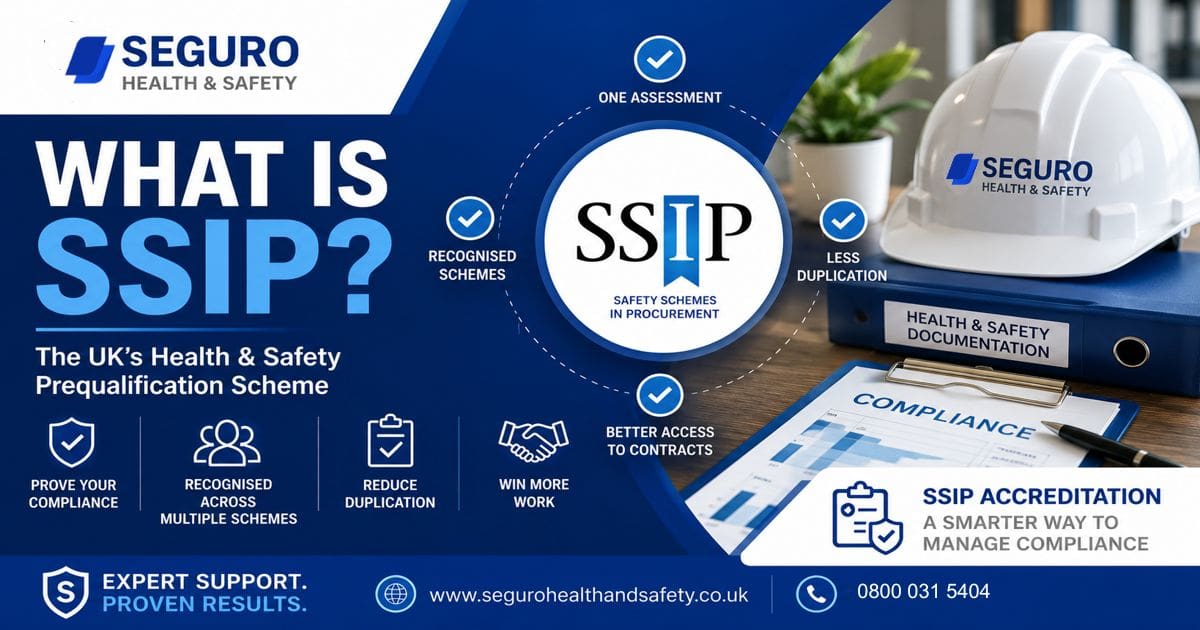
SSIP (Safety Schemes in Procurement) is the UK’s national umbrella organisation for health & safety assessment schemes.
Instead of completing multiple safety accreditations, SSIP allows businesses to gain recognition once and have it accepted by many different buyers.

SSIP includes well-known schemes such as:

If a contractor holds a CHAS, Constructionline, or PQS-approved accreditation, clients can trust that their health & safety systems meet core standards.

Why The Accreditation Matters

SSIP is now one of the most important benchmarks for contractors, subcontractors, and trades in the UK. Here’s why:

1. Win More Work With Recognised Safety Standards

Major contractors, councils, FM companies, and developers increasingly require CHAS, Constructionline, and PQS as part of PQQ or onboarding.

2. Saves Time on Repetitive Safety Pre-Qualification

SSIP prevents businesses from having to complete multiple health & safety assessments for different clients—saving hours of admin every month.

3. Reduces Cost of Compliance

Instead of paying for several accreditations, one SSIP certificate is accepted by many buyers.

4. Demonstrates Legal Compliance

SSIP assessments align with UK safety laws including:

  • Health and Safety at Work Act

  • Management of Health and Safety at Work Regulations

  • CDM Regulations

This reassures clients that your company operates safely and competently.

5. Strengthens Your Brand & Credibility

Displaying an SSIP badge shows customers, inspectors, and project managers that you take safety seriously.

Get Accredited and Win More Work!

What Do The Assessors Check?

To gain accreditation through any approved scheme, your company must provide evidence of:

Health & Safety Management

  • Up-to-date H&S policy

  • Competent person support

  • Safety arrangements

  • Toolbox talks & site inductions

Risk Management

  • Recent RAMS

  • COSHH assessments

  • Site-specific risk controls

Training & Competence

  • CSCS/CPCS evidence

  • Certificates of training

  • Induction process

Incident & Reporting Systems

  • Accident records

  • RIDDOR procedures

  • Near-miss processes

Insurance

  • Employer’s liability

  • Public liability

  • Professional indemnity (if relevant)

If applying for enhanced schemes (e.g., SafePQQ), additional checks cover environmental, quality, and social value standards.

How to Get SSIP Accreditation (Step-by-Step)

Step 1: Choose a Scheme

Decide whether CHAS, SafeContractor, SMAS, or Constructionline best matches your business needs.

Step 2: Complete the Online Assessment

Provide your company details, trade activities, and scope of works.

Step 3: Upload Documentation

Submit your health & safety policy, RAMS, training records, and insurance certificates.

Step 4: Assessment Review

An SSIP auditor reviews everything and may request additional evidence.

Step 5: Receive Your Certificate

Once approved, your business is added to the national database and can display the SSIP badge.

Accreditation lasts 12 months and must be renewed annually.

Most Common Reasons SSIP Applications Fail

Avoid these issues to secure fast approval:

❌ Outdated or missing H&S policy
❌ No recent or adequate RAMS
❌ Missing staff training certificates
❌ Incomplete accident records
❌ Insurance out of date or incorrect
❌ Competent person details missing

Fixing these in advance boosts your first-time pass rate.

SSIP vs Non-SSIP Schemes

Scheme Type Accepted by Buyers? Benefits
SSIP Certified Widely accepted Saves time, reduces cost, proves competence
Non-SSIP Schemes Limited acceptance May require additional paperwork

SSIP is designed to simplify compliance across the entire supply chain.

Get Accredited and Win More Work!

Is it Worth It for Contractors?

Absolutely. The Accreditation helps you:

✔ Win more work
✔ Reduce tendering admin
✔ Get recognised by major contractors
✔ Demonstrate health & safety competence
✔ Strengthen your professional image

If you want to grow in construction, FM, engineering, or local authority supply chains, SSIP is now an essential requirement—not just a “nice to have.”

Health and safety in construction

Insight by

Bob Evans

Bob Evans

Published on

28 October 2025

CHAS

Health and safety in construction

In the fast-paced world of construction, safety is of paramount importance. From home extensions to infrastructure projects that shape our country, the welfare of workers and the public is our first consideration.

When it comes to creating a culture of safety, construction companies must have robust processes and systems in place.

  • Health and safety legislation
  • Common hazards in the construction industry
  • Implementing health and safety on construction sites
  • Safety planning and risk assessment in construction projects
  • Personal protective equipment (PPE) in construction
  • Training and education for construction safety
  • Construction site inspections and audits
  • Creating a culture of safety on construction sites
  • Site Manager Compliance Kit
  • SSIP Accreditation
  • HSG150 health and safety in construction

Health and safety legislation

Health and safety legislation in the workplace is the Health and Safety at Work Act 1974This legislation sets out the duties of employers, employees, and others. 

Responsibilities of employers

  • Assess risks: Identify risks to employees, customers, and others 
  • Create a policy: Have a written health and safety policy if they employ five or more people 
  • Provide training: Ensure staff are adequately trained 
  • Provide welfare: Ensure adequate welfare provisions are available 
  • Provide information: Ensure employees have access to relevant information, instruction, and supervision 
  • Consult employees: Consult employees about risks and preventive measures 

Responsibilities of employees 

  • Have a duty of care to themselves and others

Other construction-related health and safety legislation

Common hazards in the construction industry

The construction industry is fraught with hazards that can lead to serious accidents if not properly managed.

  • There were 51 fatal injuries to workers in 2023/24
  • 47,000 workers sustained non-fatal injuries at work averaged over the three years 2021/22-2023/24

One of the most prevalent risks is falls, which can occur from heights such as scaffolding, ladders, or roofs.

Another common hazard is the risk of being struck by objects. This can happen when tools or materials are improperly secured or when heavy machinery is involved.

Construction site workers are often close to moving equipment, and the potential for accidents increases.

Exposure to hazardous substances, such as asbestos and silica dust, poses a significant risk.

Implementing health and safety on construction sites

Implementing health and safety processes and systems on construction sites is essential. Many clients now insist that contractors hold a minimum health and safety standard. SSIP (Safety Schemes in Procurement) implemented the standard. SSIP is an umbrella organisation formed in 2009 to reduce the duplication of health and safety assessments. CHAS and PQS are suppliers of the standard.

Below is a health and safety checklist for a typical site construction setup

Safety planning and risk assessment in construction projects

Planning work operations is a key factor in keeping people safe on-site. The process is to develop a method statement of how the work will be executed and then develop a risk assessment. The risk assessment analyses the risks and looks at ways to mitigate them. The project planner may adjust the method statements if the risk assessment finds that the risk is too high.

Ready for use Risk assessment and method statements templates.

Personal protective equipment (PPE) in construction

Personal protective equipment (PPE) is the last line of defence to keep people safe. PPE can include the following:

  • Hard hat
  • His visibility vests and trousers
  • Ear protection
  • Eye protection
  • Lung protection
  • Hand protection
  • Skin protection
  • Foot protection

The site manager must ensure that their workers are provided with the necessary equipment and trained on how to use it effectively. A PPE register is vital to control who had what and when.

Site training

Training and education are fundamental for a safe construction site. On-site training includes:

On-site e-learning to train site workers saves time and cost.

A training register is vital to control who had what and when.

Construction site inspections and audits

Regular inspections and audits of construction sites are critical for ensuring ongoing health and safety compliance.

Inspections help identify potential hazards that may have arisen since the last inspection and ensure that safety measures are effectively implemented.

Inspections can be conducted by internal safety officers or external auditors, providing an objective perspective on the effectiveness of the site’s safety practices.

Creating a culture of safety on construction sites

Creating a safety culture begins with a commitment from leadership to prioritise health and safety measures at all levels of the organisation.

By communicating that health and safety are priorities in the company culture, workers will feel empowered to work safely and promote safety with their workmates.

Site Manager Compliance Kit

Overview

The Site Manager Compliance Kit is an essential tool for every contractor. The Compliance Kit contains all of the information and documentation needed to comply with the requirements of today’s Safety Regulations.

Includes

  • Construction Phase Health and Safety Plan (CDM 2015), which can be easily amended and edited for specific projects
  • 70 Toolbox Talk Documents
  • 65 Completed Risk Assessments
  • 41 COSHH Assessments
  • Site inspection Check Sheets – Scaffold, Dumper, Excavator etc
  • Permits to Work – Confined Space, Excavation, Hot Work, Asbestos, etc
  • Site set-up check sheet
  • Site Induction
  • Site Rules
  • Site Registers – PPE, Plant & Equipment etc

Review the Site Manager Compliance Kit

CHAS Accreditation

If you want to implement CHAS, we can help you achieve this goal.

The CHAS assessment standards and requirements are listed below.

  • Policy
  • Occupational Health
  • Behavioural Management
  • Enforcement Actions
  • Accident Reporting and Investigation
  • Fleet Operations / Management Scheme
  • Competent Advice – Corporate and Construction
  • Drug and Alcohol Policy
  • Training and Information
  • Qualifications and Experience
  • Monitoring, Audit and Review
  • Risk Assessment and Safe System of Work
  • Workforce Involvement
  • Co-operation and Co-ordination
  • Welfare Provision
  • Subcontractors and Sub-consultants
  • Responsible Person
  • Contractor
  • Declaration

Review CHAS accreditation

HSG150 health and safety in construction

HSG150 Health and Safety in Construction explains the essential tasks for achieving healthy and safe construction sites.

It helps the reader to identify hazards and control risks and explains how to plan, organise, control, monitor and review health and safety throughout the life of a project.

It is aimed at everybody involved in construction work, including clients, designers, contractors and individual workers. Clients, designers and others who specify construction work may also find the book useful.

Download HSG150

Benefits of using Elearning

Insight by

amanda

Amanda Lambert

Published on

21 October 2025

Health and safety blog

What are the benefits of using Elearning?

There are a number of benefits to Elearning whether you choose to use it on its own, or to enhance any existing in house training you may provide.

It saves time and is cost effective

Instead of having to arrange a training session at a set time and place you can carry out Elearning at a time and place that suits you. This helps to reduce the time taken away from the office, removes travel costs and increases workplace productivity.

Learning with 24/7 access

Many traditional training courses operate within normal 9-5 office hours. Meaning you and your staff have to leave your jobs and take time out of the office to attend. This can also mean additional hassle of travel to and from the venue. Most Elearning courses have an average completion time of an hour, and CPD approved courses allow once completed, to print out certificates of proof.

It’s discreet

Not every employee will feel comfortable learning in a large group. We all learn at different speeds and levels and may find some topics harder to understand than others. Elearning allows your staff to learn on their own and to tackle the subject at their own pace.  The interactive tasks that are set ensure a thorough understanding throughout each module.

If your looking for any Health & Safety Elearning courses we have some that you may be interested in.

Available health and safety online training courses

You can also select a course you are interested in and click on the FREE trial button on the course. Select any courses from the list below:

The courses available are:

Need support

Once you have seen what we offer, don’t hesitate to get in touch, and we will be happy to set you up with your health and safety online training solution.

If you get stuck or need some help feel free to get in touch.

Do i need a Health & Safety Policy

Insight by

amanda

Amanda Lambert

Published on

19 October 2025

Health and safety blog

Do I need a Health & Safety Policy

It is a legal requirement to have a Health & Safety Policy in place in you have more than 5 employees. Employees are defined as someone who you pay through the PAYE system, this does not include anyone who you use as a subcontractor.

Health and Safety at Work etc Act 1974. Often referred to as HASAW or HSW, this Act of Parliament is the main piece of UK health and safety legislation. It places a duty on all employers “to ensure, so far as is reasonably practicable, the health, safety and welfare at work” of all their employees.

Less than 5 employees

There may also be a time when you have less than 5 employees and you are asked for a Health & Safety Policy. This can occur if you want to become a supplier to a large company who expect a policy no matter how many employees you have. If this is their policy they will expect it from every supplier with no exception, we can help you to develop a company policy at a reasonable price.

How to write the policy

A policy is a written statement which has three essential parts:

1) Health & Safety Policy

The health and safety policy details a statement of intent. The statement of intent details your aims and objectives, health and safety policy, processes and systems to prevent accidents, train your employees, supply PPE, etc. The policy is signed and dated by the most senior person, the managing director.

(2) Organisation of Health and Safety – Roles and Responsibilities

The organisation of health and safety is best done by developing an organisation chart, with the most senior person at the top, then detailing the people who are responsible for the day-to-day running of all matters concerning health and safety. An example is:

  • Managing director
  • Health and safety advisor
  • Fire safety manager
  • Health and safety training manager
  • Risk assessments and method statements manager
  • PPE manager
  • Control of substances hazardous to health COSHH manager

In small businesses, one person may have many roles

3) Arrangements for health and safety – How are risks managed?

The arrangements for health and safety should detail how the organisation aims to achieve its aims. For example:

  • Develop risk assessments
  • Training of people
  • Consulting with people
  • Fire and emergency arrangements
  • First aid arrangements
  • Reporting of accidents, injuries and dangerous incidents
  • Arrangements for working at height, manual handling, etc.

Buy a policy

We have written several health and safety policies. Click on the link to review them: Health and safety policies.

We will write a bespoke policy for you if you can’t see your company type above.

Please get in touch if you would like some free advise. Complete out contact form or call 0800 031 5404.

How can i check if someone is SSIP registered?

Insight by

amanda

Amanda Lambert

Published on

18 September 2025

Accreditations

Introduction

If you are a construction client looking to check whether the contractor you intend to employ is SSIP (Safety Schemes in Procurement) registered, look no further! We will show you how to determine whether someone is SSIP-registered, giving you the peace of mind you need before starting your project.

Get Accredited and Win More Work!

Contractor

If you are a contractor looking to become SSIP registered, you will need to select an accreditation company. The accreditation companies we work with are:

CHAS
PQS
ConstructionLine
Safe contractor
SMAS
CQMA
Builders profile
Evetta
Other

The most expensive is CHAS, and the least costly is PQS. Due to the Deem to Satisfy system by SSIP, a PQS accreditation is equivalent to a CHAS accreditation, and for a small fee, you can obtain certificates for both.

The driver for selection is normally your customer; if they insist on CHAS, you can get accredited with PQS and request a certificate for CHAS within the process.

Independent Advice

Feel free to call us, and we can advise you on the best selection for your needs. We have completed thousands of applications and understand the market inside out. We don’t mind which company you select; the assessment process is the same, thanks to SSIP.

Get Accredited and Win More Work!

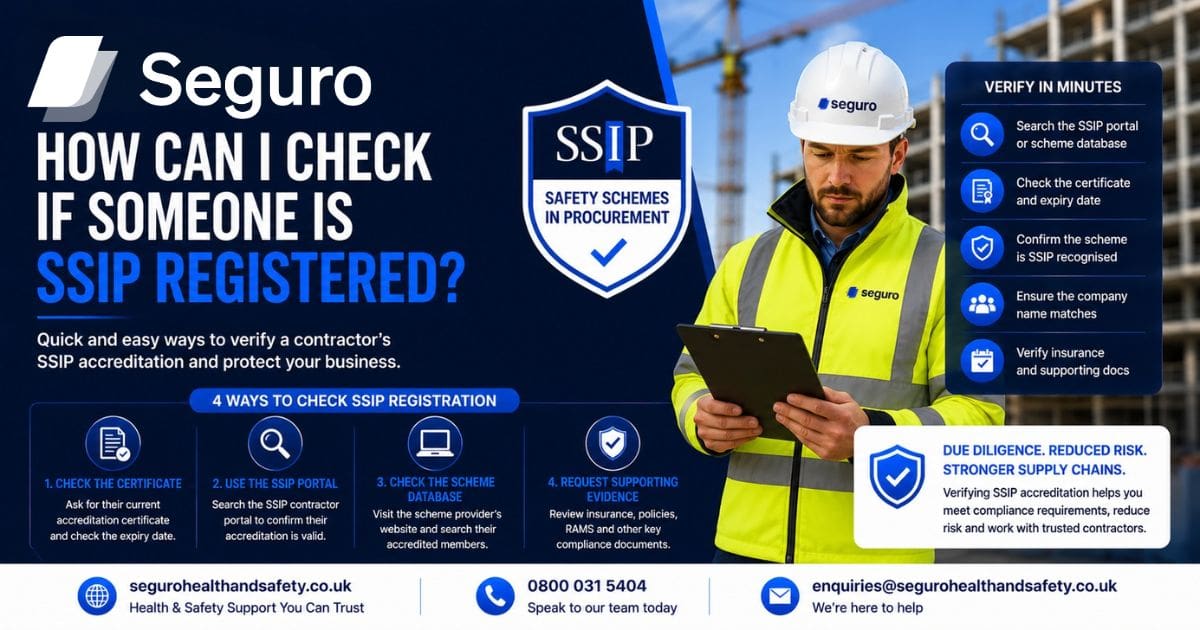
Checking if a contractor is SSIP registered is straightforward

Go to the SSIP website and click onto the SSIP Portal.

In the search section type in the contractor name and press enter. If they are registered, the SSIP website. portal will give you the registration and renewal date details.

In order to find out the details and check it is the correct company you will need:

  • Company full registered
  • Registered address

Contacting the company and requesting a copy of their SSIP certificate and any additional and relevant documentation is also advisable. They should be willing to provide you with this information if they are a reputable company.

If you are not happy with the work someone has done for you this would not fall under SSIP. You would need to go to trading standards if you cannot resolve the issue with the company. Trading standards website

Testimonial

Ash Electrics

We have now received our Gold award, with 100% thanks to yourselves.

I will share our feedback on your service but just to say a huge thank you, you have always been helpful and supportive and that has been very much appreciated.

With very best wishes

Jane

All your Health & Safety requirements in one place

Insight by

amanda

Amanda Lambert

Published on

18 June 2025

Health and safety blog

All your H&S requirements in one place

Here at Seguro we can be a one stop shop for your safety needs. We can help you with one off client requests or by being your competent person providing you with our full Safety package the choice is yours.

All our our clients have different needs so we can tailor a package to fit your Health & Safety requirements.

Competent Person

We provide a full Health & Safety Management System including a policy, employee handbook and an environmental policy. Expert advice is available for you 24/7.

Accreditation

If your looking for an accreditation but not sure which one we can recommend one to suit your individual needs

We can help you to provide the paperwork needed to enable you to show you are capable of working safely. These vary depending on what accreditation you are looking to complete.

We stay with you until the accreditation is achieved.

Risk Assessments & Method Statements

We have a full library of Risk Assessments & Method Statements available for you to purchase from as little as £10. All of our documents are available in word format for you to be able to amend and use as you need in your business.

examples

Safety Advisor

This is a support service for less than 5 employees, this comes with expert advice as well as access to our online documents and Risk assessments. This can be purchased separately or comes free with accreditation applications for less than 5 employees.

We offer many more services including PQQ preparation, Construction Phase Plan preparation. Why not visit our website and see if we can help you with any issues you have now and throughout 2025.

Complete the form below, and we will be happy to provide you with assistance.


    I confirm I have read and agree to the Seguro Health and Safety Consultants Privacy Policy.