Close Navigation

Search

Common Reasons CHAS Applications Fail and How to Avoid Them

Insight by

Bob Evans

Bob Evans

Published on

2 May 2026

CHAS

Top Reasons CHAS Applications Fail

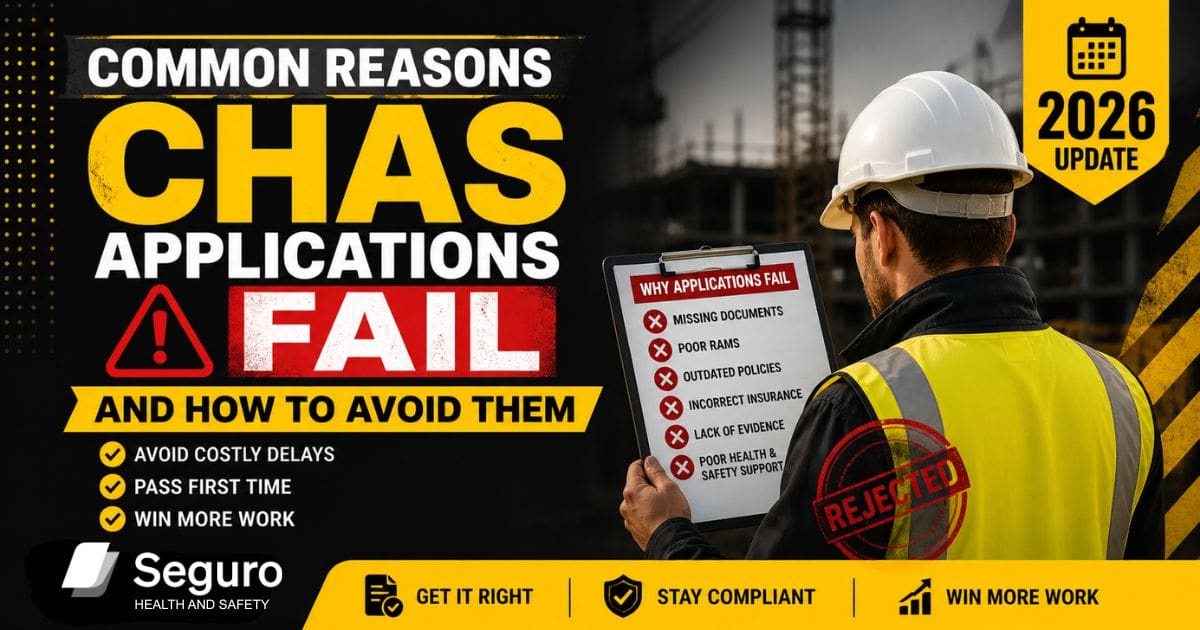
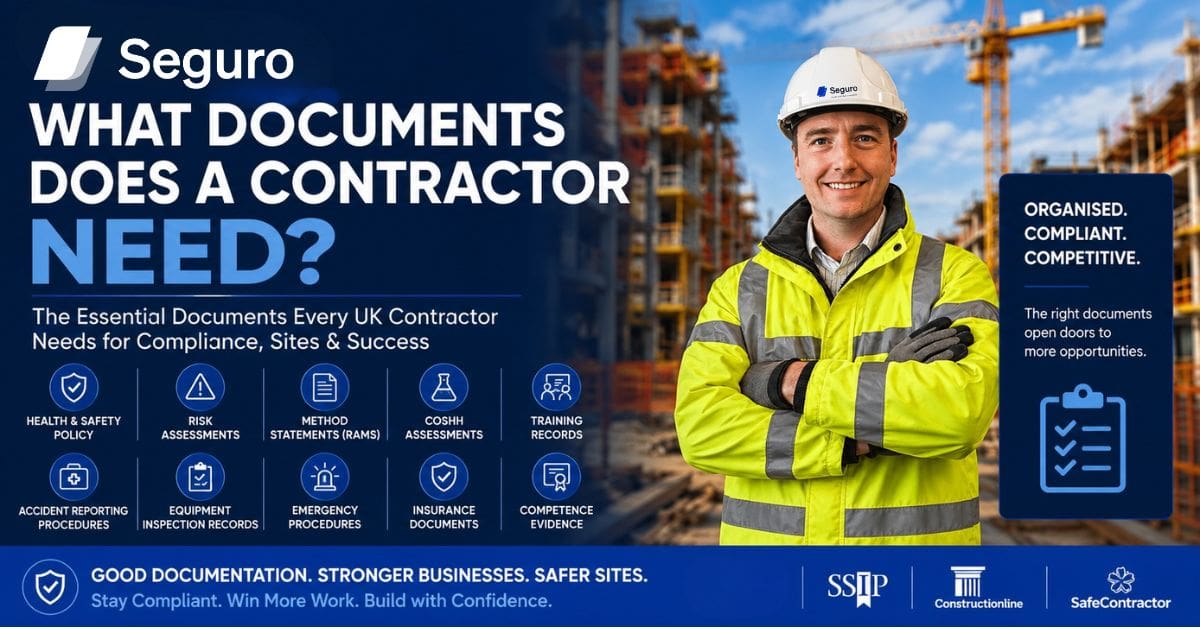
CHAS applications fail because documents are missing, outdated, inconsistent or too generic. The most common issues are poor RAMS, incorrect insurance and lack of competent health and safety support.

To avoid these issues completely, follow our step-by-step guide to getting CHAS accreditation.

1. Missing Documents

The most frequent issue is simply failing to provide all required evidence.
Common gaps include:
  • No health and safety policy
  • Missing RAMS
  • No training records
  • Incomplete accident procedures
If it’s not uploaded, it doesn’t exist in the assessor’s view.

2. Outdated or Unsigned Health & Safety Policy

Your policy must:
  • Be reviewed within the last 12 months.
  • Be signed and dated
  • Reflect your current business activities.
A generic or outdated policy is a red flag for assessors.

3. Poorly Written RAMS (Risk Assessments & Method Statements)

Weak RAMS are one of the biggest failure points.
Typical issues:
  • Too generic (“copy and paste” templates)
  • Not specific to your actual work
  • Missing control measures
  • No evidence of review or communication
RAMS must show real understanding of risk, not just paperwork.

4. Incorrect or Mismatched Insurance

Insurance details must:
  • Match your company name exactly.
  • Be in date
  • Cover your actual work activities.
Common mistakes:
  • Expired policies
  • Wrong business name
  • Insufficient cover

5. Missing or Inadequate Training Records

CHAS expects evidence of competence.
Failures often happen when:
  • No training records are provided
  • Training is out of date.
  • No evidence for high-risk activities
If you carry out specialist work, training must reflect it.

6. No Competent Health & Safety Advisor

Under UK regulations, businesses must have access to a competent person.
Applications fail when:
  • No advisor is identified.
  • No evidence of competence is provided
  • Advice appears generic or non-specific.
This is a key compliance requirement, not optional.

7. Weak Accident & Incident Procedures

Assessors expect clear procedures for:
  • Reporting accidents
  • Recording incidents
  • Investigating issues
Common problems:
  • Missing process
  • Too vague
  • No clear responsibility

8. Inconsistent Information Across Documents

This is a hidden but critical issue.
Examples:
Inconsistency = lack of control → likely failure

How to Pass CHAS First Time

To avoid CHAS rejection reasons
✔ Use up-to-date, tailored documents
✔ Ensure all information is consistent
✔ Provide clear evidence of competence
✔ Submit complete documentation
✔ Get expert support if unsure
Most failures come down to not meeting the CHAS assessment criteria properly.

Final Thought

Most CHAS failures are avoidable.
They don’t happen because businesses are unsafe…
They happen because the evidence doesn’t prove they are safe.
If you want to pass the first time, our CHAS support service can handle the process for you.

CALL Amanda on 0800 031 5404 to get started

Pass with ease
shape Ask Amanda

Frequently asked questions

Why do CHAS applications fail?

CHAS applications commonly fail because documents are missing, outdated, inconsistent or too generic. Common issues include poor RAMS, expired insurance, missing training records, unsigned health and safety policies and lack of competent health and safety advice.

What is the most common reason a CHAS application fails?

One of the most common reasons a CHAS application fails is missing or incomplete evidence. If required documents, such as RAMS, policies, insurance certificates, training records, or accident procedures, are not provided, the assessor cannot confirm compliance.

Can poor RAMS cause a CHAS application to fail?

Yes. Poor RAMS can cause a CHAS application to fail if they are too generic, not relevant to the work being carried out, lack suitable control measures, or lack evidence that workers understand them.

Can outdated policies fail CHAS?

Yes. A health and safety policy that is unsigned, undated, out of date or not relevant ensures all documents are complete, current, and consistent. Use suitable RAMS, provide training evidence, check insurance details, include accident procedures and ensure you can demonstrate access to competent health and safety advice.

Does insurance need to match the CHAS application?

Yes. Insurance documents should match the company name and business activities stated in the CHAS application. Expired policies, incorrect company names or insufficient cover can delay or fail an application.

How can I avoid failing CHAS?

To avoid failing CHAS, ensure all documents are complete, up to date, and consistent. Use suitable RAMS, provide training evidence, check insurance details, include accident procedures and ensure you can demonstrate access to competent health and safety advice.

Can Seguro help fix a failed CHAS application?

Yes. Seguro Health and Safety can help review a failed or delayed CHAS application, identify what is missing, prepare suitable documents, upload evidence and respond to assessor queries. Failure to comply with the company’s current activities can lead to CHAS queries or rejection. Policies should be current, signed and reviewed regularly.

Related CHAS Guides

How to Get CHAS Accreditation – Step-by-Step Guide for 2026

Insight by

Bob Evans

Bob Evans

Published on

29 April 2026

CHAS

How to Get CHAS Accreditation: Complete Guide (2026)

What is CHAS?

CHAS (The Contractors Health and Safety Assessment Scheme) is a UK accreditation that proves your business meets recognised health and safety standards. It is widely used in construction, facilities management, and public-sector procurement.

CHAS accreditation helps you:

  • Win more tenders
  • Demonstrate compliance with health and safety law
  • Reduce contractor onboarding checks
  • Build credibility with clients
  • Align with CDM 2015 competency requirements

Quick Answer: How to Get CHAS Accreditation

To get CHAS, you must:

  1. Choose your CHAS level (CHAS Basic, CHAS Advanced, or CHAS Elite).
  2. Register your business on the CHAS portal.
  3. Upload evidence of your health and safety management systems.
  4. Provide policies, training records, insurance, RAMS, and competence documentation.
  5. Wait for CHAS assessors to review your application.
  6. Respond to any improvement requests.
  7. Receive your certificate and listing once approved.
  8. If you’re unsure what CHAS actually involves, start with our guide on what CHAS accreditation is.


CHAS Accreditation Levels (2026)

1. CHAS Basic (Core H&S)

Covers:

  • Health & safety policy
  • Risk assessments & method statements
  • Training & competence
  • Accident reporting
  • First aid
  • Basic legal compliance

Suitable for small contractors or sole traders.

2. CHAS Advanced (PAS 91 Compliant)

Includes everything in Basic PLUS:

  • Environmental management
  • Quality management
  • Equal opportunities
  • Anti-bribery & corruption
  • Financial standing

Often required in public-sector tenders.

3. CHAS Elite (SSIP + Common Assessment Standard)

Highest level covers:

  • Health & safety
  • Quality
  • Environmental
  • Financial
  • Sustainability
  • GDPR/data protection
  • Modern slavery & corporate responsibility

Often required for major contractors, councils, housing associations.

Step-by-Step: How to Get CHAS Accreditation

Step 1 – Choose Your CHAS Level

The level you need depends on the clients you want to work with.

Construction companies usually require:

  • Basic for subcontractors
  • Advanced or Elite for principal contractors or tender-heavy work

Step 2 – Register on the CHAS Portal

Go to the CHAS portal and create an account.
You’ll enter:

  • Company name
  • Address
  • SIC code
  • Number of employees
  • Sector (construction, electrical, plumbing, etc.)

Step 3 – Gather Your Evidence

This is the most important part. Check out the CHAS criteria you will need.

Required Documents for CHAS Basic

You must upload:

  • Health & Safety Policy (signed & dated)
  • Risk Assessments
  • Method Statements
  • COSHH assessments (if relevant)
  • Accident/incident reporting process
  • Training certificates (CSCS, asbestos awareness, manual handling, etc.)
  • Proof of competence for workers
  • Subcontractor management process
  • Insurance documents (EL/PL)

Additional Documents for CHAS Advanced

  • Environmental Policy
  • Waste management
  • Equality & Diversity Policy
  • Quality Policy
  • Anti-bribery Policy

Additional Documents for CHAS Elite

  • GDPR processes
  • Modern slavery statement
  • Corporate social responsibility policy
  • Supply chain compliance processes

Step 4 – Upload Everything to the Portal

CHAS guides you section by section.
You will tick off each compliance requirement as you upload evidence.

Step 5 – Assessment Begins

A CHAS assessor reviews your documents for compliance with:

  • HSE requirements
  • CDM 2015 duties
  • SSIP standards
  • PAS 91 (Advanced)
  • CAS standard (Elite)

Typical review time: 3/10 days

Step 6 – Respond to Any Actions

If something is missing or incorrect, CHAS will send an “Action Request.”

Most common reasons for rejection:

❌ Out-of-date H&S policy
❌ Missing risk assessments
❌ Insurance expired
❌ No evidence of training
❌ No subcontractor management system

Once you fix the issues, resubmit.

Step 7 – Receive Your CHAS Certificate

Once approved, you get:

  • Certificate (PDF)
  • Digital logo for your website
  • Listing on the CHAS contractor search

CHAS is valid for 12 months.

How much does CHAS cost?

Before applying, it’s worth understanding the costs of applying for CHAS accreditation so you can budget properly.

CHAS assessment criteria

You’ll also need to meet the CHAS assessment criteria, which we break down in detail here.

How to pass the first time and avoid delays

If your application is delayed, these are the most common reasons CHAS applications fail and how to avoid them.

CHAS Support

Need help getting approved? Our CHAS support service handles the full process for you.

Frequently asked questions

How do I get CHAS accreditation?

To get CHAS accreditation, you need to choose the correct CHAS level, complete the online application, upload your health and safety evidence, respond to any assessor queries and wait for approval. Alternatively, Seguro can do it for you.

What documents do I need for CHAS accreditation?

Typical documents needed for CHAS accreditation include a health and safety policy, RAMS, training records, insurance certificates, accident reporting procedures, first aid arrangements and evidence of competent health and safety advice.

How long does CHAS accreditation take?

CHAS accreditation timescales depend on how complete and accurate your documents are. Applications can be delayed if information is missing, policies are outdated, RAMS are too generic or insurance details do not match the application.

What is the difference between CHAS Standard, Advanced and Elite?

CHAS Standard focuses on core health and safety compliance. CHAS Advanced includes broader checks, including environmental, quality, and financial information. CHAS Elite is aligned with the Common Assessment Standard and is the most comprehensive level.

Why do CHAS applications get delayed?

CHAS applications are often delayed because documents are missing, policies are unsigned or out of date, RAMS are not suitable, training records are incomplete, insurance documents are incorrect, or assessor queries are not answered quickly.

How can I pass CHAS the first time?

To improve your chances of passing CHAS the first time, make sure all documents are complete, current, consistent and relevant to your work. Check RAMS, training evidence, insurance, accident procedures and competent person details before submitting.

Can Seguro help me get CHAS accredited?

Yes. Seguro Health and Safety can help contractors get CHAS accredited by preparing documents, checking evidence, completing the application, uploading information to the CHAS portal and responding to assessor queries. Learn more about how Seguro can support you with the complete service.

CALL Amanda on 0800 031 5404 to get started

Get a price
shape

Related CHAS Guides

Do I need to be a CHAS accredited contractor?

Insight by

Bob Evans

Bob Evans

Published on

10 April 2026

CHAS

Do You Need to Be a CHAS Accredited Contractor?

If you’re self-employed or running a small construction business, a common question is:

“Do I actually need CHAS accreditation to work?”

The honest answer is: it depends on the type of work you do and who you work for.

Quick Answer

  • Domestic work only? → No, not strictly required
  • Working for contractors, councils, or commercial clients? → Yes, almost always required
  • Want to win more contracts? → CHAS or SSIP is essential
  • If you’re not accredited yet, start with our CHAS accreditation step-by-step guide.

Domestic Market

If you only work directly for homeowners:

  • You are not legally required to have CHAS accreditation
  • Most domestic clients won’t ask for it

However, don’t mistake this for no responsibility.

Under UK health and safety law, you still have a duty of care to:

  • Yourself
  • Anyone working with you
  • Members of the public

If something goes wrong (accident, injury, unsafe work), you are still liable, with or without CHAS.

Bottom line: You can operate without CHAS in domestic work, but you still need proper safety systems in place.

Construction & Commercial Market

If you want to work in the wider construction industry:

CHAS (or equivalent) becomes essential.

Main contractors, developers, housing providers, and local authorities will almost always require:

  • Proof of health & safety compliance
  • A recognised accreditation standard
  • Evidence before allowing you on-site

The most widely recognised scheme is:

  • CHAS

But it’s part of a wider system called:

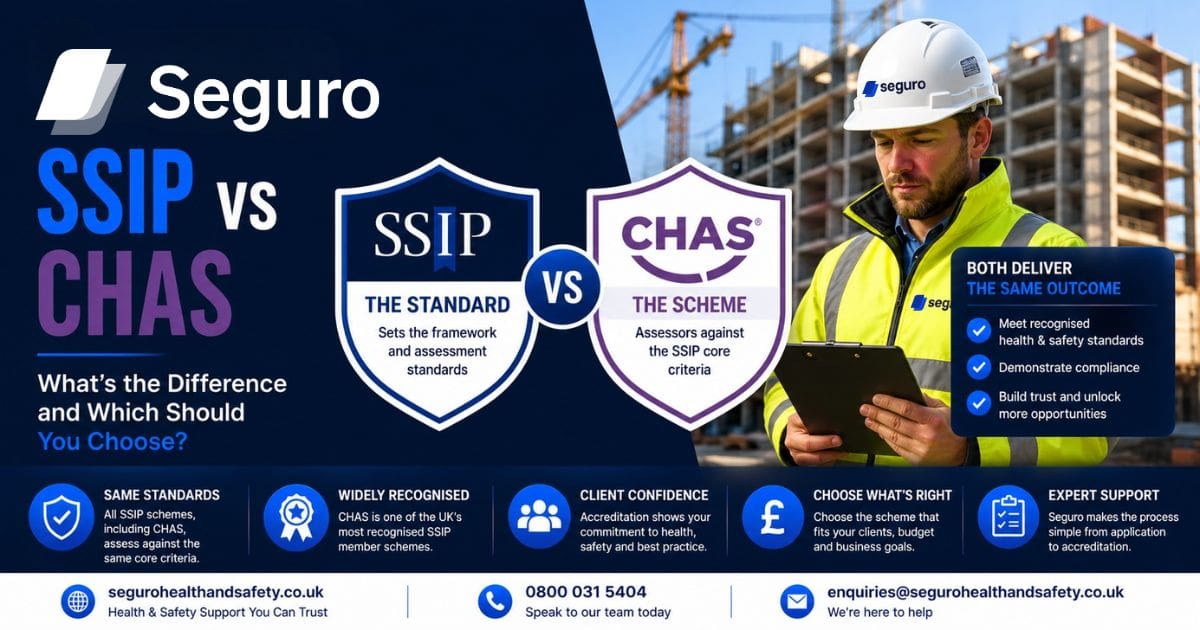
  • Safety Schemes in Procurement

All SSIP schemes assess the same core criteria, including:

  • Constructionline
  • SMAS Worksafe
  • SafeContractor

This means:

You don’t have to choose CHAS, but you must have an SSIP accreditation to compete.

Does Business Size Matter?

Yes, especially when it comes to compliance requirements.

Sole traders & businesses under 5 employees

  • You still need health & safety systems
  • You can get CHAS / SSIP accreditation
  • You don’t legally need a full-time safety advisor

Businesses with 5+ employees (including subcontractors)

  • You must have access to a competent health & safety advisor
  • This is a legal requirement under:
    • Management of Health and Safety at Work Regulations 1999

Most small contractors meet this by using a retained (outsourced) competent person service

What Does CHAS Actually Assess?

CHAS (and all SSIP schemes) measure your business against core health & safety standards.

These include:

  • Health & Safety Policy
  • Access to Competent Advice
  • Training and Competence
  • Risk Assessments & Method Statements (RAMS)
  • Monitoring, Audit & Review
  • Workforce Engagement
  • Accident Reporting & History
  • Subcontractor Management
  • Cooperation & Communication
  • Welfare Provision
  • Hazard Identification & Control

In simple terms, CHAS proves your business can work safely and professionally on construction projects.

Why Most Contractors Choose CHAS Anyway

Even if it’s not mandatory for your current work, many contractors get accredited because it:

  • Opens doors to higher-value contracts
  • Helps you pass pre-qualification questionnaires (PQQs)
  • Builds trust with clients instantly
  • Reduces repeated compliance checks

Final Verdict

  • Domestic-only work? CHAS is optional, but safety compliance is not
  • Construction or commercial work? CHAS or SSIP is effectively required
  • Want to grow your business? Accreditation becomes a competitive advantage
  • To stay compliant, it’s important to understand CHAS renewal requirements each year.

Simple Rule to Remember

No CHAS = limited opportunities
CHAS (or SSIP) = access to the real construction market

Need help maintaining your status? Our CHAS support service is here to help.

CALL Amanda on 0800 031 5404 for immediate support

Get Started
shape Ask Amanda

Frequently asked questions

Do I need to be a CHAS accredited contractor?

You do not normally need CHAS accreditation if you only work directly for domestic homeowners. However, if you want to work for main contractors, commercial clients, housing providers, developers or local authorities, CHAS or another SSIP accreditation is often required before you can start work.

Is CHAS a legal requirement?

CHAS accreditation itself is not a legal requirement. However, UK contractors still have legal duties to manage health and safety. CHAS helps demonstrate that your business has suitable health and safety arrangements in place.

Do domestic contractors need CHAS accreditation?

Domestic contractors are rarely asked by private homeowners for CHAS accreditation. However, they still have a duty of care to protect themselves, workers, subcontractors and members of the public from harm.

Do small contractors need CHAS accreditation?

Small contractors often need CHAS accreditation to work in the commercial construction market. Main contractors, local authorities and larger clients commonly require CHAS or another SSIP certificate before allowing subcontractors onto the site.

Can I use another SSIP scheme instead of CHAS?

Yes. CHAS is one SSIP accreditation provider, but other schemes, such as Constructionline, SafeContractor, SMAS, CQMS, and PQS, can also assess contractors against the same SSIP core criteria. The right choice depends on what your client or tender requires.

Do I need a competent health and safety advisor for CHAS?

If you employ five or more people, including subcontractors or self-employed workers under your control, you must have access to competent health and safety advice. Many small contractors meet this requirement by using an outsourced competent person service.

What does CHAS check?

CHAS checks whether your business has suitable health and safety arrangements. This includes your health and safety policy, competent advice, training records, risk assessments, method statements, accident reporting, workforce involvement, subcontractor management and welfare arrangements. Review the CHAS assessment criteria.

Why do main contractors ask for CHAS?

Main contractors use CHAS because they must control health and safety risks across their supply chains. CHAS gives them evidence that a subcontractor has been assessed against recognised SSIP health and safety standards.

Related CHAS Guides

Health and safety in construction

Insight by

Bob Evans

Bob Evans

Published on

28 October 2025

CHAS

Health and safety in construction

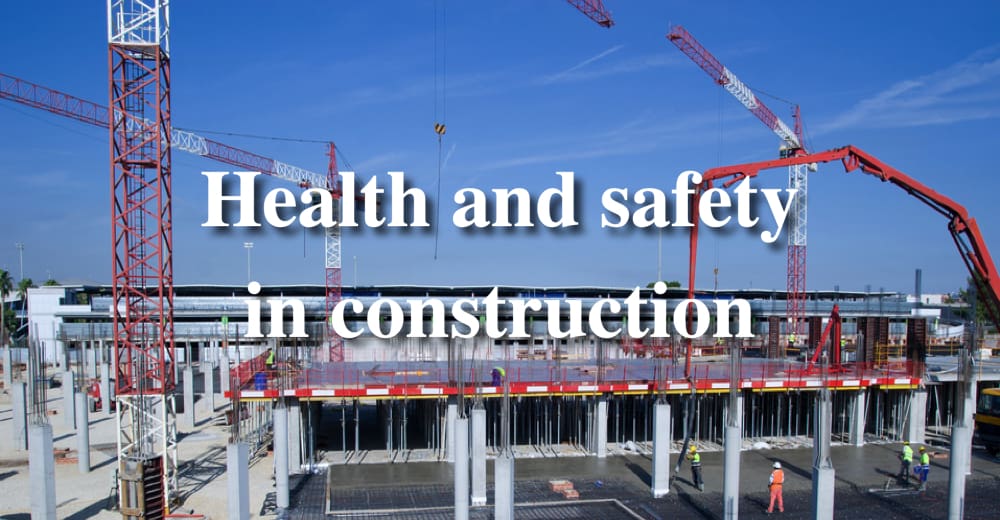
In the fast-paced world of construction, safety is of paramount importance. From home extensions to infrastructure projects that shape our country, the welfare of workers and the public is our first consideration.

When it comes to creating a culture of safety, construction companies must have robust processes and systems in place.

  • Health and safety legislation
  • Common hazards in the construction industry
  • Implementing health and safety on construction sites
  • Safety planning and risk assessment in construction projects
  • Personal protective equipment (PPE) in construction
  • Training and education for construction safety
  • Construction site inspections and audits
  • Creating a culture of safety on construction sites
  • Site Manager Compliance Kit
  • SSIP Accreditation
  • HSG150 health and safety in construction

Health and safety legislation

Health and safety legislation in the workplace is the Health and Safety at Work Act 1974This legislation sets out the duties of employers, employees, and others. 

Responsibilities of employers

  • Assess risks: Identify risks to employees, customers, and others 
  • Create a policy: Have a written health and safety policy if they employ five or more people 
  • Provide training: Ensure staff are adequately trained 
  • Provide welfare: Ensure adequate welfare provisions are available 
  • Provide information: Ensure employees have access to relevant information, instruction, and supervision 
  • Consult employees: Consult employees about risks and preventive measures 

Responsibilities of employees 

  • Have a duty of care to themselves and others

Other construction-related health and safety legislation

Common hazards in the construction industry

The construction industry is fraught with hazards that can lead to serious accidents if not properly managed.

  • There were 51 fatal injuries to workers in 2023/24
  • 47,000 workers sustained non-fatal injuries at work averaged over the three years 2021/22-2023/24

One of the most prevalent risks is falls, which can occur from heights such as scaffolding, ladders, or roofs.

Another common hazard is the risk of being struck by objects. This can happen when tools or materials are improperly secured or when heavy machinery is involved.

Construction site workers are often close to moving equipment, and the potential for accidents increases.

Exposure to hazardous substances, such as asbestos and silica dust, poses a significant risk.

Implementing health and safety on construction sites

Implementing health and safety processes and systems on construction sites is essential. Many clients now insist that contractors hold a minimum health and safety standard. SSIP (Safety Schemes in Procurement) implemented the standard. SSIP is an umbrella organisation formed in 2009 to reduce the duplication of health and safety assessments. CHAS and PQS are suppliers of the standard.

Below is a health and safety checklist for a typical site construction setup

Safety planning and risk assessment in construction projects

Planning work operations is a key factor in keeping people safe on-site. The process is to develop a method statement of how the work will be executed and then develop a risk assessment. The risk assessment analyses the risks and looks at ways to mitigate them. The project planner may adjust the method statements if the risk assessment finds that the risk is too high.

Ready for use Risk assessment and method statements templates.

Personal protective equipment (PPE) in construction

Personal protective equipment (PPE) is the last line of defence to keep people safe. PPE can include the following:

  • Hard hat
  • His visibility vests and trousers
  • Ear protection
  • Eye protection
  • Lung protection
  • Hand protection
  • Skin protection
  • Foot protection

The site manager must ensure that their workers are provided with the necessary equipment and trained on how to use it effectively. A PPE register is vital to control who had what and when.

Site training

Training and education are fundamental for a safe construction site. On-site training includes:

On-site e-learning to train site workers saves time and cost.

A training register is vital to control who had what and when.

Construction site inspections and audits

Regular inspections and audits of construction sites are critical for ensuring ongoing health and safety compliance.

Inspections help identify potential hazards that may have arisen since the last inspection and ensure that safety measures are effectively implemented.

Inspections can be conducted by internal safety officers or external auditors, providing an objective perspective on the effectiveness of the site’s safety practices.

Creating a culture of safety on construction sites

Creating a safety culture begins with a commitment from leadership to prioritise health and safety measures at all levels of the organisation.

By communicating that health and safety are priorities in the company culture, workers will feel empowered to work safely and promote safety with their workmates.

Site Manager Compliance Kit

Overview

The Site Manager Compliance Kit is an essential tool for every contractor. The Compliance Kit contains all of the information and documentation needed to comply with the requirements of today’s Safety Regulations.

Includes

  • Construction Phase Health and Safety Plan (CDM 2015), which can be easily amended and edited for specific projects
  • 70 Toolbox Talk Documents
  • 65 Completed Risk Assessments
  • 41 COSHH Assessments
  • Site inspection Check Sheets – Scaffold, Dumper, Excavator etc
  • Permits to Work – Confined Space, Excavation, Hot Work, Asbestos, etc
  • Site set-up check sheet
  • Site Induction
  • Site Rules
  • Site Registers – PPE, Plant & Equipment etc

Review the Site Manager Compliance Kit

CHAS Accreditation

If you want to implement CHAS, we can help you achieve this goal.

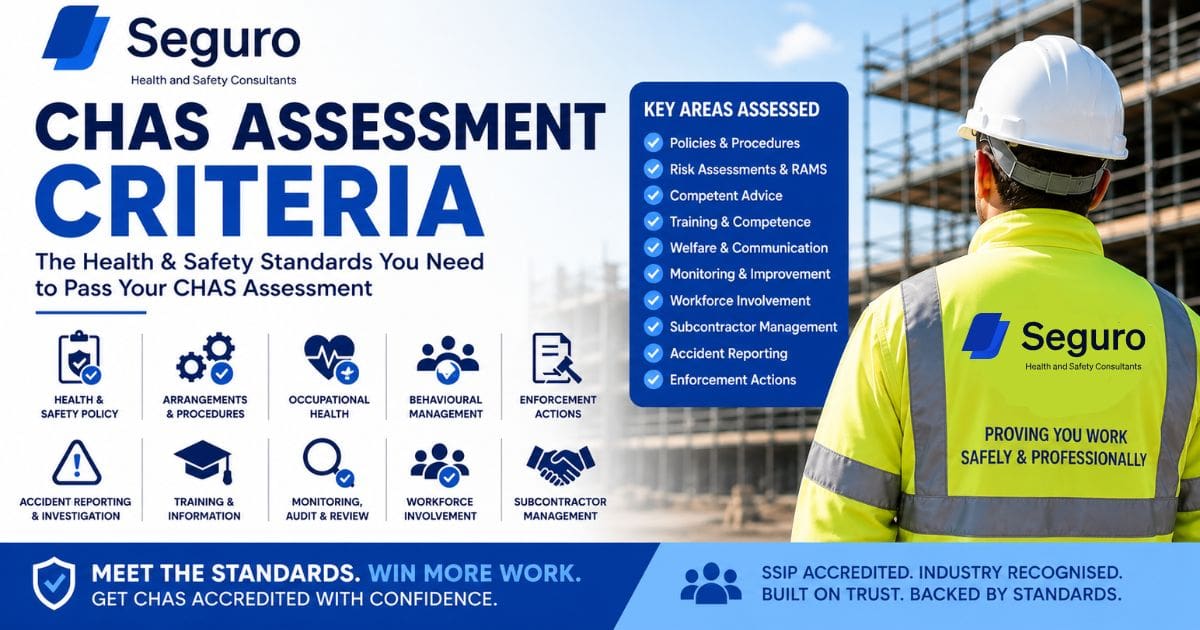
The CHAS assessment standards and requirements are listed below.

  • Policy
  • Occupational Health
  • Behavioural Management
  • Enforcement Actions
  • Accident Reporting and Investigation
  • Fleet Operations / Management Scheme
  • Competent Advice – Corporate and Construction
  • Drug and Alcohol Policy
  • Training and Information
  • Qualifications and Experience
  • Monitoring, Audit and Review
  • Risk Assessment and Safe System of Work
  • Workforce Involvement
  • Co-operation and Co-ordination
  • Welfare Provision
  • Subcontractors and Sub-consultants
  • Responsible Person
  • Contractor
  • Declaration

Review CHAS accreditation

HSG150 health and safety in construction

HSG150 Health and Safety in Construction explains the essential tasks for achieving healthy and safe construction sites.

It helps the reader to identify hazards and control risks and explains how to plan, organise, control, monitor and review health and safety throughout the life of a project.

It is aimed at everybody involved in construction work, including clients, designers, contractors and individual workers. Clients, designers and others who specify construction work may also find the book useful.

Download HSG150

CHAS assessment criteria

Insight by

Bob Evans

Bob Evans

Published on

27 September 2025

CHAS

CHAS Assessment Criteria (Explained for Contractors)

If you’re applying for CHAS, understanding the assessment criteria is key to passing the first time.

Quick Answer

  • CHAS follows the same core criteria as all SSIP schemes
  • You must show documented evidence, not just statements
  • Most failures come from missing, outdated, or weak documents

CHAS sits under:

  • SSIP (Safety Schemes in Procurement)

This means all SSIP schemes assess the same health & safety standards, reducing duplication across the construction industry.

Full CHAS Assessment Criteria

To achieve accreditation, your business is assessed against the following areas:

  • Health & Safety Policy
  • Arrangements (how safety is managed in practice)
  • Occupational Health
  • Behavioural Management
  • Enforcement History
  • Accident Reporting & Investigation
  • Fleet Operations (if applicable)
  • Competent Advice (corporate & construction)
  • Drug & Alcohol Policy
  • Training & Information
  • Individual Qualifications & Experience
  • Monitoring, Audit & Review
  • Risk Assessments & Safe Systems of Work (RAMS)
  • Workforce Involvement
  • Cooperation & Coordination
  • Welfare Provision
  • Subcontractor Management
  • Roles: Contractor / Principal Contractor / Designer
  • To apply these correctly, follow our step-by-step guide to getting CHAS accreditation.

What CHAS Assessors Actually Look For

Here’s what matters in practice, not theory.

1. Health & Safety Policy

Your policy must:

  • Be in the correct company name
  • Be dated within the last 12 months
  • Be signed by a director or a responsible person
  • Clearly define roles and responsibilities

Learn more: How to structure your policy properly – How to Get CHAS Accreditation Step-by-Step

2. Arrangements (Your Safety Systems)

This is where many applications fail.

You must show working systems for:

  • Accident reporting (including RIDDOR)
  • Training and supervision
  • Communication
  • Risk assessments
  • Monitoring and review
  • Emergency procedures
  • Asbestos awareness
  • COVID-19 (where relevant)

Related guide: What Are Construction RAMS? A Simple Guide for UK Contractors

3. Occupational Health

You need evidence of:

  • Awareness (toolbox talks, posters)
  • Access to support for workers
  • Training (e.g. mental health awareness)

4. Behavioural Management

CHAS expects:

  • A documented behavioural safety approach
  • Evidence that safe behaviours are promoted and monitored

5. Enforcement History

You must declare:

  • Any HSE or Local Authority notices (last 5 years)
  • Prosecutions (if any)
  • Actions taken to prevent repeat issues

Important:
CHAS checks are independent, and non-disclosure can fail your application

6. Accident Reporting & Investigation

You need:

  • A clear accident reporting procedure
  • RIDDOR reporting systems
  • 3 years of records, including:
    • Injuries
    • Dangerous occurrences
    • Occupational diseases
    • Incidents involving non-workers

Plus: evidence of corrective actions taken

Why Most CHAS Applications Fail

From experience, the biggest issues are:

  • Outdated policies (over 12 months old)
  • Missing RAMS
  • No competent safety advisor
  • Weak or generic documents
  • No evidence (only statements)

Fix this early: Common Reasons CHAS Applications Fail (and How to Avoid Them)

How to Pass First Time

To succeed, your application must:

  • Be complete
  • Be current
  • Be specific to your business
  • Include clear supporting evidence

Simple Summary

CHAS is not about paperwork; it’s about proving your business can work safely. If you’re unsure where you might fall short, see the common reasons CHAS applications fail.

Enforcement Actions

Details of any enforcement notices (Prohibition, Improvement or Crown) or prosecutions served on your company in the last five years by the HSE or Local Authority and the remedial actions taken to prevent a recurrence. A prosecution or notice will not debar the business from registration, but a failure to declare one could – please note that CHAS will check the HSE public register of convictions.

Accident Reporting and Investigation

Supporting Information:

• Documented arrangements for the recording, reporting, and reporting of accidents (Including RIDDOR reportable accidents).

  • Records of all RIDDOR-reportable and other incidents for at least the last three years, including remedial actions to prevent a recurrence.
  • Records of any other accidents within the last three years, including the remedial actions to prevent a recurrence. The accident statistics for the last three years, incorporating the following categories: Health & Safety Assessment Guidance v1.0 (website) 05/07/2023 Uncontrolled document when printed Page 3 of 13 Classification: PUBLIC. Chas assessment standards
  • Deaths
  • Specified Injuries
  • Over 3 days incapacitated
  • Over 7 days Incapacitated
  • Injuries to non-workers
  • Occupational Diseases
  • Dangerous Occurrences
  • Gas Incidents


CALL Amanda on 0800 031 5404 for support

Get Started Today
shape Ask Amanda

Frequently Asked Questions

What are the CHAS assessment criteria?

The CHAS assessment criteria are the health and safety standards used to check whether a contractor has suitable policies, procedures and evidence in place. They cover areas such as health and safety policy, competent advice, training, RAMS, accident reporting, workforce involvement, welfare and subcontractor management. How to Get CHAS Accreditation Step-by-Step

Is CHAS assessment criteria the same as other SSIP schemes?

Yes. CHAS follows the SSIP core criteria, meaning it assesses contractors against the same recognised health and safety standards as other SSIP schemes. This helps reduce duplication when contractors are pre-qualified for work.

What documents are needed for a CHAS assessment?

Typical documents needed for a CHAS assessment include a health and safety policy, risk assessments, method statements, training records, insurance certificates, accident reporting procedures, competent advice details, monitoring records and evidence of workforce communication.

What should a CHAS health and safety policy include?

A CHAS health and safety policy should be in the correct company name, signed by a director or responsible person, dated within the last 12 months, and clearly explain health and safety responsibilities across the business.

What does CHAS check under accident reporting?

CHAS checks that the business has documented arrangements for recording, reporting and investigating accidents, including RIDDOR-reportable incidents. Contractors may also need to provide accident records and corrective actions for the previous three years.

Does CHAS check enforcement notices?

Yes. CHAS asks contractors to declare any HSE or Local Authority enforcement notices or prosecutions from the last five years. A notice does not automatically prevent accreditation, but failure to declare one may cause problems with the application

Why do CHAS applications fail?

CHAS applications often fail because documents are missing, outdated, generic or not specific to the business. Common issues include unsigned policies, inadequate advice, weak RAMS, missing training records, expired insurance, and poor accident reporting procedures. Common Reasons CHAS Applications Fail

Can someone complete my CHAS assessment for me?

Yes. Seguro is a CHAS accreditation consultant who can prepare the required documents, complete the online assessment, upload evidence and respond to assessor queries on behalf of your business. Need help preparing your documents? Our CHAS support service can assist.

Related CHAS Guides

Save up to £500 with your SSIP assessment renewal

Insight by

Bob Evans

Bob Evans

Published on

21 September 2025

Accreditations

Save up to £500 with your SSIP assessment renewal.

Don’t miss the deadline for your SSIP assessment renewal. Ensure your business stays compliant.

The problem

CHAS and other SSIP providers raise their assessment fees annually, increasing costs. An American corporation owns CHAS, and their fees have been raised yearly. They are now very high compared to other SSIP accreditation suppliers.

We have a solution

There are over thirty SSIP accreditation suppliers who all do the same thing, to the same standard. The standard is controlled by SSIP, which was created to develop a fair playing field and reduce costs.

CHAS is the most popular and well-known; however, the suppliers below are also prominent and are much more economical than CHAS.

Our preferred SSIP assessment renewal supplier is PQS; they have the lowest fees and are great to deal with. They have a good customer service team and have created easy-to-use systems to complete the accreditation documentation.

Our preferred SSIP supplier list.

What will an SSIP accreditation cover?

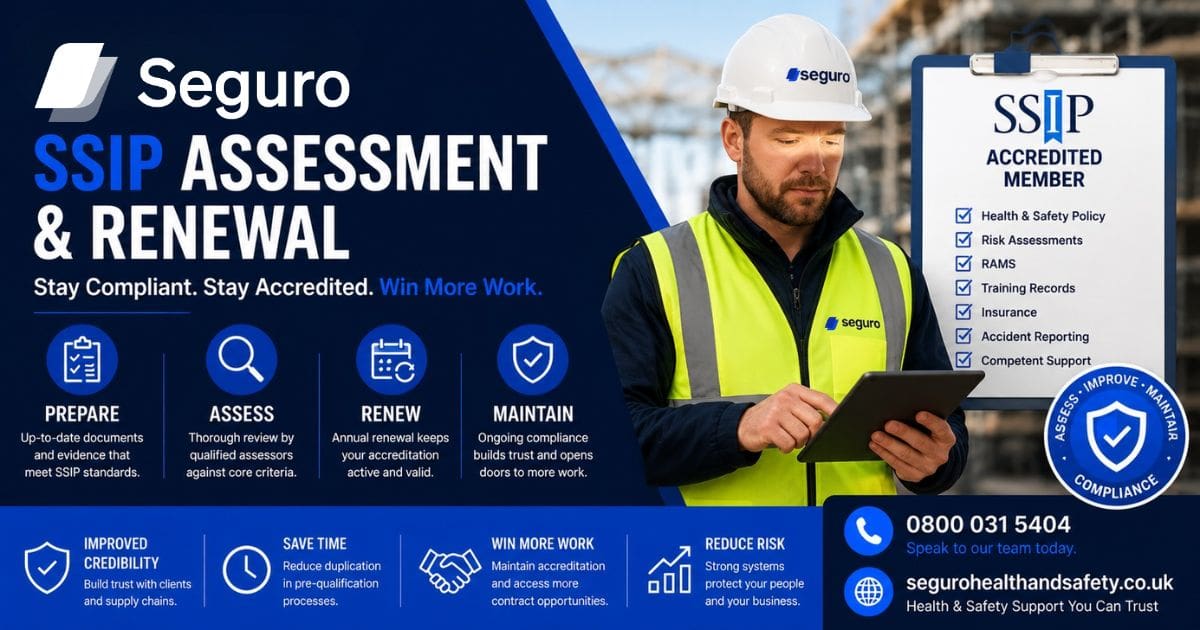
All assessments are completed using the SSIP Core Criteria as the threshold standard and cover the following:

  • Health & Safety policy
  • Competent Advice
  • Training arrangements
  • Monitoring, audit and review
  • Workforce involvement
  • Accident reporting and enforcement action
  • Subcontracting/consulting
  • Risk Assessments and Safe Systems of Work
  • Cooperations with others
  • Welfare provision
  • Hazard elimination

The assessment completed will be proportionate and relevant to the type of work you undertake and the size of your business, noting the size of your business will include any labour staff working for you.

About PQS accreditation

The PQS is an accreditation supplier and SSIP member. PQS charge a much lower fee than CHAS, saving you up to £500 depending on your type of accreditation.

There is no difference between CHAS and PQS; they are SSIP members and work according to the same rules and guidance.

If you are worried that your customers are asking for CHAS, it’s OK, as SSIP allow you to obtain a CHAS certificate even when PQS has accredited you through their deem to satisfy process.

If your SSIP accreditation is coming up for renewal, contact us, and we can advise you on the best solution for your business and budget.

Complete the form below, and we will contact you and provide you with some support.


    I confirm I have read and agree to the Seguro Health and Safety Consultants Privacy Policy.

    What is a CHAS accreditation?

    What is a CHAS accreditation?

    A CHAS accreditation is one of the most widely recognised assessments in the UK.

    It provides independent verification that your business has effective health and safety management systems in place.

    What does CHAS mean?

    CHAS = Contractors Health & Safety Assessment Scheme

    Why is CHAS important?

    If you are a sub-contractor, many main contractors, local authorities, and housing contractors now require CHAS certification before approving a supplier.

    How can we help?

    We can complete the application, gather all required documents and answers to questions, and compile all necessary evidence, allowing you to focus on your job. We are efficient, economical and have a 100% success rate. Quote Request.

    Get CHAS Accredited

    Why select Seguro as your accreditation consultant?

    Here’s why businesses choose us for their CHAS application:

    • We are accreditation consultants and have completed over eight thousand accreditations in an eighteen-year period.
    • You don’t have to worry — we understand the whole process and have a proven track record of success.
    • You’ll receive a friendly, professional service with a fast, reliable accreditation turnaround. Documents completed in just five working days.
    • Quick and easy.
    • Fixed fee, with no hidden costs.
    • 100% success rate
    Get CHAS Accredited - Start Today

    CHAS accreditation requirements

    CHAS accreditation requirements

    CHAS accreditation requirements – CHAS has several requirements that must be met during the application process. We outline the basic requirements for CHAS standards, Advanced, and Elite CHAS accreditations.

    Here are the minimum requirements for a CHAS application.

    You will need:

    • A signed, up-to-date Health and Safety Policy.
    • RAMS — Risk Assessments and Method Statements — relevant to your trade.
    • Training records for your workforce.
    • Valid insurance documents.
    • A first aid and accident reporting procedure.
    • COSHH assessments, if you use hazardous substances.
    • Evidence of supervision and competence across your organisation.

    For CHAS Advanced or CHAS Elite, additional requirements apply.

    These include:

    • An Environmental Policy.
    • A Quality Management System.
    • Equality, Anti-Bribery, and Modern Slavery policies.
    • Suitable financial standing checks.

    If you’re considering CHAS, we can help.

    • We provide a fast turnaround, with documents completed in just five working days.
    • We offer a fixed fee, with no hidden charges.
    • And our team is responsive, friendly, and highly efficient.
    Get CHAS Accredited - Start Today

    Is CHAS accreditation worth it?

    Is CHAS accreditation worth it?

    The benefits of CHAS is worth the investment, especially if: You are a small/medium businesses aiming to grow or work with larger clients.

    • You have been told to get CHAS accredited by your client.
    • You want to work for local authorities, large blue- chip companies and principal contractors.
    • You want to save time and reduce admin burden by streamlining pre-qualifications when tendering
    • You don’t already have a strong health & safety compliance system
    • You want to present a professional, safety-first image to clients.

    If you are looking for the above, then yes CHAS accreditation is a wise investment.

    Here’s a balanced breakdown of the value and considerations

    Why CHAS Accreditation Is Valuable

    1. It Shows Robust Health & Safety Compliance

    CHAS is a recognised third-party assessment that verifies your health & safety management system meets current legislation and SSIP criteria. That gives you credible proof of compliance rather than just internal paperwork.

    2. Improved Tendering and Contract Access

    Many clients — especially in construction and public sector procurement — require CHAS (or equivalent SSIP) accreditation before inviting bids. Some councils and major contractors automatically reject bids from non-accredited firms.

    3. Saves Time on Pre-Qualification

    Once you’re CHAS-accredited, your health & safety compliance is pre-qualified — meaning fewer repeated forms and PQQ questions for each tender. This streamlines procurement admin.

    4. Reputation & Trust

    It’s a widely recognised badge of competence. Clients see it as a signal that you take safety seriously, which helps differentiate you from competitors. Beacon Risk

    5. Other Member Benefits

    CHAS membership often includes extras like legal helplines, discounts on training and services, and business resources — which can add indirect value.

    Considerations & Drawbacks

    1. Cost Can Be Significant

    Accreditation fees vary by company size and level (Standard/Advanced/Elite), and they’re annual — not one-offs. For smaller businesses, lower-cost SSIP options may be more cost-effective.

    2. Time & Documentation Burden

    Preparing policies, risk assessments, method statements, insurance docs, training records, etc., takes effort — and many first-time applicants struggle to get it right without support.

    3. Other SSIP Members Can Do the Same Job

    CHAS is a member of SSIP alongside other schemes. Technically, any SSIP member accreditation should meet the same basic compliance standard, although some clients specifically ask for CHAS.

    Practical Tips for Deciding if It’s Worth It

    ✔️ It’s likely worth it if:

    • Your target clients or frameworks explicitly require or favour CHAS.

    • You’re tendering regularly and want to cut down repeated PQQ work.

    • You want a strong industry-recognised compliance badge.

    ❓ Think twice if:

    • You rarely tender or clients don’t mandate CHAS.

    • Cost is a tight constraint and you could use a more affordable SSIP route.

    • You already hold a recognised SSIP accreditation that clients accept.

    Bottom Line

    CHAS accreditation is generally worth it for UK contractors and consultants — especially in construction and procurement-driven sectors — because it can unlock opportunities, save time, and improve credibility. However, it does come with costs and admin effort, and alternative SSIP accreditations may sometimes be a better value depending on your clients and business size.

    Get CHAS Accredited Today

    Done for you CHAS support – Get approved first time

    Insight by

    Bob Evans

    Bob Evans

    Published on

    27 June 2024

    CHAS

    Done For You CHAS Accreditation Support – Get Approved First Time

    CHAS support to get CHAS accreditation and avoid delays, confusion, or rejection…

    You’re not alone. Most contractors struggle because CHAS isn’t just about having documents; it’s about properly proving compliance.

    That’s where we come in.

    Quick Answer

    Our done-for-you CHAS support service handles your entire application, from documents to approval, so you pass the first time without the stress.

    Why Most CHAS Applications Fail

    Before working with us, most clients have already tried to apply on their own.

    Here’s what typically goes wrong:

    ❌ Generic or incomplete Health & Safety policies
    ❌ RAMS that don’t reflect real work
    ❌ Missing training and competency evidence
    ❌ Inconsistent information across documents
    ❌ Slow or incorrect responses to assessors

    The result: Returned applications, delays, and lost work opportunities.

    What Our CHAS Support Service Includes

    We don’t just “help”, we handle the entire process.

    1. Full Document Creation

    We create everything required to meet CHAS standards:

    • Health & Safety Policy (tailored to your business)
    • Risk Assessments and Method Statements (RAMS)
    • COSHH assessments (if required)
    • Accident reporting procedures
    • Training and competency records

    No templates. Everything is built for your actual work.

    2. Complete CHAS Application

    We:

    • Complete your CHAS submission
    • Upload all documentation
    • Ensure everything aligns with the CHAS assessment criteria

    This is where most applications go wrong; we make sure yours doesn’t.

    3. Assessor Query Management

    Most applications get follow-up questions.

    We handle:

    • Additional evidence requests
    • Document updates
    • Assessor communication

    Fast responses = faster approval.

    4. Compliance Gap Fixing

    Before submission, we identify and fix issues such as:

    • Missing training records
    • Weak RAMS
    • Outdated policies
    • Incorrect insurance

    This is the difference between passing the first time and getting rejected.

    How Fast Can You Get Approved?

    With the right support:

    Documents ready in as little as 5 working days
    Most approvals within 1–2 weeks

    Without support:

    Applications can drag on for weeks or fail completely

    How Much Does CHAS Support Cost?

    The CHAS fee is typically:

    £429 + VAT Standard level

    But the real cost is:

    • Time lost
    • Failed submissions
    • Delayed contracts

    Our service saves you money by getting it right the first time.

    Who This Is For

    This service is ideal if:

    You’ve already been rejected
    You don’t have proper H&S documentation
    You don’t have time to deal with the process
    You need CHAS quickly to win wor

    Not Sure Where You Are in the Process?

    Start here:

    The Result You Get

    CHAS accreditation achieved
    Fully compliant documentation
    Confidence when dealing with clients
    Access to more contracts

    This isn’t just about passing; it’s about being ready to take on new opportunities.

    Client Feedback

    AMS Contracting – Thank you for your assistance to date. We have received our certificate. Your help has been very much appreciated. Many thanks, Chris. 24th February 2026

    Spinney Electrical – I would just like to thank you for all your help, patience & time. Finally!! Feeling relieved. Vicky 13th February 2025

    Why Choose Seguro?

    25+ years industry experience
    100% success rate on CHAS applications (15+ years)
    500+ applications completed every year
    Fixed fee — no hidden costs
    Fast turnaround

    We act as your Competent Person, not just a consultant.

    Get CHAS Approved First Time

    Let us handle your CHAS application from start to finish.

    • Speak to our team today
    • Get your documents sorted
    • Get approved fast

    CALL Amanda on 0800 031 5404 to get started

    Start My CHAS Application
    shape Ask Amanda

    Frequently Asked Questions

    What is CHAS support?

    CHAS support is a Seguro service that helps contractors complete their CHAS accreditation by preparing documents, submitting the application and responding to assessor feedback to improve the chances of passing first time.

    Do I need help with CHAS accreditation?

    You can complete CHAS accreditation yourself, but many contractors choose Seguro support to save time and avoid mistakes. Help is especially useful if you are unfamiliar with health and safety requirements or have limited documentation.

    What does CHAS support include?

    Our CHAS support includes health and safety policy creation, RAMS preparation, training and insurance checks, completing the CHAS portal, uploading documents and managing assessor queries.

    How long does CHAS accreditation take with support?

    With professional support, most CHAS applications can be prepared and submitted within a few days, with assessment typically taking up to 10 working days, depending on the review process.

    Why do CHAS applications fail without support?

    CHAS applications often fail due to missing or outdated documents, weak risk assessments, inadequate advice, expired insurance, or insufficient training records. Support helps identify and fix these issues before submission.

    Can a consultant complete my CHAS application for me?

    Yes. A CHAS consultant, like Seguro, can manage the entire process, including preparing documents, completing the online application, uploading evidence, and responding to assessor feedback on your behalf.

    Is CHAS support worth it?

    CHAS support is often worth it for contractors who want to pass first time, reduce delays and focus on their business rather than managing complex health and safety documentation.

    Do I need a competent health and safety advisor for CHAS?

    If you employ five or more people, including subcontractors, you must have access to competent health and safety advice. Many contractors meet this requirement through outsourced CHAS support services.

    Related CHAS Guides