Close Navigation

Search

Top dangerous jobs in the UK

Insight by

amanda

Amanda Lambert

Published on

15 September 2015

Health and safety management


Top dangerous jobs in the UK

You thought you might know the top dangerous jobs in the UK, but the list below may surprise you. Some jobs are more dangerous than others but we weren’t expecting a few of these.

The latest health and safety statisitcs can be studied at HSE Statistics.

Builder

The top most dangerous job comes as no surprise builders are putting themselves at risk everyday – 39 people died in the construction industry between 2012 and 2013, the majority of them by falling from a height.

Refuse collector

This isn’t the most pleasant job to have, but being a refuse collector should also carry a health warning. 10 people died collecting, treating and disposing of waste between 2012 and 2013. The industry had a fatality rate of 7.8 per 100,000 employees in 2012/2013

Farmer

Agriculture, forestry and fishing has the highest risk of all industrial sector, this sector accounts for an average of one in five fatal injuries. Out of the 29 workers fatally injured in 2012 / 2013 almost 50% were farmers, 17 % were hired hands in the industry. 5 of these were killed by animals, 5 more died by drowning or asphyxiation.

Miner

With only three deep pit coal mines left operational in the UK there is still a threat to miners on a daily basis. In 2012 / 2013 there were 2 fatalities and over 150 injuries in the mining and quarrying industry. As the industry has reduced in size, the fatality rate is now the highest in the country at 9.6 per 100,000 employees.

Shopkeeper

Although there was no fatal injuries in the retail industry between 2012 / 2013, there were 1619 “major injuries” in the sector with close to 7,000 injuries reported in total.

Mechanic

Mechanics and Car Salesmen are also at risk with 8 deaths recorded in 2012 / 2013 and close to 300 major injuries.

Teacher

Education is reportedly the most injury prone sector with 1,736 people reporting non-fatal major injuries in 2012 / 2013, although there were no reported fatalities.

Estate agent

It might seem like an unlikely career for you to be at risk,  but HSE statistics say that 4 people died in the rental and leasing activities industry in 2012 / 2013, with 70 people suffering from major, but non-fatal, injuries.

Seguro health and Safety

Learn more about what we do.


Do you know the most common reasons for accidents in the workplace?

Insight by

amanda

Amanda Lambert

Published on

9 September 2015

Health and safety news

Common reasons for accidents in the workplace

Depending on which industry you work in there are a different variety of hazards you may come into contact with.

One example is an office worker is much less at risk from being burnt than a chef as you would expect.

There is however a range of common accidents and injuries which occur across all occupational sectors – and slips / trips and falls invariably top the table.

In 2013/14

  • over half the fatal injuries to workers were of three kinds: falls from height; contact with moving machinery; and being struck by a vehicle (RIDDOR)
  • falls and slips & trips, combined, account for over a third (35%) of employee injuries. They made up more than half of all reported major/specified injuries and almost three in ten (29%) over-seven-day injuries to employees (RIDDOR)
  • handling was the most frequent cause of over-seven-day injury (RIDDOR)
  • an estimated 1.9 million working days were lost due to handling injuries and slips & trips (LFS).

Up to date HSE statistics

Overall, the three most common types of accident/injury were:

  • Trips/slips or falls
  • Machinery / Moving Objects
  • Manual handling/lifting

Some of the most common injuries were:

  • Sprains and strains
  • Back injury
  • Head injury
  • Neck injury
  • Repetitive Strain Injury

Most Common Risks 

Overall, slips/trips and falls or damage caused by manual handling/lifting remain the main culprits of injury in the workplace.

Some of these risks may have been able to be managed if a risk assessment and workforce training had been carried out. If you need an up to date risk assessment or tool box talks download our free documents below:

RA1 – Working at Heights

Slips, Trips and Falls Tool Box Talk

Safety online training

Training is the key to reduce the most common accidents in the workplace.

Our online training is designed for your employees to be able to complete it when it is most convenient for them at work or home. The training is multiple choice and lasts for approx. 1 hour.

Why our Online Training is different

  • Our course is priced for all businesses at £25 + vat per delegate
  • Mobile friendly
  • We have an online platform that businesses can create an account and allocate employees training purchased
  • Managers are able to see each employees progress
  • We allow up to two resets before the course is considered as a fail
  • Try our training for FREE 


What is CHAS Accreditation?

Insight by

amanda

Amanda Lambert

Published on

19 August 2015

CHAS

What is CHAS Accreditation? (Simple Guide for UK Contractors)

Quick Answer

CHAS accreditation (Contractors Health and Safety Assessment Scheme) is a UK health and safety certification that proves a contractor meets recognised compliance standards.

It is widely used by public and private sector clients to assess whether a business is competent, safe, and suitable for work.

What CHAS Accreditation Means

CHAS is a pre-qualification scheme that evaluates your company’s:

  • Health and safety policies
  • Risk assessments and procedures
  • Competence and training
  • Overall compliance systems

In simple terms, CHAS shows clients you meet minimum safety standards and are ready to work.

To understand what’s involved in passing, see the full CHAS assessment criteria explained.

Background and Development

  • Originally developed by local government health and safety professionals
  • Supported by the Health and Safety Executive (HSE)
  • Helped pioneer:
    • SSIP (Safety Schemes in Procurement)
    • Common Assessment Standard (CAS)

CHAS is now part of a wider framework used across the UK construction industry.

Who Owns CHAS?

  • Originally administered by the London Borough of Merton
  • Acquired by Veriforce in 2022
  • Still operates as a recognised UK compliance scheme

Who Uses CHAS?

CHAS is used by:

  • Local authorities
  • Main contractors
  • Housing providers
  • Commercial organisations

It helps them shortlist safe and compliant contractors

How CHAS Accreditation Works

To become CHAS accredited:

  1. Submit an application
  2. Provide evidence of your health & safety systems
  3. Undergo an assessment
  4. Receive approval if compliant

Once approved:

  • Your business is added to the CHAS database
  • Clients can verify your accreditation
  • Once approved, you’ll be recognised as a CHAS-accredited contractor.

Why CHAS is Important

CHAS helps contractors:

  • Demonstrate competence and compliance
  • Meet requirements under UK regulations such as CDM
  • Avoid repeating multiple pre-qualification checks
  • Win more work from clients who require SSIP

Common Pitfalls to Avoid

Many contractors struggle with:

  • Missing documents
  • Poor RAMS
  • Outdated policies
  • Incorrect insurance

CHAS and CDM Regulations

Under UK Construction (Design and Management) Regulations (CDM):

  • Clients must appoint competent contractors
  • CHAS is recognised as a scheme that helps demonstrate this competence

This makes CHAS a key part of legal and commercial compliance

Final Thought

CHAS accreditation is not just a certificate.

It’s proof that your business:

  • Works safely
  • Meets industry standards
  • Is ready to deliver work professionally

CALL Amanda on 0800 031 5404 for immediate support

Get a price
shape Ask Amanda

Frequently asked questions

What is CHAS accreditation?

CHAS accreditation (Contractors Health and Safety Assessment Scheme) is a UK certification that demonstrates a contractor meets recognised health and safety standards. It is used by clients to assess whether a business is competent and compliant before awarding work.

What does CHAS stand for?

CHAS stands for Contractors Health and Safety Assessment Scheme. It is a pre-qualification scheme used across the UK construction industry to verify health and safety compliance.

Who uses CHAS accreditation?

CHAS accreditation is used by local authorities, main contractors, housing associations and private sector organisations to shortlist contractors, suppliers and consultants who meet health and safety standards.

Why is CHAS important?

CHAS accreditation is important because it proves your business meets health and safety standards, helps you prequalify for work and reduces the need to complete multiple pre-qualification questionnaires. Many clients require it before allowing contractors to tender.

How does CHAS accreditation work?

To get CHAS accreditation, a business must submit an application and provide evidence of its health and safety systems. The submission is assessed, and if compliant, the company is approved and listed on the CHAS database for clients to verify.

Is CHAS part of SSIP?

Yes. CHAS is a founding member of SSIP (Safety Schemes in Procurement), which is a framework designed to standardise health and safety assessments and reduce duplication across the construction industry.

Who owns CHAS?

CHAS was originally developed by the local government and administered by the London Borough of Merton. It was acquired by Veriforce in 2022 and continues to operate as a recognised health and safety accreditation scheme.

Does CHAS accreditation prove competence under CDM regulations?

Yes. CHAS is recognised as a scheme that helps demonstrate contractor competence under the Construction (Design and Management) Regulations, which require clients to appoint competent contractors.

How do the CDM 2015 regulation changes affect you?

Insight by

amanda

Amanda Lambert

Published on

12 August 2015

CDM

How do the CDM 2015 regulation changes affect you?

Did you know there are CDM 2015 regulation changes that came into place from 6 April 2015. Here is our quick guide on how they might affect you.


New legislation

From 6 April 2015, the Construction (Design and Management) Regulations 2015 (CDM 2015) came into force, replacing CDM 2007. The key changes of the new CDM regulations are listed below:

  • The revised Regulations apply to all projects including domestic client jobs
  • All projects must have a written construction phase plan
  • The role of CDM co-ordinator in the previous CDM Regs 2007 has been removed and replaced with a new role of principal designer
  • There is a duty to make sure all persons doing the job have the right skills, knowledge, training and experience
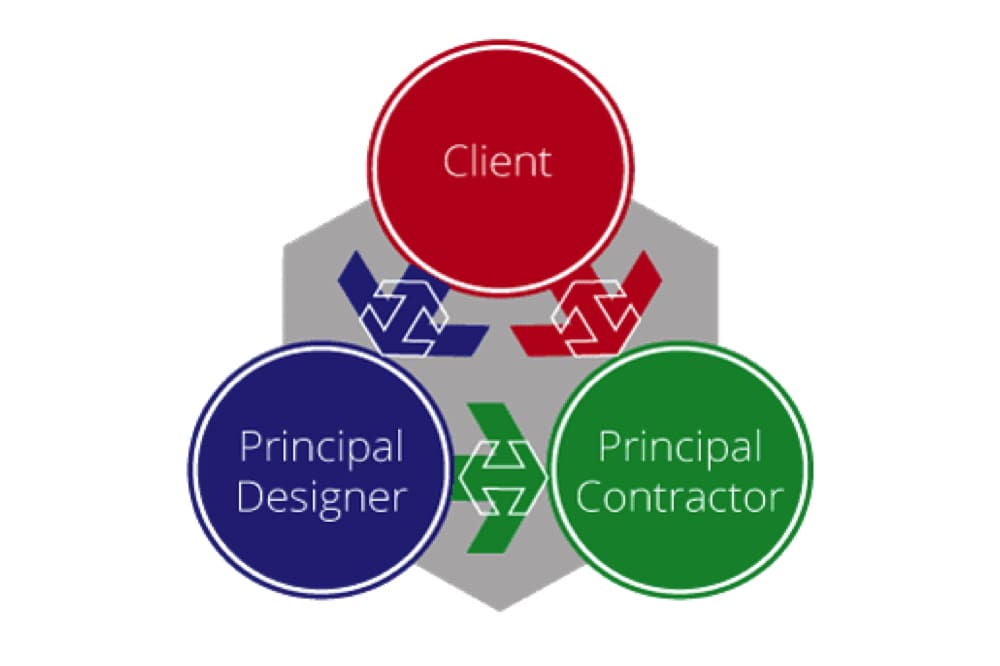
  • A Principal designer and principal contractor must be appointed on projects that will have more than one contractor

CDM 2015 main changes

CDM Coordinator role replaced by a ‘Principal Designer’. Clients are required to appoint a ‘Principal Designer’ for all projects involving more than one contractor (trade contractor) on site at one time

Client’s duties strengthened. Several of the previous functions of the CDM Co-ordinator are now to be carried out by the Clients directly, and the wording for these duties is more onerous. Additionally the Client has a new duty to ensure that both the Principal Designer and Principal Contractor comply with their duties.

Client’s “key project advisor” role removed. Previously the CDM Co-ordinator acted as the “key project advisor in respect of construction health and safety”, however under CDM2015 the Principal Designer only has to provide advice to the Client with respect to Pre-Construction Information. Accordingly, Clients that need help with their duties are advised in the HSE Guidance Document to seek competent specialist advice.

Duties to be applicable to domestic projects. For domestic projects involving more than one contractor the Principal Contractor will normally assume the Client duties. The domestic Client can choose to appoint a Principal Designer for the project. However if they do not make this appointment, the first Designer appointed during the pre-construction phase becomes the Principal Designer for the project.

Principal Designer and Principal Contractor required for all projects with more than one “trade” Contractor on site. Clients must appoint both a Principal Designer and Principal Contractor. Principal Designer’s duties include identifying and controlling risks, assisting the Client in the production of PreConstruction Information, and the preparation of the Health and Safety File. Principal Contractor duties include the planning, management and co-ordination of construction phase of the project.

Construction Phase Plan is required for all projects. The Client is to ensure that a Construction Phase Plan, provided by the Contractor or Principal Contractor, is in place before any works commence.

Threshold for notification. Notification to the HSE is required for any project exceeding 30 construction days with 20 or more workers, or if the project exceeds 500 person days.

‘Explicit competence’ requirements removed. The Client will need to ensure those that are to be appointed (i.e. Designer, Contractor or Principal Contractor and Principal Designer) can demonstrate appropriate information, instruction, training and supervision.


Further information

The CITB have produced guidance for all the roles covered under the new CDM 2015 regulations, which can be downloaded here. They have also developed a free CDM Wizard app for Android and IOS to help quickly produce construction phase plans, which can be downloaded via the links below.

The HSE have also produced detailed guidance called “Managing health and safety in construction – Construction (Design and Management) Regulations 2015”, which covers the legal requirements for CDM 2015.

Home Page

Visit our home page and larn how we can support you.

New style COSHH hazard labeling

Insight by

amanda

Amanda Lambert

Published on

1 July 2015

COSHH

New style COSHH hazard labeling

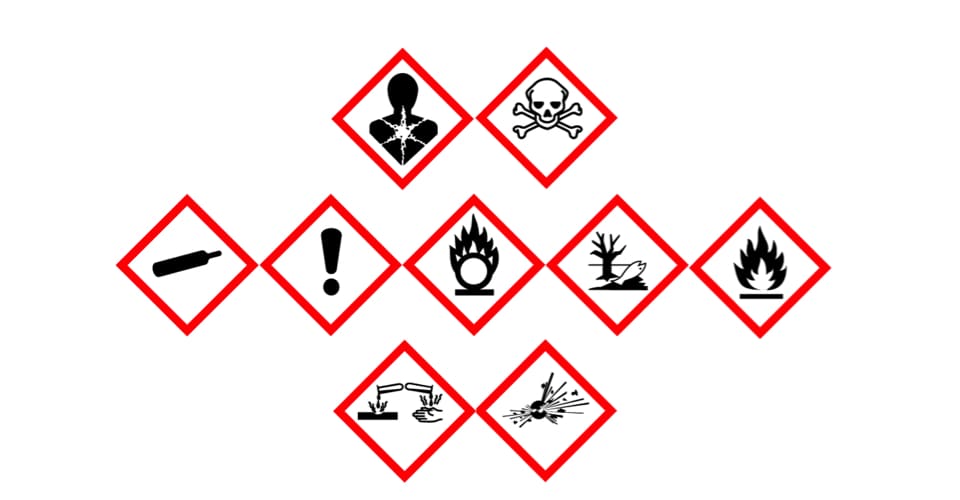
From this month, another phase of the EU Classification Labelling and Packaging of Substances and Mixtures Regulation (CLP) starts. All chemicals created from June must be packaged with the new red diamond cautioning signs Outlined on the accompanying pages.

For chemical blends, which will be the normal shape in which chemicals land at most working environments, new creation runs should likewise bear the CLP labels, however suppliers are permitted to exhaust existing stocks with the old hazard notices in orange squares until 2017.

Numerous manufactures have acquired the due dates and started utilizing the new labels in 2010 when all new load of single substances needed to start conveying the CLP labels — which bring Europe in line with the United Nations’ globally harmonised system for classifying and labelling chemicals.

The new framework, which likewise influences safety data sheets (SDSs) and different parts of chemicals hazard labelling, holds a significant number of the pictograms used to to signal types of hazard in the old system which followed the Chemicals (Hazard Information and Packaging for Supply) Regulations 2009 (CHIP, or all the more correctly, CHIP 4). These regulations have additionally been withdrawn for the current month.

An expression of caution

The new signs may be accompanied by one of two qualifiers:

Danger: for the most hazardous substances and mixtures

Warning: for less serious hazards.

“One new sign and pictogram is that for ‘Contains gases under pressure’ — the gas cylinder image resembles a wine bottle or cricket bat. This is a new category under CLP”

Beside the hazard diamond and pictogram and under the qualifying word, many CLP labels carry hazard statements, which replace the old risk phrases. So for respiratory sensitises, such as isocyanates or platinum salts, the statement “May cause allergy or asthma symptoms or breathing difficulties if inhaled” replaces the briefer but more technical phrase “May cause sensitisation by inhalation”.

Instead of old safety phrases, labels should now carry one or more of a prescribed set of precautionary statements.

These phrases are divided into three categories:

  • General: “if medical advice is needed, have product container or label at hand” “keep out of reach of children” and “read label before use”.
  • Prevention: “Keep container tightly closed” and “Use only outdoors or in a well ventilated area”.
  • Response: examples include “get medical advice/attention if you feel unwell” or “Fight fire remotely due to the risk of explosion”.

CPL specific

One new sign and pictogram is that for “Contains gases under pressure” – the gas cylinder image, resembling a wine bottle or a cricket bat. This is a new category under CPL with four sub-groups for compressed, liquefied, refrigerated liquefied and dissolved gases.

The first three of these have their own hazard statement: “Contains gas under pressure; may explode if heated. “Refrigerated liquefied gases are associated with the phrase “contains refrigerated gas: may cause cryogenic burns or injury”.

Another new symbol, showing a human torso fractured from the inside indicates the chemical may cause long term health effects and applies to carcinogens and mutagens, respiratory sensitises and substances that are toxic for specific organs or can affect the human reproductive system.

The pictogram replaces the former skull and crossbones for the most serious long term hazards, such as those posed by lead or chrome oxides.

For less serious health hazards, including irritants and skin senitisers, the old “X” symbol is replaced by the new “health effects” exclamation mark pictogram.

Acute toxicity, where chemicals could harm a worker after single exposure or multiple exposures in a few hours, will still be represented by a skull and crossbones in CLP’s new diamond configuration accompanied by the word “Danger”.

The CLP symbol for corrosive substances is essentially the same as the previous one, showing test tubes dropping the substance onto a hand or flat surface.

Review our COSHH assessments pack below.

General COSHH Assessments Pack

Physical agents

Explosive materials also retain a similar pictogram under CPL labelling, with a spherical object bursting apart. The two former risk phrases for risk or extreme risk of explosion “by shock, friction, fire or other sources of ignition” are replaced by seven hazard statements that should appear on labels, from “Unstable explosives” to “may mass explode in fire”.

Flammable gases, aerosols, liquids and solids have a similar pictogram to before – though the new version looks a little more like a stylised leaf – but is now accompanied by “Danger” for extremely flammable substances and “Warning” for less hazardous ones.

The symbol for oxidising liquids and solids, which give off oxygen easily and can accelerate combustion of other materials, remains a ring with a flame on top and will be accompanied by “Danger” for strong oxidises that can cause explosions and “warning” for weaker ones.

The final pictogram in the CLP classification is the lone symbol for environmental hazards, sharing the dead fish and blasted tree image of its predecessor. This symbol and its five accompanying hazard statements cover toxicity to the aquatic environment. Where the old orange symbol was also applied to chemicals that could damage the ozone layer, these will now be labelled with the exclamation mark pictogram and the signal word “warning”.

Full details of the new pictograms, their associated hazard classifications and statements and examples of how these are represented on SDSs can be found in the European commission guide chemicals at work – a New Labelling System, available at OSHA legislation guidelines exposure chemical agents

Before you go review our COSHH assessments pack below.

General COSHH Assessments Pack

Where Do You Rank In The Health & Safety Top 500 Leaderboard?

Insight by

amanda

Amanda Lambert

Published on

23 June 2015

Health and safety blog

HS top 500


Where Do You Rank In The Health & Safety Top 500 Leaderboard?

The Health and Safety Industry Top 500 Leaderboard is curated and managed by David Cant @DavidGCant, and published by Veritas Consulting Safety Services Ltd, in association with PPE.org@PPEORG

The Leaderboard shows rankings in an association table-design for the Top 500 people, organizations and association worldwide in industry related parts. This leaderboard perceives the Top 500 dynamic Twitter users included in the Health and Safety Industry, working in Asbestos, Training, E-learning, PPE Suppliers, Safety Equipment, Road Safety, Environment and some more!

This time last year we ranked #217 in the Health & Safety Top 500 Leaderboard. With this in mind we are very proud to announce that we have jumped 138 places over the year and now rank #79. Over the past month alone we are up by 23 places from #102 and are hoping to continue to climb the ladder.

Rankings are in light of Social Media associations and impact over all online networking channels, for example, Google, Facebook and Linkedin, with the information measured by Klout. Rankings can go “Up or Down” contingent upon Social Media action in this way.

Where do you rank?
On the off chance that you are not on this Leaderboard and in the Health and Safety industry yourself or might want to designate somebody who ought to be incorporated tweet @DavidGCant the details with #HSTop500 and David will add you to the LeaderBoard to see where you Rank.

Are you ensuring your employees safety?

Insight by

amanda

Amanda Lambert

Published on

9 June 2015

Health and safety news

Are you ensuring your employees safety?

Your employees safety is key to your business success. Failure to keep your employees safe can be expensive.

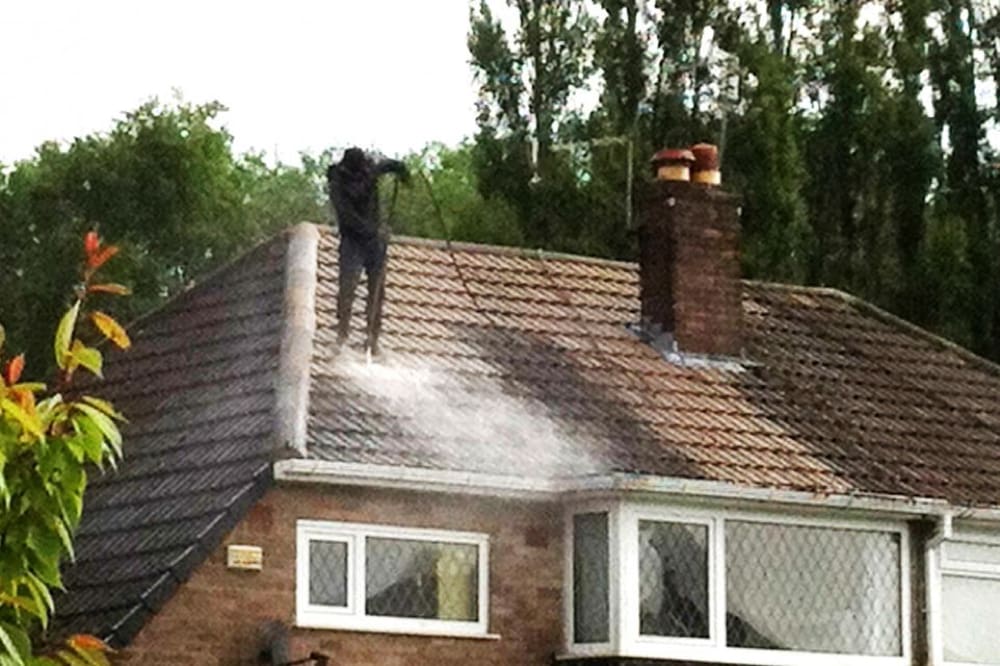
The general public is now savvy when it comes to health safety at work. For example, the general public will video, take images and send the footage to the HSE as they did in the case below.

Many small businesses sail close to the wind with regard to health and safety, but they don’t have to; with some essential support, we can ensure you run your business safely.

Director responsibilities

As a director, your first job should be to review your company’s health and safety policy document and ensure you are happy with it.

Legislation that covers the responsibilities of a director

  • The Health and Safety at Work, etc Act 1974
  • The Management of Health and Safety at Work Regulations 1999
  • Corporate Manslaughter and Corporate Homicide Act 2007

Learn more about directors’ health and safety responsibilities.

Employees safety case study

Tyldesley-based firm IQ Roofing Solutions was prosecuted after a member of the public snapped the worker on the roof.

A Health and Safety Executive (HSE) inspector visited in the site the same day on June 6 last year and issued a prohibition notice, ordering the staff to come down until scaffolding or other safety measures had been introduced.

Boss Stuart Bell, managing director of the firm, had been at the site earlier that day and knew work would be carried out without scaffolding, a court heard.

The firm, of Nelson Street in Tyldesley, had previously been served with a prohibition notice in 2011 following unsafe working practices.

Trafford Magistrates Court heard that IQ Roofing Solutions was unable to provide proof that it held employers’ liability insurance — a legal requirement — which allows workers to claim compensation if they are injured at work.

The business pleaded guilty to two breaches of work-at-height regulations and to a breach of the Employers’ Liability Act.

The company was fined £3,000 and ordered to pay £2,000 court costs.
A fine of £1,000 was issued to Mr Bell along with £1,619 prosecution costs after he admitted two breaches of the work-at-height regulations.

Laura Moran, HSE Inspector, said: “Falls from height are responsible for about a third of workplace deaths every year, with 25 people losing their lives in 2012 and 2013 alone.

“I’d therefore like to thank the member of the public who alerted us to the work, as they may well have prevented a serious injury.

“Both IQ Roofing Solutions and Stuart Bell put workers’ lives in danger by allowing them onto a slippery roof without safety measures in place. This meant that workers could have been badly injured if they had slipped and fallen to the ground below.

“If workers had been injured, then they may not have been able to claim compensation as the firm also failed to provide us with any proof that it had employers’ liability insurance.” Employees safety is paramount to our work at HSE.

Competent safety advisor

One way to help yourself is to have your own health and safety advisor. You can delegate all health and safety responsibilities to this third-party person. Your safety advisor will educate you on what you need to do to keep your business safe.

If an accident does occur on-site, and the company has all health and safety requirements up to date, the safety advisor will deal with HSE for you.

A safety advisor can save you time and money for a basic monthly fee.

Request a chat and find out more about our safety advisor service