



SSIP for Small Contractors: A Complete Guide to Getting Accredited and Sourcing New Opportunities
For many small contractors, winning work is becoming increasingly difficult without recognised health and safety accreditation.
Whether you’re a sole trader, a subcontractor, or a growing construction business with a small team, clients increasingly expect contractors to demonstrate compliance before they can tender, gain site access, or join approved supplier lists.
This is where SSIP accreditation can help.
In this guide, we explain what SSIP means for small contractors, what documents are required, how much it costs, and how accreditation can help you win more work.
What Is SSIP?
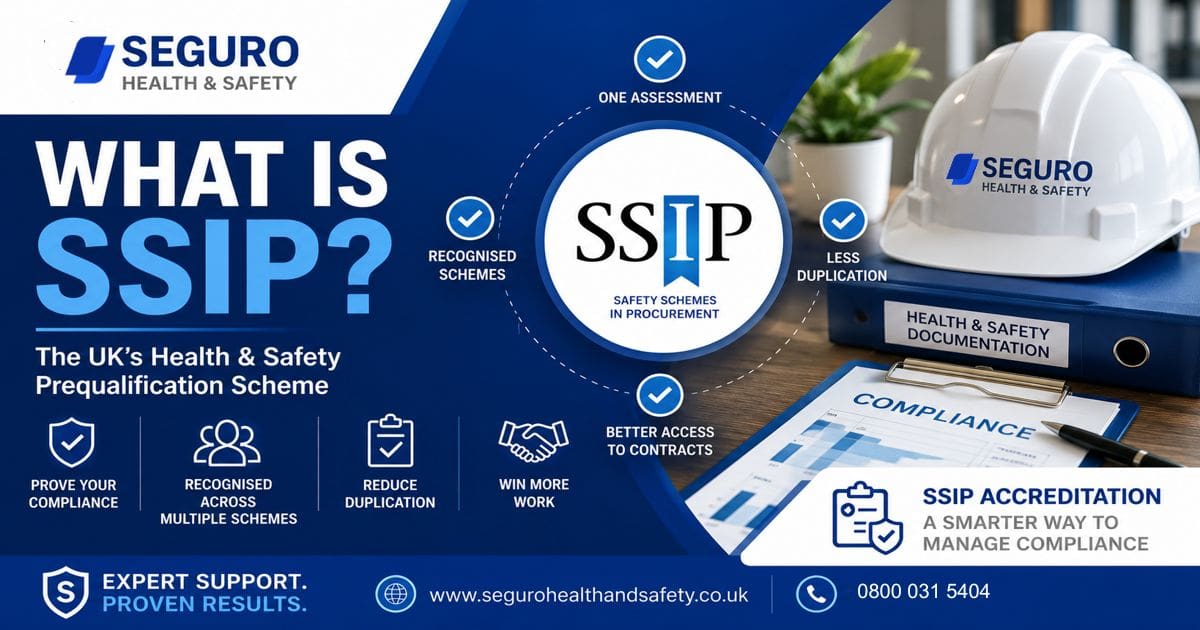
SSIP stands for Safety Schemes in Procurement.
It is a recognised health and safety assessment framework used throughout the UK construction industry.
The purpose of SSIP is to provide a standard method of assessing contractors’ health and safety competence.
Instead of completing multiple questionnaires for different clients, contractors can achieve accreditation through an SSIP member scheme and demonstrate compliance across a wide range of organisations.
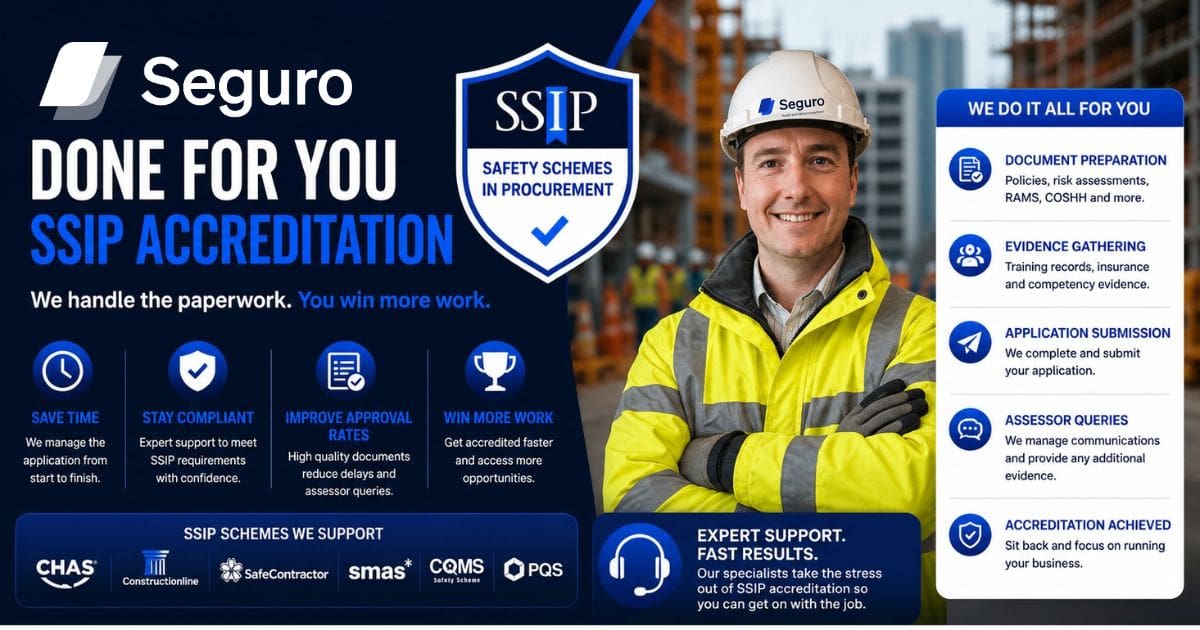
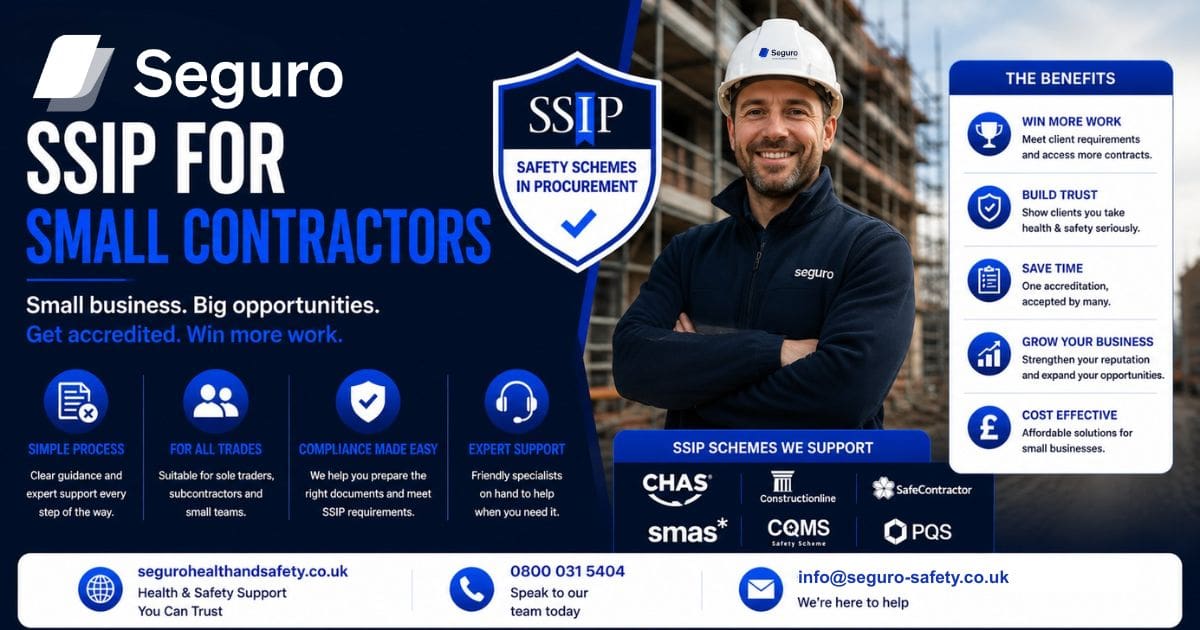
Popular SSIP schemes include:
- CHAS
- SafeContractor
- SMAS
- Constructionline
- CQMS
- PQS
Do Small Contractors Need SSIP Accreditation?
Not every contractor legally requires SSIP accreditation.
However, many clients now make accreditation a condition of:
- Tendering for projects
- Working for principal contractors
- Joining approved supplier lists
- Public sector contracts
- Framework agreements
- Commercial construction projects
Without accreditation, some opportunities may simply be unavailable.
For many small businesses, SSIP accreditation is no longer optional, it is a commercial requirement.
Benefits of SSIP for Small Contractors
Win More Work
Many clients require SSIP accreditation as part of their contractor selection process.
Being accredited can increase access to:
- Main contractor work
- Local authority contracts
- Housing projects
- Education sector work
- Healthcare projects
- Commercial developments
Improve Credibility
Accreditation demonstrates that your business takes health and safety seriously.
This can help build trust with:
- Clients
- Principal contractors
- Procurement teams
- Site managers
Simplify Pre Qualification
Instead of repeatedly completing health and safety questionnaires, accreditation provides recognised evidence of compliance.
Improve Documentation
Many contractors use the accreditation process as an opportunity to improve:
- Health & Safety Policies
- Risk Assessments
- RAMS
- Training records
- Accident procedures
Stay Compliant
Maintaining accreditation encourages regular reviews of health and safety management arrangements.
Which SSIP Scheme Is Best for Small Contractors?
The best scheme depends on your clients and business objectives.
CHAS
One of the most recognised contractor accreditation schemes in the UK.
Suitable for businesses working with larger contractors and public sector clients.
SMAS
A popular option for SMEs looking for straightforward accreditation.
SafeContractor
Widely recognised across facilities management and commercial sectors.
Constructionline
Combines health and safety assessment with contractor visibility and procurement opportunities.
CQMS
Often chosen by smaller businesses seeking compliance support.
PQS
A cost-effective accreditation route for micro-businesses and sole traders.
All schemes assess broadly the same SSIP core criteria.
What Documents Do Small Contractors Need for SSIP?
The exact requirements vary slightly between schemes, but most applications require:
Health & Safety Policy
A document explaining how your business manages health and safety.
Risk Assessments
Evidence that hazards have been identified and controlled.
RAMS
Risk Assessments and Method Statements relevant to the work undertaken.
Insurance
Typically:
- Employers’ Liability Insurance
- Public Liability Insurance
Training Records
Evidence of workforce competence.
Examples include:
- CSCS cards
- First Aid certificates
- IPAF
- PASMA
- Asbestos awareness training
Accident Reporting Procedure
A documented process for recording and investigating incidents.
Competent Health & Safety Support
Evidence that your business has access to qualified health and safety advice.
Can Sole Traders Get SSIP Accreditation?
Yes.
Many SSIP schemes accept applications from:
- Sole traders
- Self-employed contractors
- Small partnerships
- Micro-businesses
Although legal requirements may be simpler for very small businesses, accreditation providers still expect evidence that risks are managed appropriately.
How Much Does SSIP Cost for Small Contractors?
Typical entry-level accreditation fees include:
| Scheme | Typical Fee* |
| CHAS Standard | £429 + VAT |
| Constructionline Bronze | £498 + VAT |
| SafeContractor Standard | £419 + VAT |
| SMAS Entry Level | £317 + VAT |
| CQMS H&S (0–4 employees) | £175 + VAT |
| PQS (2–4 employees) | £119 + VAT |
*Fees may change and may vary depending on company size.
Additional costs may apply if documentation requires updating or specialist support is needed.
Common Challenges for Small Contractors
Many small businesses struggle because they:
- Have no written Health & Safety Policy
- Use generic RAMS
- Have incomplete training records
- Lack competent person support
- Are unfamiliar with accreditation requirements
- Have limited time to prepare documentation
These challenges often lead to delays or failed applications.
Why Small Contractors Use Accreditation Support
Professional support can help:
Save Time
Avoid spending hours preparing documents and completing applications.
Improve Approval Rates
Applications can be reviewed before submission to reduce assessor queries.
Provide Missing Documentation
Policies, RAMS, risk assessments and supporting evidence can be developed where needed.
Reduce Stress
Many contractors prefer to focus on their projects while compliance experts manage the accreditation process.
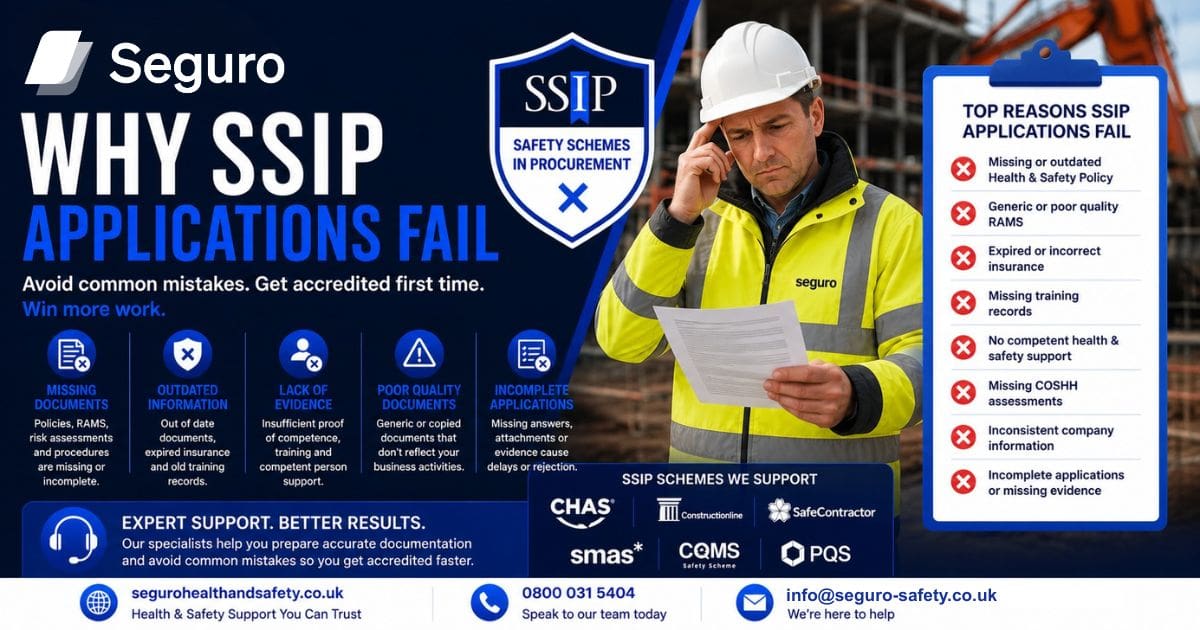
Common Reasons Small Contractors Fail SSIP Assessments
The most common issues include:
- Missing policies
- Generic RAMS
- Expired insurance
- Missing training certificates
- No competent person evidence
- Missing COSHH assessments
- Incomplete applications
- Inconsistent company details
Most of these issues can be resolved before submission with a proper compliance review.
How Seguro Helps Small Contractors Achieve SSIP Accreditation
Seguro Health & Safety supports small contractors throughout the accreditation process.
Services include:
- CHAS Applications
- Constructionline Accreditation
- SafeContractor Applications
- SMAS Accreditation
- CQMS Applications
- PQS Accreditation
- Health & Safety Policies
- RAMS
- Risk Assessments
- COSHH Assessments
- Competent Person Support
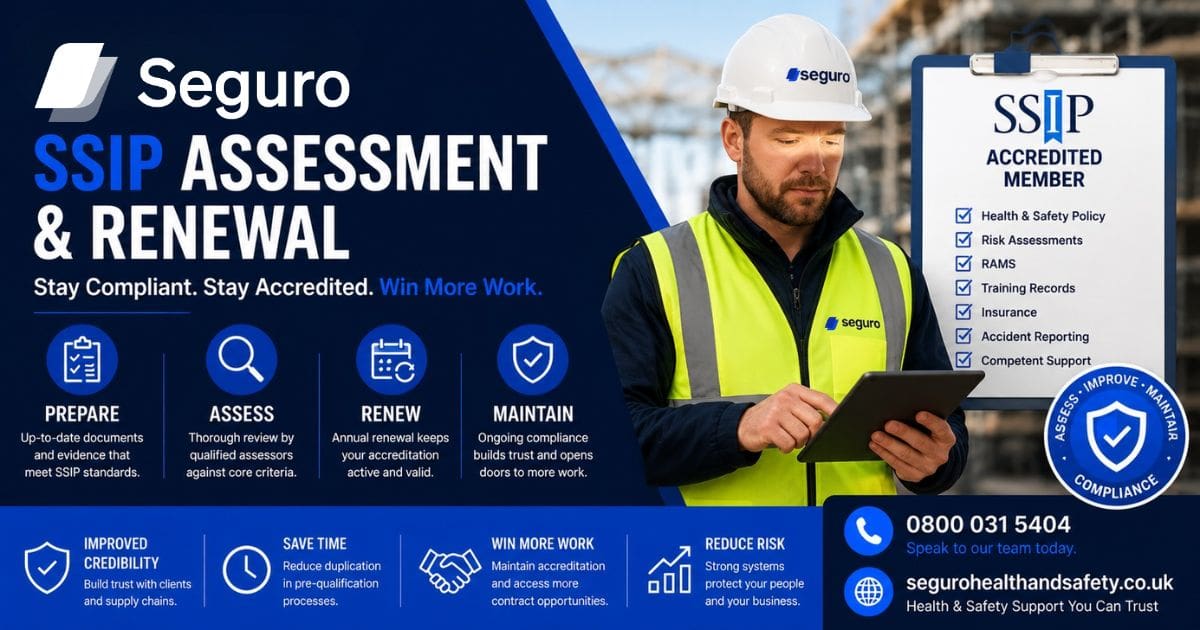
- Accreditation Renewals
Whether you are applying for the first time or renewing existing accreditation, Seguro can help make the process faster and simpler.
Conclusion
SSIP accreditation can provide significant benefits for small contractors, helping them demonstrate compliance, improve credibility, satisfy client requirements, and access more work opportunities.
Although the process can seem daunting initially, most contractors find that having the correct documentation, competent support, and a clear application process makes accreditation much easier.
For businesses looking to grow, win larger contracts, and strengthen their health and safety credentials, SSIP accreditation is often one of the most valuable investments they can make.
Request a call back for more information or call 0800 031 5404
Book a CALL

Frequently Asked Questions
What is SSIP accreditation for small contractors?
SSIP accreditation is a recognised health and safety assessment that helps small contractors demonstrate compliance with industry standards. It is commonly required by clients, principal contractors and public sector organisations before awarding work. For more information, go to SSIP Accreditations: The Complete Guide
Do small contractors need SSIP accreditation?
While SSIP accreditation is not a legal requirement, many clients and principal contractors require it as part of their pre-qualification process. Without accreditation, small contractors may miss opportunities to tender for certain projects.
Can a sole trader get SSIP accreditation?
Yes. Sole traders, self-employed contractors and micro-businesses can apply for SSIP accreditation provided they can demonstrate suitable health and safety management arrangements and provide the required supporting documentation.
What documents do small contractors need for SSIP accreditation?
Most SSIP schemes require a health and safety policy, risk assessments, RAMS, insurance certificates, training records, accident reporting procedures and evidence of competent health and safety support.
Which SSIP scheme is best for small contractors?
The best SSIP scheme depends on your clients and business goals. Popular options include CHAS, SMAS, SafeContractor, Constructionline, CQMS and PQS. All assess contractors against broadly the same SSIP core health and safety criteria.
How much does SSIP accreditation cost for a small contractor?
Costs vary by scheme and company size. Entry-level fees can range from around £119 plus VAT for PQS to over £400 plus VAT for schemes such as CHAS, SafeContractor and Constructionline.
How long does it take for a small contractor to get SSIP accredited?
The timescale depends on how quickly documentation can be prepared and reviewed. Contractors with compliant policies, RAMS, training records and insurance often achieve accreditation faster than businesses starting from scratch.
What are the most common reasons small contractors fail SSIP assessments?
Common reasons include missing health and safety policies, generic RAMS, expired insurance, missing training records, lack of competent person evidence, missing COSHH assessments and incomplete applications.
Can SSIP accreditation help small contractors win more work?
Yes. SSIP accreditation can improve credibility, satisfy client compliance requirements, support tender applications and provide access to projects that require recognised health and safety accreditation.
Can Seguro help small contractors achieve SSIP accreditation?
Yes. Seguro Health & Safety helps small contractors obtain and maintain SSIP accreditation through support with CHAS, SafeContractor, SMAS, Constructionline, CQMS and PQS applications, as well as health and safety policies, RAMS, risk assessments, competent person support and renewals.