Close Navigation

Search

Company policies Method Statements Risk assessments Health and safety policies CHAS accreditation Constructionline accreditation Safe Contractor accreditation PQS accreditation

CHAS v Constructionline how do you decide?

Insight by

amanda

Amanda Lambert

Published on

4 May 2023

CHAS

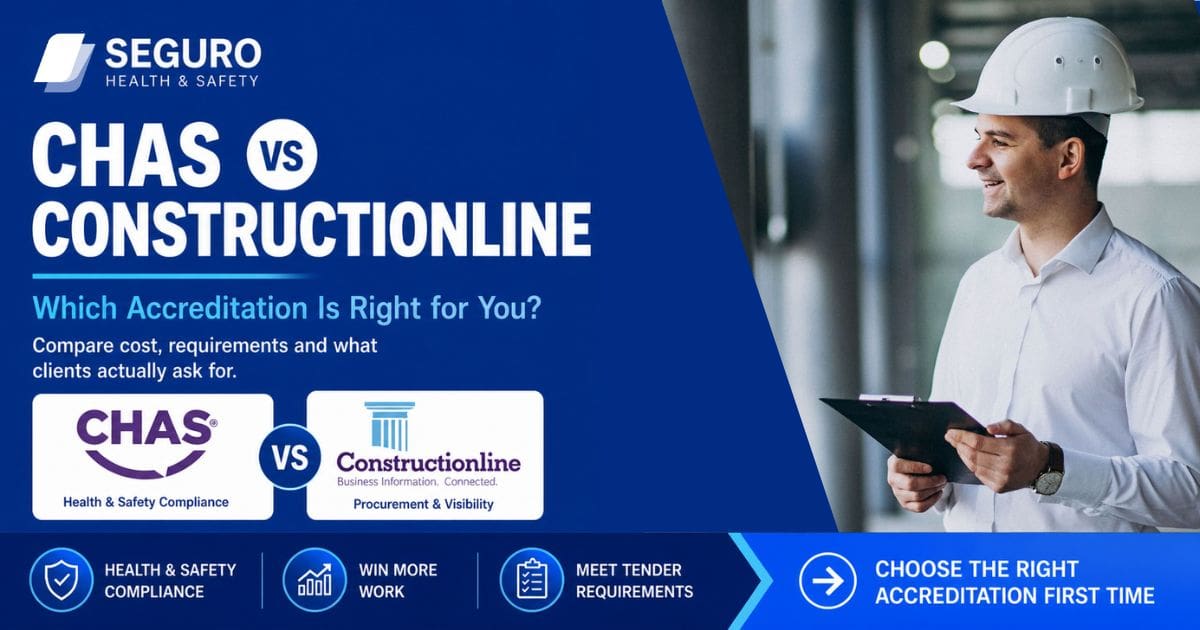
CHAS vs Constructionline: Which Accreditation Do You Need? (2026 Guide)

Quick Answer

CHAS and Constructionline are both UK contractor accreditation schemes used to demonstrate health and safety compliance.

  • CHAS focuses primarily on health & safety and SSIP compliance
  • Constructionline combines health & safety with supplier verification, financial checks, and procurement tools
  • If you’ve decided on CHAS, follow our step-by-step CHAS accreditation guide.

What is the Difference Between CHAS and Constructionline?

CHAS (Contractors Health and Safety Assessment Scheme)

  • Health & safety focused
  • SSIP accredited
  • Recognised by public and private sector clients
  • Often required for site access and contractor approval
  • To understand how both schemes align, see our SSIP and CHAS explanation.

Best for:

  • Contractors needing SSIP compliance
  • Businesses working with main contractors or local authorities

Constructionline

  • Broader pre-qualification platform
  • Includes:
    • Health & safety (via SSIP at higher levels)
    • Financial checks
    • Company verification
  • Acts as a supplier database for buyers

Best for:

  • Contractors bidding for larger frameworks and tenders
  • Businesses needing visibility to buyers

Key Differences (Simple Comparison)

Feature

CHAS

Constructionline

Focus

Health & Safety

Full supplier pre-qualification

SSIP Accreditation

Yes

Yes (Gold level)

Financial Checks

No

Yes

Procurement Platform

No

Yes

Typical Use

Compliance & site approval

Tendering & supply chain access

Which One Do Clients Prefer?

It depends on the client:

  • Main contractors / local authorities
    → Often ask for CHAS or SSIP
  • Large frameworks/procurement platforms
    → Often specify Constructionline

Some clients accept either, as both align with SSIP standards

Cost Comparison (Overview)

Costs vary based on:

  • Business size
  • Level of accreditation

Do You Need Both?

No one is enough

BUT:

  • Some contractors choose both to maximise opportunities
  • Certain clients specify one by name

When to Choose CHAS

Choose CHAS if you need to:

Meet SSIP requirements
Get approved for site work
Demonstrate health & safety compliance
Work with public sector or main contractors

When to Choose Constructionline

Choose Constructionline if you want to:

Access procurement platforms
Pass financial and supplier checks
Bid for larger contracts
Increase visibility to buyers

Pro Tip (Most Contractors Miss This)

All SSIP schemes (including CHAS and Constructionline )
follow the same core health & safety criteria

This means:

You may not need to duplicate applications.
You can often use one accreditation to support another

Final Thought

CHAS proves you are safe and compliant.
Constructionline helps you get found and win work

The best choice depends on:

  • Your clients
  • Your sector
  • Your growth strategy

Want to Choose the Right Accreditation?

Choosing the wrong scheme can:

  • Cost you money
  • Delay work
  • Limit opportunities

The right advice can save you time, cost, and stress. Need help getting approved? Our CHAS support service handles the full process for you.

CALL Amanda on 0800 031 5404 to get started

Get a price


shape Ask Amanda

Frequently asked questions

What is the difference between CHAS and Constructionline?

CHAS focuses mainly on health and safety compliance and SSIP accreditation, while Constructionline is a broader pre-qualification platform that includes financial checks, supplier verification and procurement visibility.

Is CHAS better than Constructionline?

Neither CHAS nor Constructionline is better overall. CHAS is better for demonstrating health and safety compliance, while Constructionline is better for accessing procurement opportunities and supplier databases. The right choice depends on your client’s requirements.

Do I need CHAS or Constructionline?

You may only need one accreditation, depending on your clients. Many contractors choose CHAS to meet SSIP requirements, while others choose Constructionline for tendering and visibility. Some businesses use both to maximise opportunities.

Is Constructionline SSIP accredited?

es. Constructionline Gold includes SSIP accreditation, meaning it meets the same core health and safety criteria as schemes like CHAS.

“Is CHAS part of SSIP?

Yes. CHAS is a founding member of SSIP and provides recognised health and safety accreditation that aligns with SSIP standards.

Which is cheaper, CHAS or Constructionline?

Costs vary depending on company size and level. CHAS typically costs from around £400 per year, while Constructionline starts from around £498 per year, with higher tiers costing more.

Can I have both CHAS and Constructionline?

Yes. Many contractors hold both CHAS and Constructionline to meet different client requirements and increase their chances of winning work.

Which accreditation do main contractors prefer?

Main contractors and local authorities often require CHAS or another SSIP scheme for health and safety compliance. Some larger frameworks and procurement systems may specify Constructionline.

Related CHAS Guides

SSIP Accreditation and CHAS

Insight by

amanda

Amanda Lambert

Published on

23 August 2021

CHAS

SSIP Accreditation and CHAS: What UK Contractors Need to Know (2026 Guide)

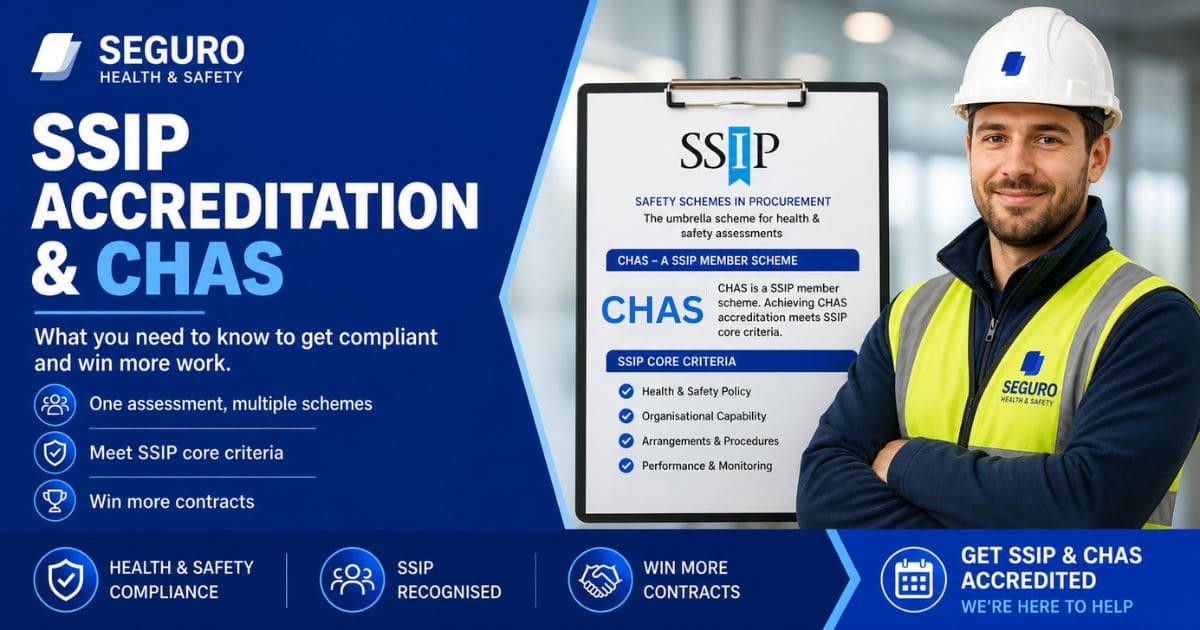
If you’re a contractor trying to win work in the UK construction sector, you’ve likely come across SSIP accreditation and CHAS.

SSIP is the system. CHAS is one of the most recognised schemes within it.

If you want to work for main contractors, councils, or commercial clients, you’ll almost always need one of them.

If you’re applying through CHAS, follow our CHAS accreditation step-by-step guide.

What Is SSIP Accreditation?

Safety Schemes in Procurement (SSIP) is an umbrella organisation that:

  • Standardises health & safety assessments
  • Reduces duplication across multiple schemes
  • Ensures all member schemes assess the same core criteria

In simple terms: SSIP means “one standard, recognised everywhere.”

What Is CHAS?

CHAS (The Contractors Health and Safety Assessment Scheme) is:

  • One of the most widely recognised SSIP schemes
  • Used by main contractors, developers, and local authorities
  • A fast way to prove your business meets health & safety requirements
  • How to get CHAS accreditation step-by-step

Quick Comparison

Feature

SSIP

CHAS

What it is

Umbrella organisation

Accreditation provider

Purpose

Standardise H&S assessments

Certify contractors

Recognition

Industry-wide

Very high

Required for tenders?

Yes (via member schemes)

Commonly specified

What Do SSIP & CHAS Actually Assess?

All SSIP schemes (including CHAS) assess the same core areas:

  • Health & Safety Policy
  • Competent Advice
  • Training & Competence
  • Risk Assessments & RAMS
  • Accident Reporting
  • Workforce Involvement
  • Monitoring & Review
  • Subcontractor Management
  • Welfare & Communication

This is why: If you pass CHAS, you meet the SSIP standard.

Do You Need SSIP or CHAS?

You DO need it if you want to:

You may not need it if:

  • You only work for domestic homeowners
  • You don’t plan to enter commercial construction

But realistically, No SSIP = limited growth in construction

CHAS vs Other SSIP Schemes

CHAS is not the only option. Other SSIP schemes include:

  • Constructionline
  • PQS
  • SMAS Worksafe
  • SafeContractor

All assess the same standards, but:

Choosing the right one depends on:

  • Your target clients
  • Tender requirements
  • Budget

How Much Does SSIP / CHAS Cost?

Typical entry-level costs:

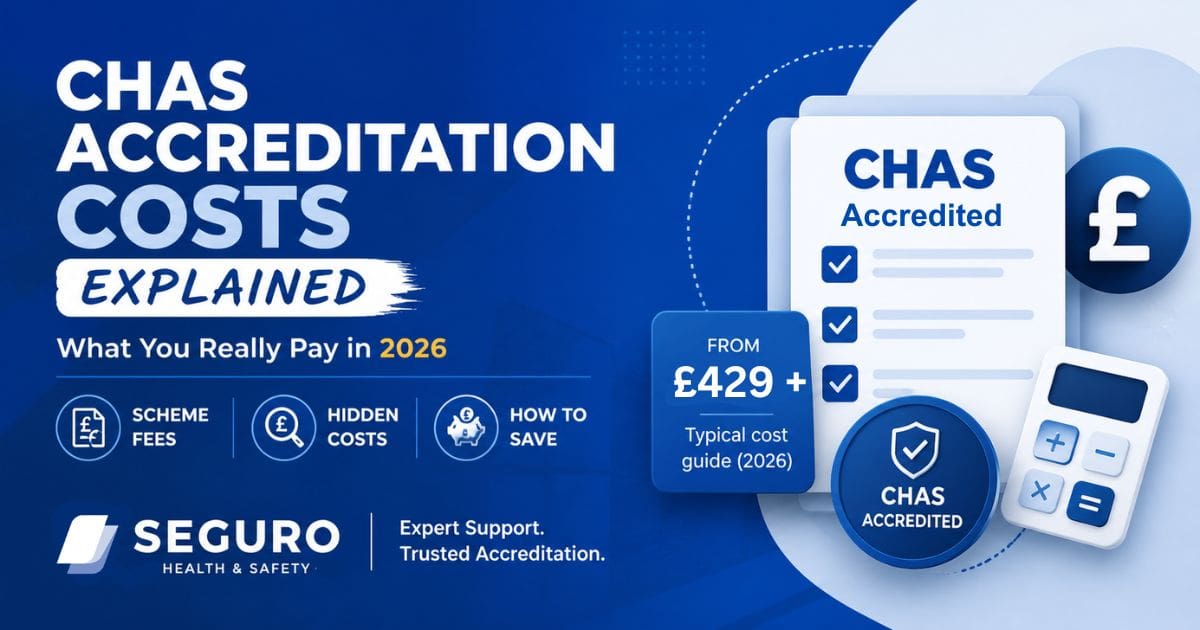
  • CHAS: from ~£429 + VAT
  • PQS – £49 + VAT
  • SMAS: from ~£317 + VAT
  • SafeContractor: from ~£419 + VAT
  • Constructionline Bronze: from ~£498 + VAT
  • To compare options, see our CHAS vs Constructionline guide.

Important: The highest cost is often getting your documents compliant, not the scheme fee.

Why Contractors Fail SSIP / CHAS

Common mistakes include:

  • Outdated health & safety policy
  • Missing RAMS
  • No competent safety advisor
  • Weak or generic documents
  • Expired insurance
  • No training evidence

Fix these early, and approval becomes straightforward. Common reasons CHAS applications fail and how to avoid them

Benefits of CHAS / SSIP Accreditation

  • Win more contracts
  • Meet pre-qualification requirements
  • Build trust with clients
  • Reduce repeated assessments
  • Improve your safety systems

Final Verdict

  • SSIP = the standard
  • CHAS = one of the best-known ways to meet it

If you want to grow in construction, SSIP accreditation isn’t optional; it’s expected.

Need help getting approved? Our CHAS support service handles the full process for you.

CALL Amanda on 0800 031 5404 to get started

Pass first time
shape Ask Amanda

Frequently Asked Questions

What is SSIP accreditation?

SSIP accreditation is a UK health and safety pre-qualification system that assesses contractors against a standard set of criteria. It helps reduce duplication across different schemes and allows contractors to demonstrate compliance to clients and main contractors.

What is CHAS, and how does it relate to SSIP?

CHAS is a health and safety accreditation scheme and a member of SSIP. It assesses contractors against the SSIP core criteria, meaning a CHAS certificate demonstrates compliance with recognised UK construction health and safety standards.

Do I need SSIP or CHAS to work in construction?

Most contractors working for main contractors, local authorities or commercial clients need SSIP accreditation such as CHAS. It is often required for pre-qualification and for accessing construction work opportunities.

Is CHAS the same as SSIP?

No. SSIP is the umbrella organisation that sets the assessment standard, while CHAS is one of the accreditation schemes that assesses contractors against those standards.

Can I use another SSIP scheme instead of CHAS?

Yes. Other SSIP schemes, such as PQS, Constructionline, SMAS, and SafeContractor, assess contractors against the same core criteria. The choice depends on what your clients or tenders require.

How long does SSIP or CHAS accreditation last?

SSIP accreditations, such as CHAS, typically last for 12 months. Contractors must renew annually to remain compliant and visible to clients and buyers. Learn about CHAS renewal.

What does CHAS assess?

CHAS assesses health and safety policies, risk assessments, training records, competent advice, accident reporting, workforce involvement, monitoring systems and subcontractor management to ensure contractors can work safely and meet industry standards. Learn about CHAS assessment criteria.

Why is SSIP accreditation important?

SSIP accreditation is important because it proves your business meets recognised health and safety standards, helps you pass pre-qualification requirements and increases your chances of winning contracts in the construction industry.

Related CHAS Guides

CHAS Accreditation Cost Breakdown (Guide Prices)

Insight by

amanda

Amanda Lambert

Published on

24 November 2015

CHAS

CHAS Accreditation Cost (2026): Full Breakdown for UK Contractors

CHAS accreditation typically costs between £400 and £3,500+ per year, depending on your company size and the level you choose (Standard, Advanced, or Elite).

Additional costs may include training, documentation, and health & safety support.

To understand the full process, see our guide on how to get CHAS accreditation.

What Affects CHAS Accreditation Cost?

CHAS pricing is based on:

  • Number of employees
  • Level of accreditation
  • Risk profile of your business

The larger your business and the higher the level, the more you will pay.

CHAS Accreditation Levels Explained

CHAS Standard (Entry Level)

  • Health & safety assessment
  • SSIP accreditation

Suitable for most small contractors

CHAS Advanced

  • Includes Standard
  • Adds PAS 91 requirements

Often needed for larger contracts.

CHAS Elite (Highest Level)

  • Includes Advanced
  • Aligns with Common Assessment Standard (CAS)
  • Covers 13 areas, including:
    • Health & safety
    • Environmental
    • Quality
    • Financial and governance

Required for many public sector frameworks

CHAS Accreditation Cost Breakdown (Guide Prices)

CHAS Standard:

  • 1 person: ~£429+ VAT
  • 2–4 people: ~£499+ VAT
  • 5–9 people: ~£829+ VAT
  • 9–15 people: ~£1009+ VAT
  • 16–30 people: ~£1179+ VAT

CHAS Advanced:

  • 1 person: ~£659+ VAT
  • 2–4 people: ~£799+ VAT
  • 5–9 people: ~£1259+ VAT
  • 9–15 people: ~£1539+ VAT
  • 16–30 people: ~£1809+ VAT

CHAS Elite:

  • 1 person: ~£909+ VAT
  • 2–4 people: ~£989+ VAT
  • 5–9 people: ~£1479+ VAT
  • 9–15 people: ~£1879+ VAT
  • 16–30 people: ~£2279+ VAT

All CHAS certifications must be renewed annually


Other CHAS accreditation Costs

Training

To comply with the standard, you may be required to train your personnel in the following courses if you have not already done so.

  • Asbestos: The Control of Asbestos Regulations
  • Working at Height The Work at Height Regulations CHAS 2013 Ltd –
  • First Aid The Health and Safety (First-Aid) Regulations
  • Fire precautions: The Regulatory Reform (Fire Safety) Order 2005 and the Dangerous Substances and Explosive Atmospheres Regulations
  • Noise and vibration: The Control of Noise at Work Regulations (NAW Regs) and The Control of Vibration at Work Regulations
  • Personal Protective Equipment Personal Protective Equipment at Work Regulations (PPE Regs)
  • Substances hazardous to Health Control of Substances Hazardous to Health Regs (COSHH)
  • Electricity Electricity at Work Regs
  • Manual Handling Operations Regulations (MHO Regs)
  • Work Equipment Provision and Use of Work Equipment (PUWE) Regs

Competent person safety advisor

You must employ a competent safety advisor if you employ more than five people. If you are a large organisation, you may already have one. Employing a qualified safety advisor may be prohibitive if you are a small contractor.

We are the remote competent person safety advisor for over eight hundred companies. We can offer this service to you for a fraction of the cost.

Additional Costs to Consider

CHAS is not just the fee—you may also need:

Training Costs

Depending on your work:

  • Working at height
  • Asbestos awareness
  • First aid
  • COSHH
  • Manual handling

Documentation Costs

If you don’t already have:

  • RAMS
  • Health & safety policy
  • Procedures

Competent Person (Safety Advisor)

UK law requires access to a competent health & safety advisor

This can be:

  • In-house (expensive)
  • Outsourced (more cost-effective)

How to Reduce CHAS Costs

To keep costs down:

Choose the correct CHAS level

Prepare documents before applying

Keep training up to date

Avoid failed applications (costs time + delays)

Use expert support to get it right first time

Can You Save Money with Other SSIP Schemes?

CHAS is one of several SSIP schemes.

Alternatives include:

Some schemes are cheaper, especially for small businesses.

Please note:

  • All SSIP schemes follow the same core criteria.
  • Many clients still specify CHAS by name.
  • To understand what’s involved in passing, see the full CHAS assessment criteria explained.

Is CHAS Worth the Cost?

CHAS is not legally required…

But it is often commercially essential.

Without it, you may:

  • Lose contract opportunities
  • Fail pre-qualification
  • Be excluded from tenders.
  • Once approved, you’ll be recognised as a CHAS-accredited contractor.

With it, you can:

  • Demonstrate compliance
  • Win more work
  • Reduce repeated assessments

Final Thought

CHAS accreditation costs are not just fees…

It’s an investment in:

  • Compliance
  • Credibility
  • Business growth

CALL Amanda on 0800 031 5404 to get started

Get a price
shape Ask Amanda

Related CHAS Guides

Frequently asked questions

How much does CHAS accreditation cost?

CHAS accreditation costs vary depending on your company’s size and the level selected. Smaller contractors usually pay less, while larger businesses and higher levels, such as CHAS Advanced or CHAS Elite, cost more.

What affects the cost of CHAS accreditation?

The cost of CHAS accreditation is mainly determined by the number of employees, the chosen accreditation level, your business risk profile, and whether you need additional support with documents, training, or competent person advice.

What are the CHAS accreditation levels?

CHAS offers different levels, including CHAS Standard, CHAS Advanced and CHAS Elite. Standard focuses on health and safety and SSIP. Advanced includes wider checks such as PAS 91. Elite is aligned with the Common Assessment Standard.

Are there extra costs besides the CHAS fee?

Yes. Additional CHAS costs may include training, RAMS, health and safety policies, procedures, insurance updates and competent person support if your current documents or evidence are missing or out of date.

Do I need a competent person for CHAS accreditation?

Yes. CHAS applicants normally need to show they have access to competent health and safety advice. This may be provided by an in-house safety advisor or an outsourced competent person service.

Can I reduce the cost of CHAS accreditation?

You can reduce CHAS accreditation costs by choosing the correct level, preparing documents before applying, keeping training up to date, avoiding failed submissions and considering whether another SSIP scheme is more suitable for your client’s requirements. Get support.

Is CHAS accreditation legally required?

CHAS accreditation is not a legal requirement, but many public sector organisations, main contractors and commercial clients require it before allowing contractors to tender or work on their sites.

Is CHAS worth the cost?

CHAS can be worth the cost if your clients ask for it or if it helps you access tenders and win work. For many contractors, the value lies in proving compliance and being accepted by clients more quickly. If you are not sure, ask.