Close Navigation

Search

Company policies Method Statements Risk assessments Health and safety policies CHAS accreditation Constructionline accreditation Safe Contractor accreditation PQS accreditation

What is PQS accreditation

Insight by

Bob Evans

Bob Evans

Published on

1 January 2026

PQS accreditation

What Is PQS Accreditation? (UK Contractors Explained)

PQS accreditation stands for Pre-Qualification Scheme accreditation. It is used in the UK construction and services sectors to assess whether a contractor meets recognised standards for health & safety, insurance, financial stability, and legal compliance.

Many clients and principal contractors require the accreditation before allowing businesses to tender for work.

What Does PQS Mean?

A PQS accreditation confirms that a business has been independently assessed against industry-recognised criteria. It demonstrates that a contractor:

  • Manages health and safety effectively
  • Has appropriate insurance in place
  • Is financially viable
  • Meets legal and regulatory obligations

Instead of completing multiple PQQs, accredited contractors can use PQS as proof of compliance.

Who Needs PQS Accreditation?

The accreditation is commonly required for:

  • Construction contractors and subcontractors
  • Electrical, mechanical, and building services companies
  • Maintenance and facilities management providers
  • Businesses tendering for commercial or public sector work

For many buyers, PQS accreditation is a minimum entry requirement.

What Does The Accreditation Assess?

A PQS assessment typically reviews:

Health & Safety Management

  • Health & Safety Policy
  • Risk assessments and method statements (RAMS)
  • Training and competence records
  • Accident reporting procedures

Company and Financial Information

  • Business structure and ownership
  • Public and employers’ liability insurance
  • Financial declarations or accounts

Compliance and Governance

  • Legal compliance
  • Modern slavery and equality policies (where applicable)
  • Environmental considerations

Get a price for a PQS accreditation

How Long Does The Accreditation Last?

PQS accreditations are valid for 12 months and require annual renewal to ensure information remains current and compliant.

Benefits of the Accreditation

PQS accreditation helps contractors:

  • Win more work
  • Reduce repeated PQQ paperwork
  • Demonstrate competence to buyers
  • Meet procurement requirements quickly

For small contractors, it saves time and improves credibility.

Common Misunderstandings

  • It is not optional for many contracts
  • Generic policies are not sufficient
  • Accreditation must be maintained, not just achieved

Conclusion

  • PQS accreditation is a UK pre-qualification assessment

  • It proves contractor competence and compliance

  • Often required before tendering

  • Covers health & safety, insurance and financial checks

  • Typically renewed annually


Expert Advice

Choosing the right PQS scheme, and getting your documentation right first time, can be the difference between winning work and being delayed or rejected at the pre-qualification stage.

The first question most contractors ask is “how much does it cost?”


In many cases, PQS accreditation is significantly more cost-effective than other SSIP schemes such as CHAS, while meeting the same SSIP-recognised standards. All SSIP accreditations follow the same core criteria, so you’re not compromising on compliance.

PQS fees can vary, so rather than guessing, complete a short form and we’ll confirm the exact current cost for your business.

Click the button below.

What is SSIP?

Insight by

Bob Evans

Bob Evans

Published on

4 November 2025

Health and safety blog

SSIP Accreditation: What It Is & Why It Matters for Contractors Guide

What is SSIP? Everything construction businesses need to know about the pre-qualification and winning more work.

What Is SSIP?What is SSIP, SSIP accreditation, ssip deem to satisfy

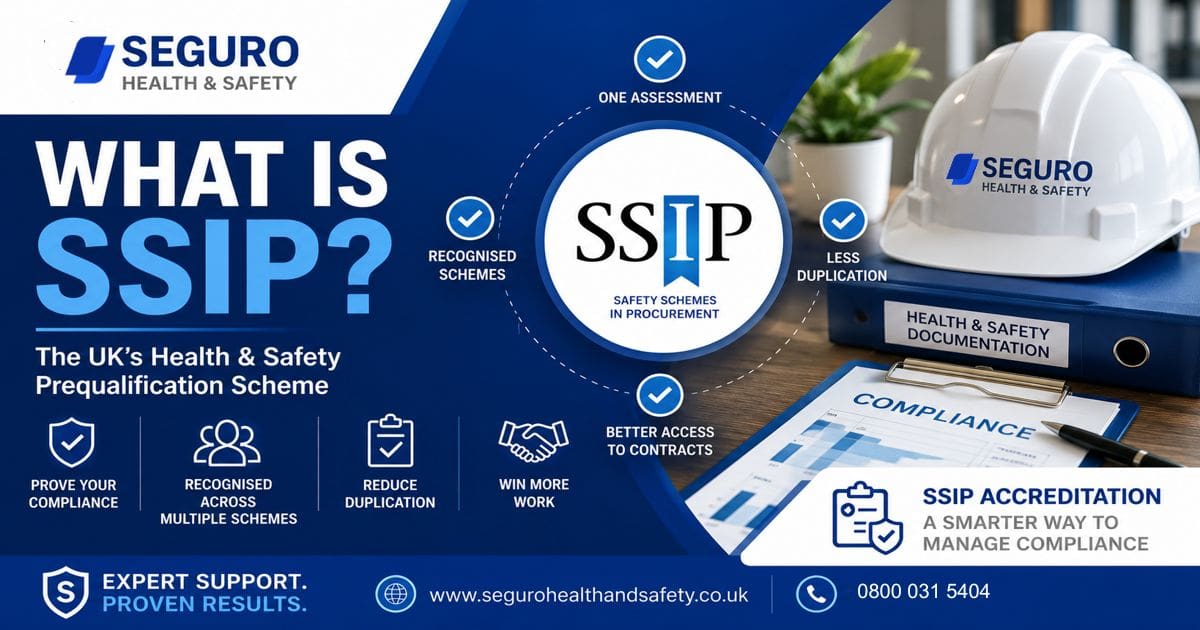
SSIP (Safety Schemes in Procurement) is the UK’s national umbrella organisation for health & safety assessment schemes.
Instead of completing multiple safety accreditations, SSIP allows businesses to gain recognition once and have it accepted by many different buyers.

SSIP includes well-known schemes such as:

If a contractor holds a CHAS, Constructionline, or PQS-approved accreditation, clients can trust that their health & safety systems meet core standards.

Why The Accreditation Matters

SSIP is now one of the most important benchmarks for contractors, subcontractors, and trades in the UK. Here’s why:

1. Win More Work With Recognised Safety Standards

Major contractors, councils, FM companies, and developers increasingly require CHAS, Constructionline, and PQS as part of PQQ or onboarding.

2. Saves Time on Repetitive Safety Pre-Qualification

SSIP prevents businesses from having to complete multiple health & safety assessments for different clients—saving hours of admin every month.

3. Reduces Cost of Compliance

Instead of paying for several accreditations, one SSIP certificate is accepted by many buyers.

4. Demonstrates Legal Compliance

SSIP assessments align with UK safety laws including:

  • Health and Safety at Work Act

  • Management of Health and Safety at Work Regulations

  • CDM Regulations

This reassures clients that your company operates safely and competently.

5. Strengthens Your Brand & Credibility

Displaying an SSIP badge shows customers, inspectors, and project managers that you take safety seriously.

Get Accredited and Win More Work!

What Do The Assessors Check?

To gain accreditation through any approved scheme, your company must provide evidence of:

Health & Safety Management

  • Up-to-date H&S policy

  • Competent person support

  • Safety arrangements

  • Toolbox talks & site inductions

Risk Management

  • Recent RAMS

  • COSHH assessments

  • Site-specific risk controls

Training & Competence

  • CSCS/CPCS evidence

  • Certificates of training

  • Induction process

Incident & Reporting Systems

  • Accident records

  • RIDDOR procedures

  • Near-miss processes

Insurance

  • Employer’s liability

  • Public liability

  • Professional indemnity (if relevant)

If applying for enhanced schemes (e.g., SafePQQ), additional checks cover environmental, quality, and social value standards.

How to Get SSIP Accreditation (Step-by-Step)

Step 1: Choose a Scheme

Decide whether CHAS, SafeContractor, SMAS, or Constructionline best matches your business needs.

Step 2: Complete the Online Assessment

Provide your company details, trade activities, and scope of works.

Step 3: Upload Documentation

Submit your health & safety policy, RAMS, training records, and insurance certificates.

Step 4: Assessment Review

An SSIP auditor reviews everything and may request additional evidence.

Step 5: Receive Your Certificate

Once approved, your business is added to the national database and can display the SSIP badge.

Accreditation lasts 12 months and must be renewed annually.

Most Common Reasons SSIP Applications Fail

Avoid these issues to secure fast approval:

❌ Outdated or missing H&S policy
❌ No recent or adequate RAMS
❌ Missing staff training certificates
❌ Incomplete accident records
❌ Insurance out of date or incorrect
❌ Competent person details missing

Fixing these in advance boosts your first-time pass rate.

SSIP vs Non-SSIP Schemes

Scheme Type Accepted by Buyers? Benefits
SSIP Certified Widely accepted Saves time, reduces cost, proves competence
Non-SSIP Schemes Limited acceptance May require additional paperwork

SSIP is designed to simplify compliance across the entire supply chain.

Get Accredited and Win More Work!

Is it Worth It for Contractors?

Absolutely. The Accreditation helps you:

✔ Win more work
✔ Reduce tendering admin
✔ Get recognised by major contractors
✔ Demonstrate health & safety competence
✔ Strengthen your professional image

If you want to grow in construction, FM, engineering, or local authority supply chains, SSIP is now an essential requirement—not just a “nice to have.”

Do I need to be a CHAS accredited contractor?

Insight by

Bob Evans

Bob Evans

Published on

24 October 2025

CHAS

Table of contents

Do I need to be a CHAS accredited contractor?

If you are self-employed or a small contractor do you need to be a CHAS accredited contractor. You may be asked to get CHAS or other SSIP certificate. Let us explain the situation to you.

Domestic Market

If you work in the domestic market and want to sail close to the wind, the answer is no, as homeowners will not insist that you work safely.

However, you have a duty of care for yourself and others under UK health and safety legislation. Even working in the domestic market, you will be in trouble if you have a terrible accident or cause harm to others.

Construction Market

The answer is yes if you work in the construction market or want to work there. You will need to have a recognised standard of health and safety.

Main contractors and clients such as local authorities insist that everyone who works for them has a standard of health and safety. They insist as it is part of their health and safety systems.

The most well-known standard is CHAS, but there are other providers of the same standard under the SSIP umbrella. SSIP (Safety Schemes in Procurement) is a organisation that manages accreditation suppliers, to ensure they work to the same standards.

The size of your business matters

If you are self-employed or a small contractor with less than 5 employees, you need CHAS or similar, SSIP but you will not be required to employ a competent person safety advisor.

You must employ a competent person safety advisor if you employ 5 or more people, including sub-contractors or other self-employed people. The easiest way to do this is to use a remote competent person safety advisor. We offer this service.

What is CHAS

The Core Criteria and the threshold standard of CHAS and all the other SSIP accreditations  is as follows:

  • Health & safety policy
  • Competent Advice
  • Training arrangements
  • Monitoring, audit and review
  • Workforce involvement
  • Accident reporting and enforcement action
  • Subcontracting/consulting
  • Risk Assessments and Safe Systems of Work
  • Cooperations with others
  • Welfare provision
  • Hazard elimination

Learn more about CHAS

We have a series of articles where you can learn more about CHAS. The list of articles is below:

The Good News

We are here to support you through the process; we can prepare all the documents, complete the registration forms, and simplify the process. CHAS is expensive, but other providers are very economical. The best thing to do is chat with us and learn more; we can tell you about the costs and the time frame. Our number is 0800 031 5404, or you can complete the form below.


    I confirm I have read and agree to the Seguro Health and Safety Consultants Privacy Policy.

    What is Builders Profile?

    Insight by

    amanda

    Amanda Lambert

    Published on

    14 August 2024

    Health and safety blog

    What Is Builders Profile?

    Builders Profile is a UK construction compliance and pre-qualification platform used to assess and verify contractor competence. It allows contractors to upload evidence once and share it with multiple clients, reducing repeated PQQs and simplifying compliance.

    It is widely used by principal contractors, house builders, and developers across the UK.

    What Does Builders Profile Do?

    It acts as a central compliance hub where contractors store and manage key business information, including:

    • Health & safety documentation
    • Insurance certificates
    • Training and competence records
    • Company and financial details
    • Accreditation evidence

    Clients can access this information directly, saving time for both parties.

    Who Uses Builders Profile?

    It is commonly used by:

    • Construction contractors and subcontractors
    • Trades working for house builders and developers
    • Principal contractors managing supply chains
    • Facilities management and maintenance companies

    Many large contractors require suppliers to be registered on Builders Profile before onboarding.

    Is Builders Profile an Accreditation?

    No. It is not an accreditation like CHAS, SMAS, or Constructionline.

    Instead, it is a compliance and verification platform that may host evidence of your accreditations, helping clients review your compliance in one place.

    What Information Is Assessed on Your Profile?

    While the Profile itself does not certify you, it typically reviews and verifies:

    • Health & Safety policies and procedures
    • Risk assessments and method statements (RAMS)
    • Training records (e.g. CSCS, trade qualifications)
    • Insurance and company information
    • Modern slavery, equality, and environmental policies

    Benefits of Using Builders Profile

    Your Profile helps contractors:

    • Reduce repeated PQQ submissions
    • Speed up supplier onboarding
    • Improve visibility with clients
    • Demonstrate compliance efficiently
    • Manage documents in one central system

    How Long Does Builders Profile Registration Last?

    Registration is usually annual, with ongoing updates required to keep documents current and visible to clients.

    Summary

    • Builders Profile is a UK construction compliance platform
    • Used to store and share contractor information
    • Not an accreditation or SSIP scheme
    • Reduces repeated PQQs
    • Widely used by principal contractors and house builders

    Expert Insight

    Your Profile works best when combined with recognised accreditations such as CHAS, SMAS, Constructionline or CQMS, ensuring your compliance evidence meets buyer expectations.

    Get a Accredited

    • ast Turnaround. Documents ready in 5 days
    • Fixed Fees. There are no hidden charges
    • Trusted Friendly consultant. 
    Get Start Today
    shape What is Builders Profile