



Construction Health and Safety Consultant Services for UK Businesses
Health and safety is no longer just a legal requirement. For construction companies, contractors, subcontractors, and SMEs, effective health and safety management is essential for protecting workers, winning contracts, maintaining compliance, and safeguarding your business reputation.
Whether you employ a single worker or manage multiple construction projects, having access to competent health and safety advice can help you reduce risk, improve performance, and demonstrate compliance to clients and regulators.
This guide explains everything you need to know about construction health and safety consultants, safety advisors, competent person services, compliance requirements, costs, and the documentation your business needs.
What Is a Construction Health and Safety Consultant?
A construction health and safety consultant is a specialist who helps businesses comply with health and safety legislation while creating safer working environments.
Their role typically includes:
- Developing health and safety policies
- Producing risk assessments and method statements (RAMS)
- Conducting site inspections
- Supporting SSIP accreditation applications
- Assisting with CHAS, SafeContractor and Constructionline requirements
- Providing competent person support
- Investigating incidents and near misses
- Delivering health and safety training
- Ensuring legal compliance
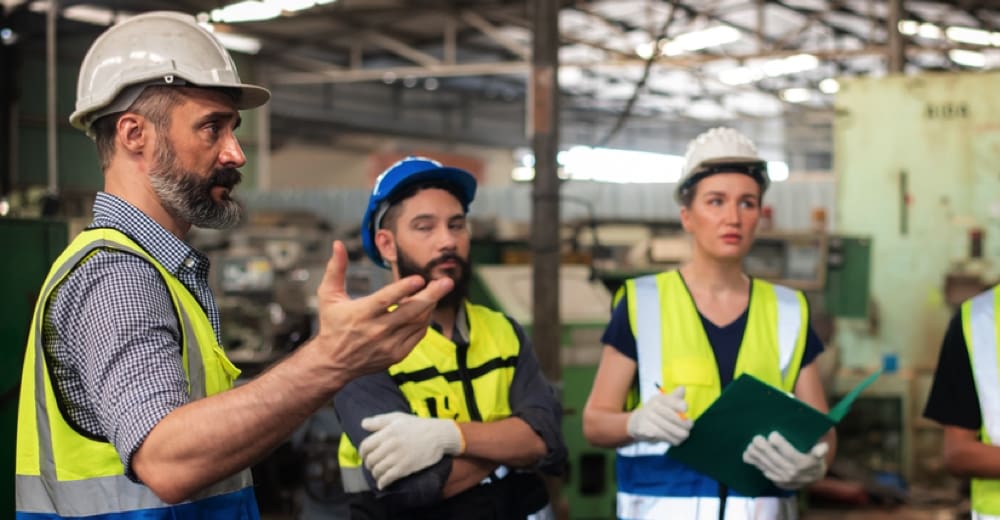
A consultant serves as an expert resource, enabling businesses to access professional health and safety support without employing a full-time health and safety manager. H&S Consultant or Advisor
Why Is Health and Safety Important in Construction?
Construction remains one of the UK’s highest-risk industries.
Common hazards include:
- Working at height
- Excavations
- Plant and machinery
- Manual handling
- Electrical work
- Asbestos exposure
- Vehicle movements
- Dust and hazardous substances
Without effective management, these risks can lead to:
- Serious injuries
- Fatal accidents
- HSE investigations
- Improvement notices
- Prosecution
- Project delays
- Increased insurance costs
- Reputational damage
Effective health and safety management protects both workers and businesses.
Transforming construction health and safety
What Does a Construction Health and Safety Consultant Do?
Services typically include:
Health and Safety Policies
A clear policy demonstrates management commitment and is often required for accreditation schemes and tender opportunities.
Risk Assessments
Identifying hazards and implementing suitable controls to reduce risk.
Method Statements
Safe systems of work explaining how tasks will be completed safely.
Site Inspections
Regular inspections help identify issues before they become serious incidents.
Accident Investigation
Supporting businesses in understanding causes and preventing recurrence.
Training Support
Helping ensure employees have suitable competence for their roles.
Accreditation Support
Many consultants help businesses achieve:
- CHAS
- SafeContractor
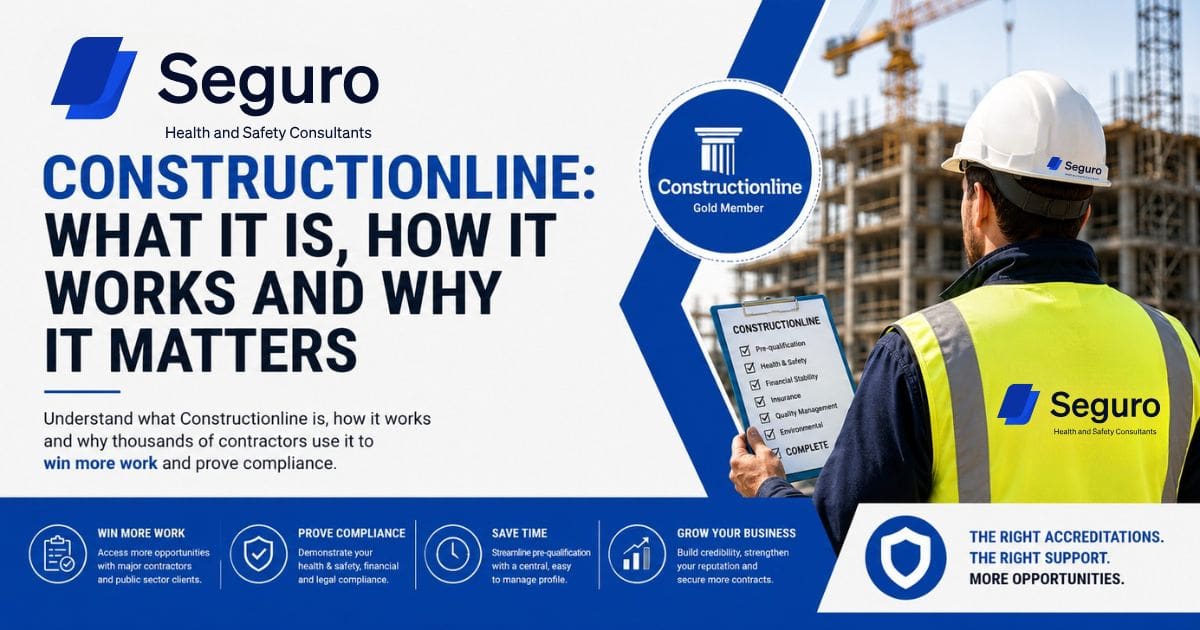
- Constructionline
- SMAS
- CQMS
- PQS
- Avetta
Safety Advisor vs Health and Safety Consultant
Many people use these terms interchangeably, but there can be differences.
Health and Safety Consultant
Typically project-based and focused on:
- Compliance reviews
- Audits
- Accreditation support
- Policy development
- Specialist advice
Safety Advisor
Usually provides ongoing support such as:
- Day-to-day advice
- Regular compliance monitoring
- Documentation updates
- Contractor support
- Employee guidance
Many businesses benefit from a combination of both services. Consultant or Advisor – Your Guide.
What Is a Competent Person?
A competent person is someone with sufficient training, knowledge, experience, and qualifications to advise a business on health and safety matters.
A competent person can:
- Review compliance arrangements
- Assist with risk management
- Provide legal guidance
- Support accident investigations
- Help prepare for audits and assessments
Many businesses outsource this role to a specialist consultant. Do You Need a Safety Consultant?
Do You Legally Need a Health and Safety Consultant?
The law does not specifically require you to appoint a consultant.
However, under the Management of Health and Safety at Work Regulations 1999, employers must have access to competent health and safety advice.
For many SMEs, this requirement is fulfilled through:
- A retained safety advisor
- A competent person service
- An external health and safety consultant
Using an experienced consultant provides confidence that your business remains compliant with current legislation and industry best practice.
Common Construction Health and Safety Mistakes
Many contractors encounter similar problems:
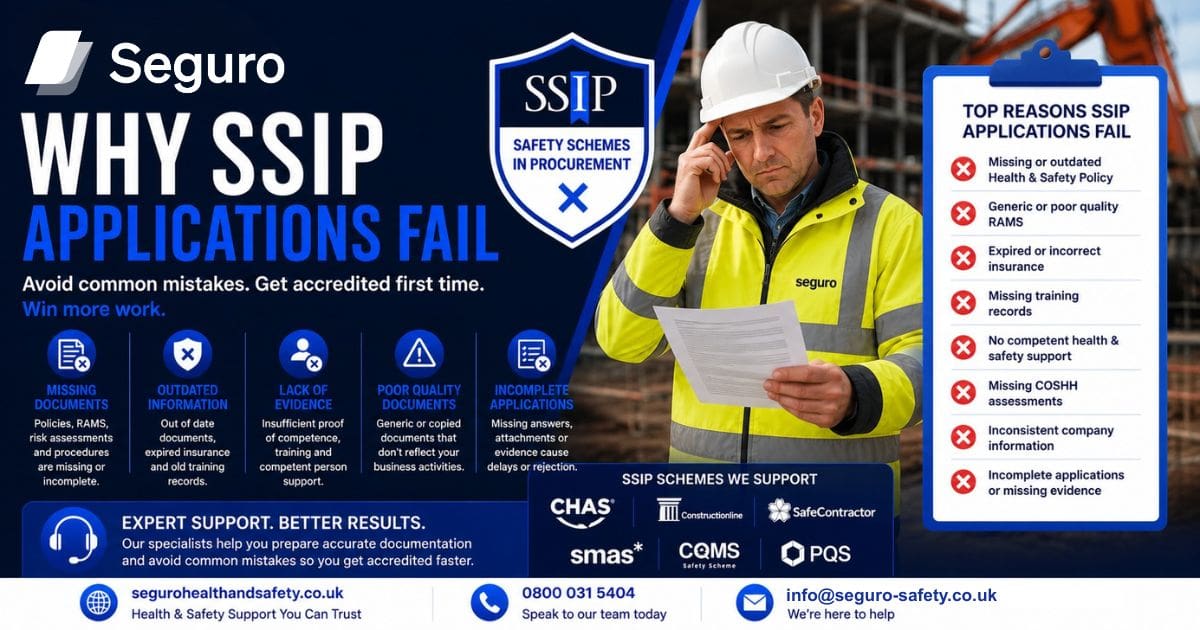
Outdated Policies
Documents that have not been reviewed.
Generic Risk Assessments
Templates that do not reflect actual activities.
Missing Training Records
Unable to demonstrate workforce competence.
Lack of Monitoring
No evidence of site inspections or audits.
Poor Incident Reporting
Near misses and accidents not investigated properly.
Addressing these issues can significantly improve compliance performance. Your complete guide on Common Health and Safety Mistakes
What Happens If You Ignore Health and Safety?
Ignoring health and safety can result in:
- HSE enforcement action
- Improvement notices
- Prohibition notices
- Unlimited fines
- Criminal prosecution
- Increased insurance costs
- Contract termination
- Reputational damage
The cost of prevention is usually far lower than the cost of non-compliance. Learn more Health and Safety Legislation You Cannot Ignore
How Health and Safety Compliance Helps Win Contracts
Health and safety compliance is often a commercial requirement.
Many clients require:
- SSIP accreditation
- Competent person support
- Suitable policies
- Risk assessments
- Insurance evidence
- Training records
Businesses with strong compliance systems often:
- Win more tenders
- Access larger projects
- Improve client confidence
- Reduce procurement barriers
Health and safety can become a competitive advantage.
Health and Safety Documents Contractors Need
Most construction businesses require:
Health and Safety Policy
Defines the company’s commitment to safety.
Risk Assessments
Documents workplace hazards and control measures.
Method Statements
Explains safe working procedures.
COSHH Assessments
Required where hazardous substances are used.
Training Records
Evidence employee competence.
Accident Reporting Procedures
Required to manage incidents effectively.
First Aid Arrangements
Ensures suitable emergency response.
Monitoring Records
Demonstrates ongoing management of safety performance.
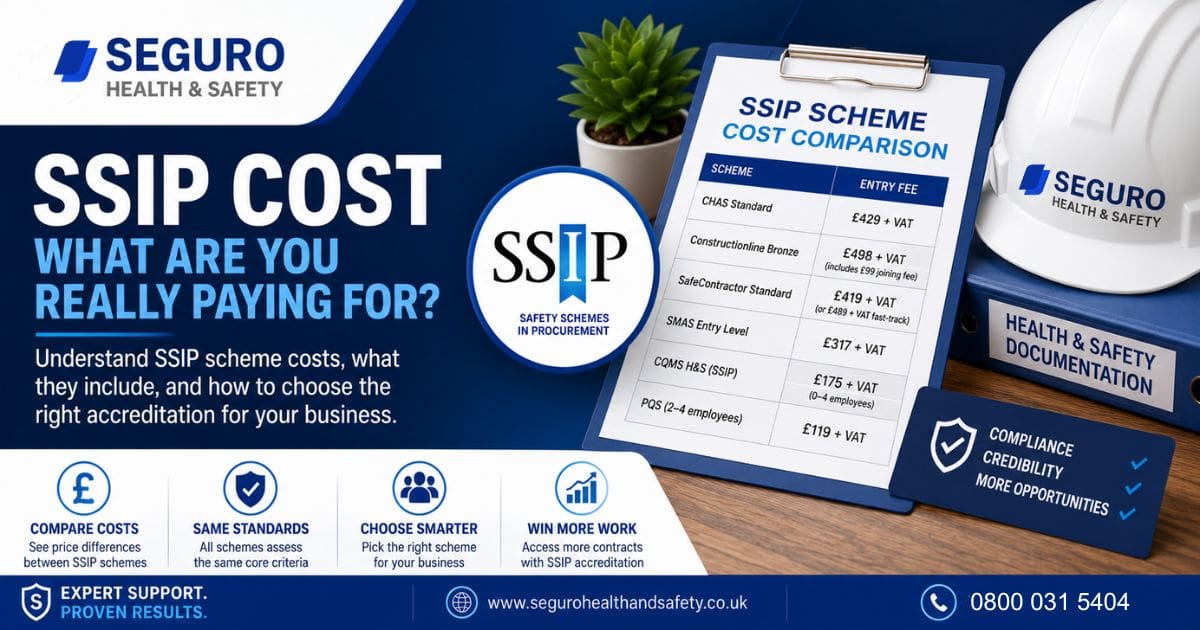
How Much Does a Construction Health and Safety Consultant Cost?
Costs vary depending on the level of support required.
Typical services include:
| Service | Typical Cost |
|---|---|
| Safety Advisor Retainer | £50–£250+ per month |
| Competent Person Service | £50–£300+ per month |
| Policy Development | £150–£500 |
| RAMS Preparation | £75–£500+ |
| Site Inspection | £150–£500+ |
| Accreditation Support | Variable |
Many businesses find outsourced support significantly more cost-effective than employing an in-house safety professional. For more detailed information on cost go to: How Much Does Health and Safety Services Cost
Health and Safety Requirements for Small Businesses
If your business has fewer than five employees, you still have legal duties.
You must:
- Assess risks
- Provide suitable training
- Maintain safe systems of work
- Control hazards
- Consult employees
- Report incidents where required
Smaller businesses often benefit from outsourced competent person support because it provides professional advice at a fraction of the cost of employing a full-time specialist. To learn more go to: Health and Safety Requirements for Small Businesses
Choosing the Right Health and Safety Consultant
When selecting a consultant, look for:
- Construction industry experience
- Practical advice
- Accreditation expertise
- Responsive support
- Transparent pricing
- Positive client feedback
The best consultants help businesses remain compliant while supporting commercial growth.
Why Work With Seguro?
At Seguro, we help construction businesses achieve compliance with confidence.
Our services include:
- Competent Person Support
- Safety Advisor Services
- Health and Safety Documentation
- RAMS Preparation
- Site Inspections
- CHAS Support
- Constructionline Support
- SafeContractor Support
- SSIP Accreditation Assistance
We work with sole traders, SMEs, subcontractors, and principal contractors throughout the UK.
Our aim is simple: make health and safety straightforward, practical, and effective.
Need Help With Construction Health and Safety?
Whether you need a competent person, safety advisor, accreditation support, or help developing your compliance systems, professional guidance can save time, reduce risk, and help your business win more work. Some services we offer are below:
Get in touch today to discuss your health and safety requirements and discover how expert support can help your business stay compliant and grow with confidence.


Frequently Asked Questions
What does a construction health and safety consultant do?
A construction health and safety consultant helps businesses comply with health and safety legislation, manage workplace risks, develop safety documentation, conduct site inspections, support accreditations, and improve overall safety performance. Their role is to help contractors create safer workplaces while meeting legal and client requirements.
Do I legally need a health and safety consultant?
There is no legal requirement to employ a health and safety consultant. However, UK employers must have access to competent health and safety advice under the Management of Health and Safety at Work Regulations 1999. Many businesses satisfy this requirement through an external consultant or competent person service.
What is the difference between a safety advisor and a health and safety consultant?
A health and safety consultant typically provides specialist advice, audits, and project-based support. A safety advisor usually offers ongoing day-to-day assistance, helping businesses maintain compliance, update documentation, and manage health and safety responsibilities on a continual basis.
What is a competent person in health and safety?
A competent person is someone with the necessary training, knowledge, experience, and skills to provide health and safety advice. Employers are required to have access to competent advice to help them meet their legal health and safety duties.
Can a health and safety consultant act as my competent person?
Yes. Many construction businesses appoint an external health and safety consultant to act as their competent person. This provides access to professional advice without the cost of employing an in-house health and safety manager.
What health and safety documents does a contractor need?
Most contractors require a health and safety policy, risk assessments, method statements, COSHH assessments, training records, accident reporting procedures, first aid arrangements, and evidence of ongoing monitoring and inspections.
How can a health and safety consultant help me win more contracts?
Many clients and principal contractors require evidence of health and safety compliance before awarding work. A consultant can help prepare the necessary documentation, achieve accreditation schemes such as CHAS and SafeContractor, and demonstrate competence during pre-qualification processes.
What is the difference between a competent person and a safety advisor?
A competent person fulfils a legal requirement by providing professional health and safety advice. A safety advisor often performs a broader support role, helping businesses manage compliance, update documentation, conduct inspections, and provide ongoing guidance.
How much does a construction health and safety consultant cost?
Costs vary depending on the level of support required. Retained safety advisor services typically start from around £50 per month, while project-based consultancy, site inspections, accreditation support, and documentation preparation are usually priced separately.
Do small businesses need health and safety support?
Yes. Even businesses with fewer than five employees have legal health and safety responsibilities. Small businesses must assess risks, provide suitable training, maintain safe systems of work, and ensure employees are protected from harm.
What are the consequences of poor health and safety management?
Poor health and safety management can lead to accidents, injuries, HSE enforcement action, fines, project delays, increased insurance premiums, reputational damage, and lost contract opportunities.
Can a consultant help with CHAS accreditation?
Yes. Health and safety consultants regularly assist businesses with CHAS applications, helping prepare policies, risk assessments, training records, and supporting evidence required to achieve accreditation successfully.
Can a consultant help with SafeContractor and Constructionline?
Yes. Most construction health and safety consultants support SafeContractor, Constructionline, SMAS, CQMS, PQS, and other SSIP accreditation schemes by preparing documentation and managing the assessment process.
How often should health and safety documents be reviewed?
Health and safety policies are typically reviewed annually. Risk assessments, method statements, and procedures should also be reviewed whenever there are significant changes to work activities, legislation, equipment, or personnel.
What industries can benefit from a health and safety consultant?
Health and safety consultants support a wide range of industries, including construction, facilities management, manufacturing, engineering, property maintenance, housing associations, education, healthcare, and logistics.
What should I look for when choosing a health and safety consultant?
Look for industry experience, practical advice, accreditation expertise, construction knowledge, transparent pricing, positive client feedback, and a proven track record of helping businesses remain compliant and win work.
Can a health and safety consultant provide site inspections?
Yes. Site inspections are a common service provided by health and safety consultants. Inspections help identify hazards, verify compliance, improve safety standards, and provide evidence of ongoing monitoring.
Is outsourced health and safety support better than employing someone in-house?
For many SMEs, outsourced support is more cost-effective than employing a full-time health and safety manager. It provides access to specialist expertise, ongoing advice, and compliance support at a fraction of the cost.
How quickly can a health and safety consultant help my business become compliant?
This depends on the size of the business and existing documentation. Many contractors can achieve a compliant health and safety management system within a few days or weeks when supported by an experienced consultant.
Why choose Seguro for health and safety support?
Seguro provides practical, construction-focused health and safety support, including competent person services, safety advisor support, documentation preparation, site inspections, and accreditation assistance. Our goal is to help businesses stay compliant, reduce risk, and win more work.
More Articles
- H&S Consultant or Advisor
- Health and Safety Consultancy Services
- Remote Safety Advisor Services
- Safety Consultant V Safety Advisor
- Do You Need a Safety Consultant?
- Health and Safety Legislation You Cannot Ignore
- Common Health and Safety Mistakes
- What Happens if You Ignore Health and Safety?
- Health and Safety in Construction
- Health and Safety Documents: What Do You Need?
- Improving Safety in Construction
- Before and After H&S Compliance
- How Much Does Health and Safety Services Cost
- Health and Safety Requirements for Small Businesses