Close Navigation

Search

What is a Dynamic Risk Assessment

Insight by

Bob Evans

Bob Evans

Published on

25 November 2025

Risk assessments

What Is a Dynamic Risk Assessment (DRA)?

How to identify risks in real time and keep your construction site safe

A Dynamic Risk Assessment is a real-time evaluation of hazards carried out on the spot, usually by site workers, supervisors, and subcontractors. Unlike a standard written risk assessment completed before work begins, a DRA helps workers respond to unexpected hazards, changing site conditions, and evolving risks during the job.

In the construction sector—where environments shift daily, and multiple trades work in close proximity Dynamic Risk Assessment is essential for preventing accidents, delays, and costly safety breaches.

SHOP For  Your Method and Risk Assessments Here

Why Dynamic Risk Assessments Are Important in Construction

1. Construction Sites Change Constantly

Weather, plant movement, deliveries, ground conditions and access routes can change in minutes. A DRA ensures risks are reassessed when conditions shift.

2. Workers Face Unplanned Hazards

Unexpected hazards include:

  • New excavations

  • Temporary power cables

  • Materials stored incorrectly

  • MEWPs or forklifts operating nearby

  • Slips, trips and uneven ground

A written risk assessment won’t always cover these, but a DRA will.

3. Compliance With UK Legislation

The Health and Safety at Work Act 1974 and Management of Health and Safety at Work Regulations 1999 require employers to manage risk as it arises. DRAs support these legal duties.

4. Reduces Accidents and Delays

By empowering workers to pause, think, and react, DRAs significantly reduce the chance of injury, project delays, insurance claims and HSE notices.

Who Should Carry Out a Dynamic Risk Assessment on Site?

A DRA can be performed by:

  • Site managers

  • Supervisors

  • Tradespeople

  • Plant operators

  • Subcontractors

  • Anyone who encounters a change in conditions

It’s important that every worker is trained to recognise hazards and understands they have the authority to stop work immediately if they believe new risks have emerged.

How to Carry Out a Dynamic Risk Assessment

Step 1: Stop and Observe the Task

Pause before starting the activity. Look at the area, equipment, and people nearby.

Step 2: Identify New or Unexpected Hazards

Common construction examples:

  • Unstable loads

  • Missing edge protection

  • Live services exposed

  • Unsafe weather conditions (wind, rain, heat)

  • New contractors working overhead

  • Confined space risks

Step 3: Evaluate the Risk Level

Ask:

  • How likely is an accident?

  • What is the potential severity?

  • Who could be harmed?

  • Do control measures already exist?

Step 4: Implement Controls Immediately

Typical controls include:

  • Changing the access route

  • Stopping plant movements

  • Using a banksman

  • Wearing additional PPE

  • Delaying the task

  • Getting a supervisor’s approval

Step 5: Continue or Stop the Task

If risks cannot be controlled safely: STOP WORK.
Report to a supervisor and update the formal RAMS if necessary.

Dynamic Risk Assessment vs. Standard Risk Assessment

Standard (Written) Risk Assessment Dynamic Risk Assessment (On-the-Spot)
Completed before work starts Completed during the task
Based on planned hazards Based on real-time hazards
Required by law Supports legal compliance
Usually done by managers Done by anyone on site
Good for predictable risks Essential for unexpected risks

Both are needed. A DRA does not replace RAMS—it strengthens them.

Best Practices for Dynamic Risk Assessment in Construction

  • Train all workers in hazard awareness

  • Encourage a “Stop Work Authority” culture

  • Keep RAMS up to date

  • Hold daily briefings or toolbox talks

  • Use simple DRA checklists

  • Ensure supervisors support DRAs, not rush them

  • Use technology (apps, mobile checklists, AI-based risk monitoring)

SHOP For  Your Method and Risk Assessments Here

Dynamic Risk Assessment Checklist

Before starting a task, ask:

  1. Are conditions the same as planned?

  2. Has anything changed since the RAMS briefing?

  3. Are other trades affecting the area?

  4. Is my equipment safe and suitable?

  5. Are weather or ground conditions safe?

  6. Do I need extra PPE or controls?

  7. Should I stop and report before continuing?

Frequently Asked Questions (FAQs)

Is a Dynamic Risk Assessment a legal requirement?

Not specifically—but the law requires employers to manage risks as they arise, making DRAs essential for compliance.

Do DRAs replace RAMS?

No. DRAs support RAMS by covering unexpected hazards.

Who can perform a DRA?

Anyone on site—workers, operators, supervisors, and contractors.

Should DRAs be documented?

Yes, when practical. Apps and mobile forms make this simple.

Conclusion: Why Your Construction Business Needs Dynamic Risk Assessment

Dynamic Risk Assessments keep your workers safe, your projects compliant, and your business protected. In a fast-changing environment like construction, they are a vital line of defence against accidents.

Combined with AI tools, DRAs help you:
✔ reduce incidents
✔ improve productivity
✔ meet UK safety standards
✔ protect your workforce
✔ strengthen your RAMS

What Are Construction RAMS? A Simple Guide for UK Contractors

Insight by

Bob Evans

Bob Evans

Published on

19 November 2025

Risk assessments

Construction RAMS: Complete Guide – What They Are + How to Write Them Properly

Your essential guide to Risk Assessments and Method Statements for UK construction businesses.

What Are Construction RAMS?

RAMS stands for Risk Assessment and Method Statement.

They are the two core documents contractors must produce before starting any construction work:

  1. Risk Assessment (RA) – identifies hazards, evaluates risks, and records control measures.
  2. Method Statement (MS) – explains step-by-step how a task will be carried out safely.

Together, RAMS ensure:

Workers understand the job

Controls are in place

You comply with CDM 2015

You satisfy client, principal contractor or SSIP accreditation requirements

SHOP For  Your Method and Risk Assessments Here

Why RAMS for Construction

Construction remains one of the UK’s highest-risk industries. RAMS help to:

  • Prevent accidents and injuries
  • Ensure compliance with HSE and CDM regulations
  • Demonstrate competence to clients
  • Protect your business legally and financially
  • Achieve CHAS, Constructionline, SafeContractor and other SSIP accreditations

Poor or incomplete RAMS are a major reason for work being stopped on site.

What Should Construction RAMS Include?

A compliant set of RAMS typically contains:

1. Project details

  • Company name
  • Project address
  • Site contact
  • Principal contractor
  • Start/end dates

2. Description of the task

What work is being done, where, and by who.

3. Key hazards

Common construction hazards include:

  • Working at height
  • Manual handling
  • Excavations
  • Plant and machinery
  • COSHH substances
  • Live services
  • Noise, vibration and dust

4. Risk evaluation

For each hazard:

  • Likelihood
  • Severity
  • Risk level
  • Control measures

5. Method Statement (safe system of work)

A clear, step-by-step description of how the work will be completed safely, including:

  • Preparation
  • Sequence of operations
  • PPE required
  • Tools and equipment
  • Emergency arrangements

6. Qualifications and training

Evidence of competency:

  • CSCS cards
  • CPCS/NPORS
  • SSSTS/SMSTS
  • Task-specific training

7. Sign-off

Signatures from operatives, supervisors, and management.

How to Write RAMS for Construction (Step-by-Step)

Step 1 — Understand the scope of work

Speak with the site manager, client or principal contractor. Confirm:

  • Access routes
  • Site conditions
  • What other trades are doing
  • Any unique project risks

Step 2 — Identify hazards and control measures

Use HSE guidance to ensure hazards are correctly assessed.

Include hierarchical controls:

  1. Eliminate
  2. Substitute
  3. Engineering controls
  4. Administrative controls
  5. PPE

Step 3 — Write a clear Method Statement

Explain the job in a way all workers can understand.

Use bullet points, diagrams (if needed), and avoid jargon.

Step 4 — Add emergency procedures

Cover fire, first aid, plant breakdown, spills, rescue procedures, etc.

Step 5 — Review and update regularly

RAMS must be project-specific, not generic. Update when:

  • Conditions change
  • Equipment changes
  • Workers change
  • Additional risks appear

Common Mistakes in Construction RAMS

❌ Copy-and-paste documents

❌ No project-specific details

❌ Not covering all hazards

❌ No reference to other trades on site

❌ Overly complex or unclear documents

❌ Missing signatures

Not reviewed after site changes

RAMS for SSIP Accreditations (CHAS, Constructionline, SafeContractor)

If you’re applying for CHAS, Constructionline or any SSIP scheme, RAMS are essential.

They must demonstrate:

  • Competent risk assessments
  • Task-specific method statements
  • Evidence of briefings
  • Clear safety controls
  • Worker competence

Most SSIP failures happen because RAMS are generic or incomplete.


Benefits of Outsourcing Your RAMS

A professional H&S advisor can ensure:

Legally compliant documents

Faster approvals by principal contractors

Reduced project delays

Peace of mind

Support with SSIP accreditations

If RAMS are rejected, it costs time, money and reputation.


Shop for your RAMS

Some of our RAMs are 18 pages long, contain 12,000 words, and are written by fully qualified professional health and safety consultants. We have over 300 available to purchase for as little as £10 each.

SHOP For  Your Method and Risk Assessments Here

Conclusion

Construction RAMS are essential for safe, compliant work under CDM 2015.

Clear, task-specific RAMS protect workers, reduce delays, impress clients and support accreditation.

How to Get CHAS Accreditation – Step-by-Step Guide for 2026

Insight by

Bob Evans

Bob Evans

Published on

16 November 2025

CHAS

How to Get CHAS Accreditation: Complete Guide (2026)

What is CHAS?

CHAS (The Contractors Health and Safety Assessment Scheme) is a UK accreditation that proves your business meets recognised health and safety standards. It is widely used in construction, facilities management, and public-sector procurement.

CHAS accreditation helps you:

  • Win more tenders
  • Demonstrate compliance with health and safety law
  • Reduce contractor onboarding checks
  • Build credibility with clients
  • Align with CDM 2015 competency requirements

Quick Answer: How to Get CHAS Accreditation

To get CHAS, you must:

  1. Choose your CHAS level (CHAS Basic, CHAS Advanced, or CHAS Elite).
  2. Register your business on the CHAS portal.
  3. Upload evidence of your health and safety management systems.
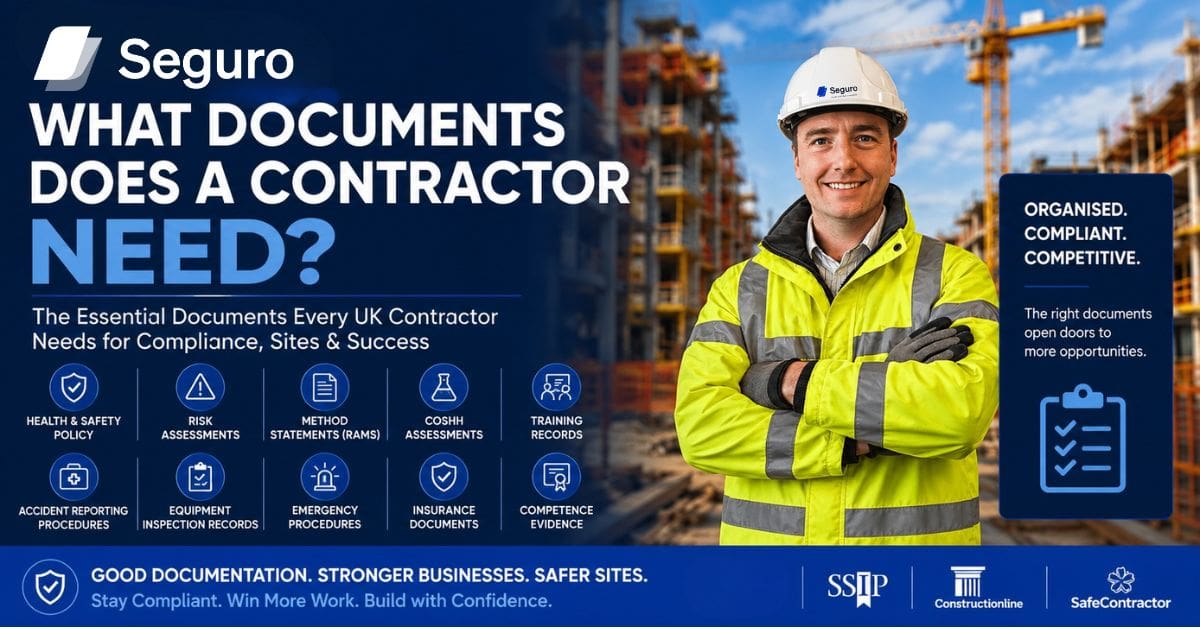
  4. Provide policies, training records, insurance, RAMS, and competence documentation.
  5. Wait for CHAS assessors to review your application.
  6. Respond to any improvement requests.
  7. Receive your certificate and listing once approved.

How can we help?

We can complete the application, gather all required documents and answers to questions, and compile all necessary evidence, allowing you to focus on your job. We are efficient, economical and have a 100% success rate. Quote Request.

Get Accredited

CHAS Accreditation Levels (2026)

1. CHAS Basic (Core H&S)

Covers:

  • Health & safety policy
  • Risk assessments & method statements
  • Training & competence
  • Accident reporting
  • First aid
  • Basic legal compliance

Suitable for small contractors or sole traders.

2. CHAS Advanced (PAS 91 Compliant)

Includes everything in Basic PLUS:

  • Environmental management
  • Quality management
  • Equal opportunities
  • Anti-bribery & corruption
  • Financial standing

Often required in public-sector tenders.

3. CHAS Elite (SSIP + Common Assessment Standard)

Highest level — covers:

  • Health & safety
  • Quality
  • Environmental
  • Financial
  • Sustainability
  • GDPR/data protection
  • Modern slavery & corporate responsibility

Often required for major contractors, councils, housing associations.

Step-by-Step: How to Get CHAS Accreditation

Step 1 — Choose Your CHAS Level

The level you need depends on the clients you want to work with.

Construction companies usually require:

  • Basic for subcontractors
  • Advanced or Elite for principal contractors or tender-heavy work

Step 2 — Register on the CHAS Portal

Go to the CHAS portal and create an account.
You’ll enter:

  • Company name
  • Address
  • SIC code
  • Number of employees
  • Sector (construction, electrical, plumbing, etc.)

Step 3 — Gather Your Evidence

This is the most important part.

Required Documents for CHAS Basic

You must upload:

  • Health & Safety Policy (signed & dated)
  • Risk Assessments
  • Method Statements
  • COSHH assessments (if relevant)
  • Accident/incident reporting process
  • Training certificates (CSCS, asbestos awareness, manual handling, etc.)
  • Proof of competence for workers
  • Subcontractor management process
  • Insurance documents (EL/PL)

Additional Documents for CHAS Advanced

  • Environmental Policy
  • Waste management
  • Equality & Diversity Policy
  • Quality Policy
  • Anti-bribery Policy

Additional Documents for CHAS Elite

  • GDPR processes
  • Modern slavery statement
  • Corporate social responsibility policy
  • Supply chain compliance processes

Step 4 — Upload Everything to the Portal

CHAS guides you section by section.
You will tick off each compliance requirement as you upload evidence.

Step 5 — Assessment Begins

A CHAS assessor reviews your documents for compliance with:

  • HSE requirements
  • CDM 2015 duties
  • SSIP standards
  • PAS 91 (Advanced)
  • CAS standard (Elite)

Typical review time: 3–10 days

Step 6 — Respond to Any Actions

If something is missing or incorrect, CHAS will send an “Action Request.”

Most common reasons for rejection:

❌ Out-of-date H&S policy
❌ Missing risk assessments
❌ Insurance expired
❌ No evidence of training
❌ No subcontractor management system

Once you fix the issues, resubmit.

Step 7 — Receive Your CHAS Certificate

Once approved you get:

  • Certificate (PDF)
  • Digital logo for your website
  • Listing on the CHAS contractor search

CHAS is valid for 12 months.

FAQs

How long does CHAS accreditation take?

3–10 working days for assessment, depending on the level and completeness of documents.

How much does CHAS accreditation assessment cost?

Fees vary by company size and accreditation level, typically from £429

Do sole traders need CHAS?

Yes — many main contractors now require CHAS Basic as a minimum.

Is CHAS mandatory?

Not legally, but many clients require it as proof of health and safety competence.

Does CHAS meet SSIP requirements?

Yes — CHAS is a founding member of SSIP.

More information can be found below: 

Get Accredited

How to Get Constructionline Accreditation 2026 Guide – Step by Step Process

Insight by

Bob Evans

Bob Evans

Published on

Constructionline

How to Get Constructionline Accreditation (Step-by-Step Guide for 2026)

What is Constructionline?

Constructionline is the UK’s largest pre-qualification platform for contractors, suppliers, and construction businesses. It provides clients with verified evidence of your:

  • Health and safety compliance
  • Business legitimacy
  • Financial stability
  • Environmental and quality management
  • Social responsibility
  • Supply-chain reliability

It helps contractors win more work and reduce repetitive PQQ paperwork.

Quick Answer: How to Get Constructionline Accreditation in 2026

To get Constructionline accredited, you must:

  1. Choose your Constructionline level (Associate, Silver, Gold, or Platinum).
  2. Register your business on the Constructionline portal.
  3. Complete the PAS 91-aligned questionnaire.
  4. Upload evidence of health and safety, insurance, finances, and policies.
  5. Complete a third-party SSIP assessment (if applying for Gold).
  6. Respond to assessor queries.
  7. Receive approval and appear on the Constructionline database.


How can we help?

We can complete the application, gather all required documents and answers to questions, and compile all necessary evidence, allowing you to focus on your job. We are efficient, economical and have a 100% success rate. Get accredited and win more work.

Get Accredited and Win More Work!

Constructionline Accreditation Levels (Explained)

1. Constructionline Associate

Entry-level listing. Shows your company exists and provides basic company information.

Suitable for very small firms, new businesses, and subcontractors.

2. Constructionline Silver (PAS 91 Basic Compliance)

Most common level. Requires:

  • Business details
  • Financial information
  • Insurance
  • Health & safety documentation
  • Environmental & quality basics

Silver is generally enough for subcontractors and suppliers.

3. Constructionline Gold (PAS 91 + Enhanced Standards)

Includes everything from Silver plus:

  • Environmental management (ISO 14001 or equivalent)
  • Quality management (ISO 9001 or equivalent)
  • Equality & diversity
  • Anti-bribery
  • GDPR compliance
  • Modern slavery
  • Social value evidence
  • Full SSIP accreditation (CHAS, SMAS, SafeContractor)

Often required for principal contractors, councils, and large tenders.

4. Constructionline Platinum (Highest Level)

Includes enhanced audits and validation of:

  • Financial performance and ratios
  • Supply-chain management
  • CSR and sustainability
  • BIM capabilities
  • Risk management strategy

Required for the most complex, high-value projects.

How to Get Constructionline Accreditation (Step-by-Step Guide)

Step 1 — Choose Your Constructionline Level

Your level depends on:

  • Size of your business
  • Type of work you do
  • Tender requirements
  • Client expectations

Most construction firms aim for Silver or Gold.

Step 2 — Register on the Constructionline Portal

You’ll need to enter:

  • Company name and address
  • Legal structure
  • Registration details (Companies House, VAT, etc.)
  • Sector and service type
  • Number of employees

Once complete, you’ll receive login details to begin the assessment.

Step 3 — Complete the PAS 91 Questionnaire

PAS 91 is the standard UK pre-qualification questionnaire used across construction procurement.

Questions cover:

  • Company identity
  • Insurance
  • Financial stability
  • Health & safety compliance
  • Environmental management
  • Quality management
  • Equal opportunities
  • Modern slavery
  • GDPR compliance

Constructionline will not proceed until all sections are complete.

Step 4 — Upload Required Documents

This is the core of your accreditation.

Key Documents for Silver Level

You MUST provide:

  • Health & Safety Policy
  • Risk assessments & method statements (RAMS)
  • Training records & competence (CSCS, NVQs, CPCS)
  • Insurance certificates (EL/PL/PI)
  • Accident reporting procedures
  • Environmental policy
  • Quality policy
  • Anti-bribery and corruption policy
  • Equality & diversity policy

Additional Documents for Gold Level

Gold requires evidence, not just policies:

  • ISO 9001 / quality management system
  • ISO 14001 / environmental management
  • GDPR processes
  • Modern slavery documentation
  • Carbon reduction / sustainability evidence
  • Full SSIP certificate (CHAS, SMAS, SafeContractor or equivalent)

Platinum Requirements (Advanced)

For high-value contractors only:

  • Audited financial accounts
  • BIM Level 2 capability
  • Corporate social responsibility report
  • Advanced supply-chain management plans
  • Risk management framework

Step 5 — Undergo SSIP Health & Safety Assessment (Gold Only)

If you don’t already have SSIP, Constructionline partners with:

  • CHAS
  • SMAS
  • SafeContractor
  • Acclaim

This verifies you meet health & safety standards aligned with CDM 2015.

Step 6 — Assessment & Clarifications

Constructionline assessors review your evidence.
They may request:

  • Extra documents
  • Updated policies
  • Missing certificates
  • Clarification on processes

Responding quickly reduces assessment time.

Step 7 — Approval & Certificate Issued

Once approved, you will receive:

  • Your Constructionline certificate
  • A listing on the national database
  • Access to client tenders
  • Your verified badge to add to your website

Accreditation lasts 12 months.

How can we help?

We can complete the application, gather all required documents and answers to questions, and compile all necessary evidence, allowing you to focus on your job. We are efficient, economical and have a 100% success rate. Quote Request.

Common Reasons Constructionline Applications Fail

❌ Insurance expired or incorrect levels
❌ No evidence of competence (CSCS, NVQs)
❌ Out-of-date policies (must be reviewed annually)
❌ No subcontractor management system
❌ RAMS missing or generic
❌ No evidence for ISO-equivalent systems
❌ Missing SSIP certificate (Gold level)

Avoid these, and your application is far more likely to pass the first time.

Get Accredited and Win More Work!

FAQs

How long does Constructionline accreditation take?

Most applications take 5–15 working days, depending on document readiness.

How much does Constructionline accreditation cost?

Prices vary by company size and level:

  • Associate: £100–£150
  • Silver: £300–£600
  • Gold: £600–£1,200
  • Platinum: £2,000+

Do I need Constructionline to win work?

Not legally — but many main contractors, councils, and housing associations require Silver or Gold.

Can sole traders join Constructionline?

Yes. Sole traders often start with Associate or Silver depending on client requirements.

Does Constructionline include SSIP?

SSIP is included only at Gold level via partner schemes.

More information can be found below: 

What is SSIP?

Insight by

Bob Evans

Bob Evans

Published on

4 November 2025

Health and safety blog

SSIP Accreditation: What It Is & Why It Matters for Contractors Guide

What is SSIP? Everything construction businesses need to know about the pre-qualification and winning more work.

What Is SSIP?What is SSIP, SSIP accreditation, ssip deem to satisfy

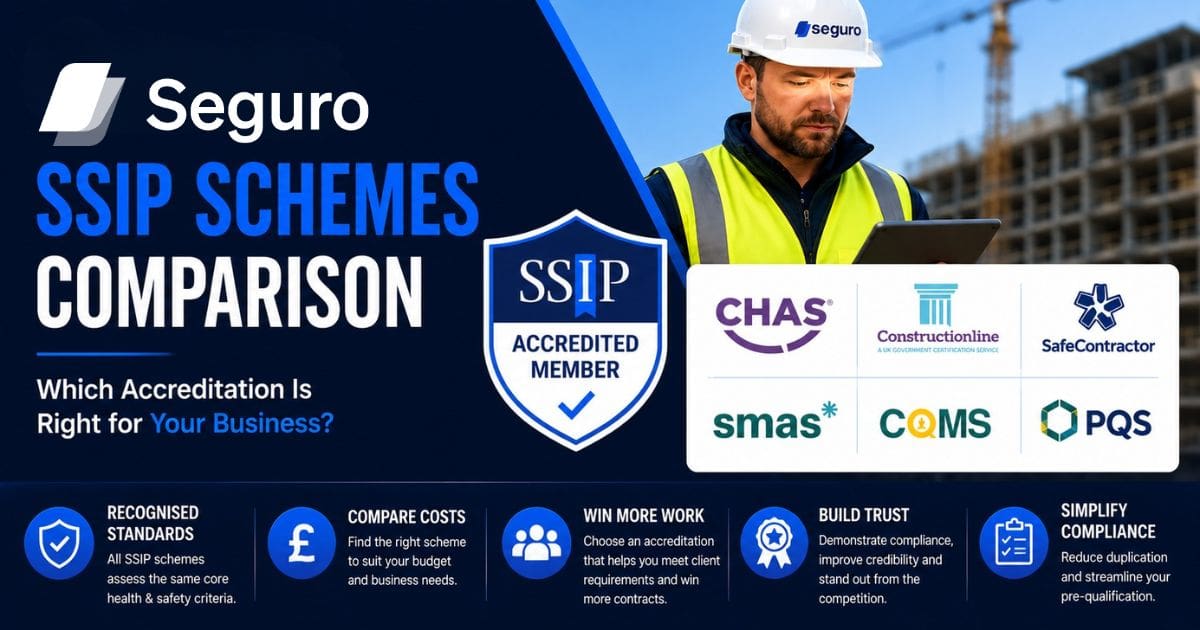
SSIP (Safety Schemes in Procurement) is the UK’s national umbrella organisation for health & safety assessment schemes.
Instead of completing multiple safety accreditations, SSIP allows businesses to gain recognition once and have it accepted by many different buyers.

SSIP includes well-known schemes such as:

If a contractor holds a CHAS, Constructionline, or PQS-approved accreditation, clients can trust that their health & safety systems meet core standards.

Why The Accreditation Matters

SSIP is now one of the most important benchmarks for contractors, subcontractors, and trades in the UK. Here’s why:

1. Win More Work With Recognised Safety Standards

Major contractors, councils, FM companies, and developers increasingly require CHAS, Constructionline, and PQS as part of PQQ or onboarding.

2. Saves Time on Repetitive Safety Pre-Qualification

SSIP prevents businesses from having to complete multiple health & safety assessments for different clients—saving hours of admin every month.

3. Reduces Cost of Compliance

Instead of paying for several accreditations, one SSIP certificate is accepted by many buyers.

4. Demonstrates Legal Compliance

SSIP assessments align with UK safety laws including:

  • Health and Safety at Work Act

  • Management of Health and Safety at Work Regulations

  • CDM Regulations

This reassures clients that your company operates safely and competently.

5. Strengthens Your Brand & Credibility

Displaying an SSIP badge shows customers, inspectors, and project managers that you take safety seriously.

Get Accredited and Win More Work!

What Do The Assessors Check?

To gain accreditation through any approved scheme, your company must provide evidence of:

Health & Safety Management

  • Up-to-date H&S policy

  • Competent person support

  • Safety arrangements

  • Toolbox talks & site inductions

Risk Management

  • Recent RAMS

  • COSHH assessments

  • Site-specific risk controls

Training & Competence

  • CSCS/CPCS evidence

  • Certificates of training

  • Induction process

Incident & Reporting Systems

  • Accident records

  • RIDDOR procedures

  • Near-miss processes

Insurance

  • Employer’s liability

  • Public liability

  • Professional indemnity (if relevant)

If applying for enhanced schemes (e.g., SafePQQ), additional checks cover environmental, quality, and social value standards.

How to Get SSIP Accreditation (Step-by-Step)

Step 1: Choose a Scheme

Decide whether CHAS, SafeContractor, SMAS, or Constructionline best matches your business needs.

Step 2: Complete the Online Assessment

Provide your company details, trade activities, and scope of works.

Step 3: Upload Documentation

Submit your health & safety policy, RAMS, training records, and insurance certificates.

Step 4: Assessment Review

An SSIP auditor reviews everything and may request additional evidence.

Step 5: Receive Your Certificate

Once approved, your business is added to the national database and can display the SSIP badge.

Accreditation lasts 12 months and must be renewed annually.

Most Common Reasons SSIP Applications Fail

Avoid these issues to secure fast approval:

❌ Outdated or missing H&S policy
❌ No recent or adequate RAMS
❌ Missing staff training certificates
❌ Incomplete accident records
❌ Insurance out of date or incorrect
❌ Competent person details missing

Fixing these in advance boosts your first-time pass rate.

SSIP vs Non-SSIP Schemes

Scheme Type Accepted by Buyers? Benefits
SSIP Certified Widely accepted Saves time, reduces cost, proves competence
Non-SSIP Schemes Limited acceptance May require additional paperwork

SSIP is designed to simplify compliance across the entire supply chain.

Get Accredited and Win More Work!

Is it Worth It for Contractors?

Absolutely. The Accreditation helps you:

✔ Win more work
✔ Reduce tendering admin
✔ Get recognised by major contractors
✔ Demonstrate health & safety competence
✔ Strengthen your professional image

If you want to grow in construction, FM, engineering, or local authority supply chains, SSIP is now an essential requirement—not just a “nice to have.”

Health and safety in construction

Insight by

Bob Evans

Bob Evans

Published on

28 October 2025

CHAS

Health and safety in construction

In the fast-paced world of construction, safety is of paramount importance. From home extensions to infrastructure projects that shape our country, the welfare of workers and the public is our first consideration.

When it comes to creating a culture of safety, construction companies must have robust processes and systems in place.

  • Health and safety legislation
  • Common hazards in the construction industry
  • Implementing health and safety on construction sites
  • Safety planning and risk assessment in construction projects
  • Personal protective equipment (PPE) in construction
  • Training and education for construction safety
  • Construction site inspections and audits
  • Creating a culture of safety on construction sites
  • Site Manager Compliance Kit
  • SSIP Accreditation
  • HSG150 health and safety in construction

Health and safety legislation

Health and safety legislation in the workplace is the Health and Safety at Work Act 1974This legislation sets out the duties of employers, employees, and others. 

Responsibilities of employers

  • Assess risks: Identify risks to employees, customers, and others 
  • Create a policy: Have a written health and safety policy if they employ five or more people 
  • Provide training: Ensure staff are adequately trained 
  • Provide welfare: Ensure adequate welfare provisions are available 
  • Provide information: Ensure employees have access to relevant information, instruction, and supervision 
  • Consult employees: Consult employees about risks and preventive measures 

Responsibilities of employees 

  • Have a duty of care to themselves and others

Other construction-related health and safety legislation

Common hazards in the construction industry

The construction industry is fraught with hazards that can lead to serious accidents if not properly managed.

  • There were 51 fatal injuries to workers in 2023/24
  • 47,000 workers sustained non-fatal injuries at work averaged over the three years 2021/22-2023/24

One of the most prevalent risks is falls, which can occur from heights such as scaffolding, ladders, or roofs.

Another common hazard is the risk of being struck by objects. This can happen when tools or materials are improperly secured or when heavy machinery is involved.

Construction site workers are often close to moving equipment, and the potential for accidents increases.

Exposure to hazardous substances, such as asbestos and silica dust, poses a significant risk.

Implementing health and safety on construction sites

Implementing health and safety processes and systems on construction sites is essential. Many clients now insist that contractors hold a minimum health and safety standard. SSIP (Safety Schemes in Procurement) implemented the standard. SSIP is an umbrella organisation formed in 2009 to reduce the duplication of health and safety assessments. CHAS and PQS are suppliers of the standard.

Below is a health and safety checklist for a typical site construction setup

Safety planning and risk assessment in construction projects

Planning work operations is a key factor in keeping people safe on-site. The process is to develop a method statement of how the work will be executed and then develop a risk assessment. The risk assessment analyses the risks and looks at ways to mitigate them. The project planner may adjust the method statements if the risk assessment finds that the risk is too high.

Ready for use Risk assessment and method statements templates.

Personal protective equipment (PPE) in construction

Personal protective equipment (PPE) is the last line of defence to keep people safe. PPE can include the following:

  • Hard hat
  • His visibility vests and trousers
  • Ear protection
  • Eye protection
  • Lung protection
  • Hand protection
  • Skin protection
  • Foot protection

The site manager must ensure that their workers are provided with the necessary equipment and trained on how to use it effectively. A PPE register is vital to control who had what and when.

Site training

Training and education are fundamental for a safe construction site. On-site training includes:

On-site e-learning to train site workers saves time and cost.

A training register is vital to control who had what and when.

Construction site inspections and audits

Regular inspections and audits of construction sites are critical for ensuring ongoing health and safety compliance.

Inspections help identify potential hazards that may have arisen since the last inspection and ensure that safety measures are effectively implemented.

Inspections can be conducted by internal safety officers or external auditors, providing an objective perspective on the effectiveness of the site’s safety practices.

Creating a culture of safety on construction sites

Creating a safety culture begins with a commitment from leadership to prioritise health and safety measures at all levels of the organisation.

By communicating that health and safety are priorities in the company culture, workers will feel empowered to work safely and promote safety with their workmates.

Site Manager Compliance Kit

Overview

The Site Manager Compliance Kit is an essential tool for every contractor. The Compliance Kit contains all of the information and documentation needed to comply with the requirements of today’s Safety Regulations.

Includes

  • Construction Phase Health and Safety Plan (CDM 2015), which can be easily amended and edited for specific projects
  • 70 Toolbox Talk Documents
  • 65 Completed Risk Assessments
  • 41 COSHH Assessments
  • Site inspection Check Sheets – Scaffold, Dumper, Excavator etc
  • Permits to Work – Confined Space, Excavation, Hot Work, Asbestos, etc
  • Site set-up check sheet
  • Site Induction
  • Site Rules
  • Site Registers – PPE, Plant & Equipment etc

Review the Site Manager Compliance Kit

CHAS Accreditation

If you want to implement CHAS, we can help you achieve this goal.

The CHAS assessment standards and requirements are listed below.

  • Policy
  • Occupational Health
  • Behavioural Management
  • Enforcement Actions
  • Accident Reporting and Investigation
  • Fleet Operations / Management Scheme
  • Competent Advice – Corporate and Construction
  • Drug and Alcohol Policy
  • Training and Information
  • Qualifications and Experience
  • Monitoring, Audit and Review
  • Risk Assessment and Safe System of Work
  • Workforce Involvement
  • Co-operation and Co-ordination
  • Welfare Provision
  • Subcontractors and Sub-consultants
  • Responsible Person
  • Contractor
  • Declaration

Review CHAS accreditation

HSG150 health and safety in construction

HSG150 Health and Safety in Construction explains the essential tasks for achieving healthy and safe construction sites.

It helps the reader to identify hazards and control risks and explains how to plan, organise, control, monitor and review health and safety throughout the life of a project.

It is aimed at everybody involved in construction work, including clients, designers, contractors and individual workers. Clients, designers and others who specify construction work may also find the book useful.

Download HSG150

Small business health and safety – Essential hints and tips

Insight by

Bob Evans

Bob Evans

Published on

7 October 2025

Competent person

Small business health and safety

Small business health and safety is essential to keep your people safe and is required by law, but it comes at a price of time and money.

A simple approach that allows you to get on with your job of running the business is to let a third party worry about all health and safety requirements within your company. We offer a competent safety advisor service that is very economical, but before we go into the details, let’s look at the essential health and safety requirements.

Small business health and safety checklist

There are some fundamental requirements that you must have in place by law.

  1. Health and safety policy (over 5 employees)
  2. Risk assessments and method statements (RAMS)
  3. Employee health and safety training with documented proof of delivery

Health and safety audit checklist

A quick health and safety audit will tell you if you have everything for an HSE inspection. A health and safety audit will check all your essential documents and then look at your arrangements to ensure the following areas are all covered.

  1. Personal Protective Equipment (PPE)
  2. Tools and Machinery
  3. Electrical
  4. Fire
  5. Heavy Loading/Unloading
  6. Chemical/Hazardous Substance Storage
  7. Working from Height

Health and safety legislation

As a director, it is essential to know and understand your responsibilities regarding health and safety. Below are the main health and safety legislation, laws, and requirements.

The Health and Safety at Work, etc Act 1974

If a health and safety offence is committed and the cause is the neglect of a director, the person and the organisation can be prosecuted.

Directors can appoint an independent third party to carry out their health and safety duties. The third-party must be fully qualified and competent to carry out the tasks. Delegating does not absolve the responsibility of a director; for example, if the safety advisor required employees to be trained and the director refused and an accident happened, then the director will held to account.

Read the health and safety at work act 1974 To ensure you understand your full health and safety executive responsibilities

The Management of Health and Safety at Work Regulations 1999

All work activities are to manage risk. Once the risk or risks have been identified, the organisation must make arrangements to reduce or mitigate the risks.

This work takes the form of RAMS (Risk and Method Statements). The risk assessment identifies risks and examines ways to reduce them.

The method statement describes how the work is to be carried out and ensures that all PPE and other means to reduce the safety risk are included.

Please visit our risk and method statement shop. We have over 150 RAMS, some of which include 18 pages and 9,000 words, that you can buy very reasonably. The documents are in Word format, so you can adjust them to suit your project.

Corporate Manslaughter and Corporate Homicide Act 2007

Corporate manslaughter and corporate homicide are when an employee is killed at work, and the HSE find the responsibility for the death is due to failure to carry out the work by all H&S laws.

It is very difficult to defend a death at work. The courts tend to side with the employee rather than the employer.

Learn more about the corporate manslaughter and corporate homicide act 2007

https://webarchive.nationalarchives.gov.uk/ukgwa/+/http:/www.justice.gov.uk/docs/manslaughterhomicideact07.pdf

Failing to fulfil director health and safety responsibilities

When a director breaches health and safety legislation and causes harm, the sentences can lead to prison and unlimited fines. Over the past few years, post-COVID, many companies have gone into administration or liquidation due to directors failing to carry out their lawful duties. The HSE is increasingly looking at individuals rather than just the company.

Competent safety advisor

One way to help yourself is to have your own health and safety advisor. You can delegate all health and safety responsibilities to this third-party person. Your safety advisor will educate you on what you need to do to keep your business safe.

If an accident does occur on-site, and the company has all health and safety requirements up to date, the safety advisor will deal with HSE for you.

A safety advisor can save you time and money for a basic monthly fee.

Request a chat and find out more about our safety advisor service

Download our FREE Toolbox talks

Insight by

Bob Evans

Bob Evans

Published on

2 September 2025

Health and safety blog

70 FREE Toolbox Talks

Download our FREE Toolbox talks 

Toolbox talks are short health and safety talks. The talks are designed to inform workers about potential hazards they may encounter while performing their duties on site.

The topics discussed directly relate to the tasks and hazards at the worksite. For example, if drainage trenches are to be excavated on site, the site supervisor can talk about the dangers, hazards, good practice and working close to deep excavations, to keep people safe.

Key Benefits of Tool box Talks

Our Free tool box talk documents are written in house by our consultants and cover all the main topics including:

TT1 – Abrasive Wheels

TT2 – Accident Prevention & Control

TT3 – Accident Reporting & Investigation

TT4 – Alcohol and Drugs

TT5 – Asbestos

TT6 – Benefits of Safety

TT7 – Buried Services

TT8 – Cartridge-Operated Tools

TT9 – Chainsaws

TT10 – Control of Dust & Fumes

TT11 – Control of Noise

TT12 – COSHH

TT13 – Electricity on Site

TT14 – Excavations

TT15 – Fire Prevention & Control

TT16 – First Aid

TT17 – General Safety Legislation

TT18 – General Site Health & Safety

TT19 – Health & safety at Work Act 1974

TT20 – Health on Site

TT21 – HFLs & Petroleum Based Adhesives

TT22 – Hoists and Hoist Towers

TT23 – Hydro Demolition

TT24 – Ladders

TT25 – Lead Hazards

TT26 – Legal Duties of Employees

TT27 – Lifting Accessories

TT28 – Lifting Equipment & Operations

TT29 – LPG & Other Compressed Gases

TT30 – Manual Handling

TT31 – Mobile Elevating Work Platforms

TT32 – Mobile Plant

TT33 – Mobile Scaffold Towers

TT34 – Needle-stick Injuries

TT35 – Personal Hygiene

TT36 – Personal Protective Equipment

TT37 – Piling

TT38 – Plant & Equipment

TT39 – Pollution Control

TT40 – Portable, Hand-held Tools

TT41 – Powers of the HSE

TT42 – Protection of Eyes

TT43 – Protection of Skin

TT44 – Risk Assessment & Method Statements

TT45 – Road & Street Safety

TT46 – Safe Stacking of Materials

TT47 – Safe Working at Height

TT48 – Safety in Demolition

TT49 – Safety Inspections & Consultation

TT50 – Safety Nets & Suspension Equipment

TT51 – Safety with Steelwork

TT52 – Security on Site

TT53 – Signallers and Slingers

TT54 – Site Transport

TT55 – Slips, Trips and Falls

TT56 – Sun Safety

TT57 – System Scaffolds

TT58 – Trackside Safety

TT59 – Trestles and Stepladders

TT60 – Tube & Fittings Scaffolding

TT61 – Vehicle Fuels

TT62 – Vibration

TT63 – Waste Management

TT64 – Water Jetting

TT65 – Weil’s Disease

TT66 – Welfare Arrangements

TT67 – Woodworking Machines

TT68 – Working in Confined Spaces

TT69 – Working over Water

TT70 – Young People on Site

Free Toolbox Talks Download

All toolbox talk documents are in MS Word Format so you can easily amend them and bespoke them to your needs. There are over 70 in the pack including an attendance register.

Download 70 FREE toolbox talks

Construction site safety

Insight by

Bob Evans

Bob Evans

Published on

5 August 2025

Safety Consultant

What is Construction Site Safety? 

Construction site safety refers to the controls, procedures, training, and supervision required to prevent injuries, ill health, and unsafe conditions on construction projects.

In the UK, it is governed by:

  • Health and Safety at Work Act 1974
  • CDM Regulations 2015
  • Management of Health and Safety at Work Regulations 1999

A site is only considered safe when risks are controlled, workers are competent, and safety processes are consistently monitored.

What Are the Most Common Hazards on Construction Sites?

Top 10 Construction Site Hazards

  1. Working at height
  2. Manual handling
  3. Moving vehicles & plant
  4. Slips, trips and falls
  5. Electricity
  6. Excavations & groundworks
  7. Falling objects
  8. Hazardous substances (COSHH)
  9. Noise & vibration
  10. Fire risks

Tip: Sites that control these risks effectively typically pass audits (CHAS, SMAS, Constructionline) with fewer issues.

What Are the Legal Requirements for Site Safety?

Under CDM 2015, duty holders must:

Client

  • Provide project information
  • Ensure competent contractors

Principal Designer

  • Manage design risk

Principal Contractor

  • Create and maintain the Construction Phase Plan
  • Manage all site safety
  • Coordinate contractors

Contractors

  • Plan, manage and monitor their own work
  • Provide RAMS and training
  • Supervise workers and subcontractors

Workers

  • Follow site rules and training
  • Use equipment safely
  • Report hazards

What Must Every Construction Site Have?

Mandatory Construction Site Requirements

  • Site inductions for all workers
  • Daily site briefings/toolbox talks
  • Construction Phase Plan
  • Welfare facilities (toilets, washing, drying)
  • Fire plan and fire points
  • First aid equipment & trained first aider
  • Accident/incident reporting
  • Secure access and fencing
  • Signage (PPE, hazards, traffic routes)
  • Traffic management controls
  • Lift plans (for cranes and lifting operations)
  • Electrical safety controls (RCDs, testing)
  • Excavation safety measures
  • Working-at-height protection

What Documents Are Required to Manage Site Safety?

Core Safety Documents

  • Risk Assessments
  • Risk and Method Statements (RAMS)
  • Site Induction
  • Construction Phase Plan
  • Fire Risk Assessment
  • COSHH Assessments
  • Toolbox Talk Records
  • Plant/Equipment Inspection Records
  • Incident/Accident Reports
  • Site Rules

What PPE Is Legally Required on Construction Sites (UK)?

  • Hard hat
  • High visibility clothing
  • Safety boots with toe protection
  • Gloves (task-specific)
  • Eye protection (grinding, cutting, dust)
  • Hearing protection (noisy work)
  • Respiratory protection (dust, silica, fumes)
  • Face fit testing for tight-fitting masks

Note: PPE is the last line of defence—it must support engineering and organisational controls.

How to Make a Construction Site Safe – Step-by-Step

Step 1 — Identify hazards

Walk the site, check equipment, ground conditions, and access points.

Step 2 — Assess the risks

Use the 5-step risk assessment method.

Step 3 — Implement controls

Install barriers, signage, designated routes, protective systems, etc.

Step 4 — Train workers

Induction, toolbox talks, task training.

Step 5 — Supervise and monitor

Daily checks, inspections, close supervision of high-risk work.

Step 6 — Review and improve

Update RAMS, adjust controls, investigate incidents.

What Training Is Required for Construction Site Workers?

  • CSCS card (proof of competence)
  • Site induction
  • Asbestos awareness
  • Manual handling
  • Working at height
  • Abrasive wheels (if using cutters)
  • Toolbox talks (regular)
  • First aid (for designated workers)
  • Fire marshal/warden training
  • Plant operator training (CPCS/NPORS)

How to Manage Subcontractors Safely 

  • Pre-qualification (CHAS, SMAS, Constructionline)
  • Check competence (training records, RAMS)
  • Induction before work begins
  • Supervision and monitoring
  • Review RAMS for each task
  • Permit-to-work for high-risk work
  • Daily briefings

Most Common Construction Site Safety Failures

  • Poor planning
  • Inadequate RAMS
  • No supervision
  • Incomplete inductions
  • Lack of site segregation
  • Unsafe access (ladders, scaffolds)
  • Poor housekeeping
  • Inadequate PPE

•Untrained workers

•Missing inspection records

How to Improve Construction Site Safety Quickly

Fast Wins

  • Daily briefings
  • Clear signage
  • Proper housekeeping
  • One-way traffic routes
  • Better lighting
  • Edge protection on open edges
  • Regular site inspections
  • Competent person overseeing safety

Free Template Downloads 

Save up to £500 with your SSIP assessment renewal

Insight by

Bob Evans

Bob Evans

Published on

21 May 2025

Accreditations

Save up to £500 with your SSIP assessment renewal.

Don’t miss the deadline for your SSIP assessment renewal. Ensure your business stays compliant.

The problem

CHAS and other SSIP providers raise their assessment fees annually, increasing costs. An American corporation owns CHAS, and their fees have been raised yearly. They are now very high compared to other SSIP accreditation suppliers.

We have a solution

There are over thirty SSIP accreditation suppliers who all do the same thing, to the same standard. The standard is controlled by SSIP, which was created to develop a fair playing field and reduce costs.

CHAS is the most popular and well-known; however, the suppliers below are also prominent and are much more economical than CHAS.

Our preferred SSIP assessment renewal supplier is PQS; they have the lowest fees and are great to deal with. They have a good customer service team and have created easy-to-use systems to complete the accreditation documentation.

Our preferred SSIP supplier list.

What will an SSIP accreditation cover?

All assessments are completed using the SSIP Core Criteria as the threshold standard and cover the following:

  • Health & Safety policy
  • Competent Advice
  • Training arrangements
  • Monitoring, audit and review
  • Workforce involvement
  • Accident reporting and enforcement action
  • Subcontracting/consulting
  • Risk Assessments and Safe Systems of Work
  • Cooperations with others
  • Welfare provision
  • Hazard elimination

The assessment completed will be proportionate and relevant to the type of work you undertake and the size of your business, noting the size of your business will include any labour staff working for you.

About PQS accreditation

The PQS is an accreditation supplier and SSIP member. PQS charge a much lower fee than CHAS, saving you up to £500 depending on your type of accreditation.

There is no difference between CHAS and PQS; they are SSIP members and work according to the same rules and guidance.

If you are worried that your customers are asking for CHAS, it’s OK, as SSIP allow you to obtain a CHAS certificate even when PQS has accredited you through their deem to satisfy process.

If your SSIP accreditation is coming up for renewal, contact us, and we can advise you on the best solution for your business and budget.

Complete the form below, and we will contact you and provide you with some support.


    I confirm I have read and agree to the Seguro Health and Safety Consultants Privacy Policy.