

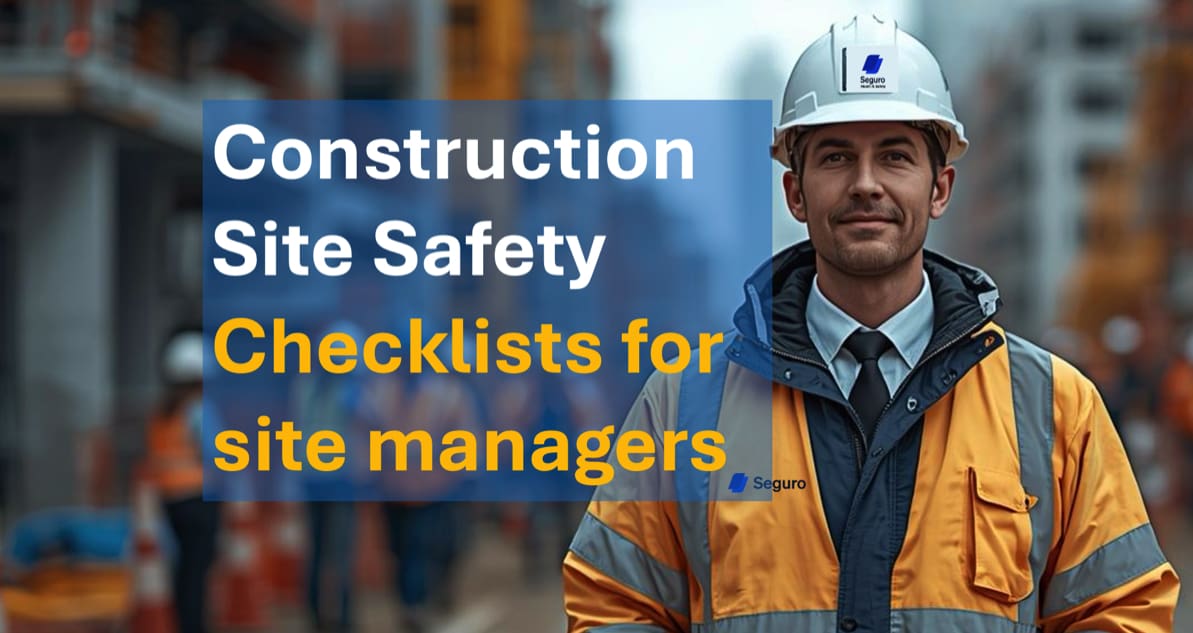


What is Construction Site Safety?
Construction site safety refers to the controls, procedures, training, and supervision required to prevent injuries, ill health, and unsafe conditions on construction projects.
In the UK, it is governed by:
- Health and Safety at Work Act 1974
- CDM Regulations 2015
- Management of Health and Safety at Work Regulations 1999
A site is only considered safe when risks are controlled, workers are competent, and safety processes are consistently monitored.
What Are the Most Common Hazards on Construction Sites?
Top 10 Construction Site Hazards
- Working at height
- Manual handling
- Moving vehicles & plant
- Slips, trips and falls
- Electricity
- Excavations & groundworks
- Falling objects
- Hazardous substances (COSHH)
- Noise & vibration
- Fire risks
Tip: Sites that control these risks effectively typically pass audits (CHAS, SMAS, Constructionline) with fewer issues.
What Are the Legal Requirements for Site Safety?
Under CDM 2015, duty holders must:
Client
- Provide project information
- Ensure competent contractors
Principal Designer
- Manage design risk
Principal Contractor
- Create and maintain the Construction Phase Plan
- Manage all site safety
- Coordinate contractors
Contractors
- Plan, manage and monitor their own work
- Provide RAMS and training
- Supervise workers and subcontractors
Workers
- Follow site rules and training
- Use equipment safely
- Report hazards
What Must Every Construction Site Have?
Mandatory Construction Site Requirements
- Site inductions for all workers
- Daily site briefings/toolbox talks
- Construction Phase Plan
- Welfare facilities (toilets, washing, drying)
- Fire plan and fire points
- First aid equipment & trained first aider
- Accident/incident reporting
- Secure access and fencing
- Signage (PPE, hazards, traffic routes)
- Traffic management controls
- Lift plans (for cranes and lifting operations)
- Electrical safety controls (RCDs, testing)
- Excavation safety measures
- Working-at-height protection
What Documents Are Required to Manage Site Safety?
Core Safety Documents
- Risk Assessments
- Risk and Method Statements (RAMS)
- Site Induction
- Construction Phase Plan
- Fire Risk Assessment
- COSHH Assessments
- Toolbox Talk Records
- Plant/Equipment Inspection Records
- Incident/Accident Reports
- Site Rules
What PPE Is Legally Required on Construction Sites (UK)?
- Hard hat
- High visibility clothing
- Safety boots with toe protection
- Gloves (task-specific)
- Eye protection (grinding, cutting, dust)
- Hearing protection (noisy work)
- Respiratory protection (dust, silica, fumes)
- Face fit testing for tight-fitting masks
Note: PPE is the last line of defence—it must support engineering and organisational controls.
How to Make a Construction Site Safe – Step-by-Step
Step 1 — Identify hazards
Walk the site, check equipment, ground conditions, and access points.
Step 2 — Assess the risks
Use the 5-step risk assessment method.
Step 3 — Implement controls
Install barriers, signage, designated routes, protective systems, etc.
Step 4 — Train workers
Induction, toolbox talks, task training.
Step 5 — Supervise and monitor
Daily checks, inspections, close supervision of high-risk work.
Step 6 — Review and improve
Update RAMS, adjust controls, investigate incidents.
What Training Is Required for Construction Site Workers?
- CSCS card (proof of competence)
- Site induction
- Asbestos awareness
- Manual handling
- Working at height
- Abrasive wheels (if using cutters)
- Toolbox talks (regular)
- First aid (for designated workers)
- Fire marshal/warden training
- Plant operator training (CPCS/NPORS)
How to Manage Subcontractors Safely
- Pre-qualification (CHAS, SMAS, Constructionline)
- Check competence (training records, RAMS)
- Induction before work begins
- Supervision and monitoring
- Review RAMS for each task
- Permit-to-work for high-risk work
- Daily briefings
Most Common Construction Site Safety Failures
- Poor planning
- Inadequate RAMS
- No supervision
- Incomplete inductions
- Lack of site segregation
- Unsafe access (ladders, scaffolds)
- Poor housekeeping
- Inadequate PPE
•Untrained workers
•Missing inspection records
How to Improve Construction Site Safety Quickly
Fast Wins
- Daily briefings
- Clear signage
- Proper housekeeping
- One-way traffic routes
- Better lighting
- Edge protection on open edges
- Regular site inspections
- Competent person overseeing safety
Free Template Downloads
- Site induction form
- Toolbox talks
- Weekly inspection checklist