



What Is SSIP Deem to Satisfy?
Quick Answer:
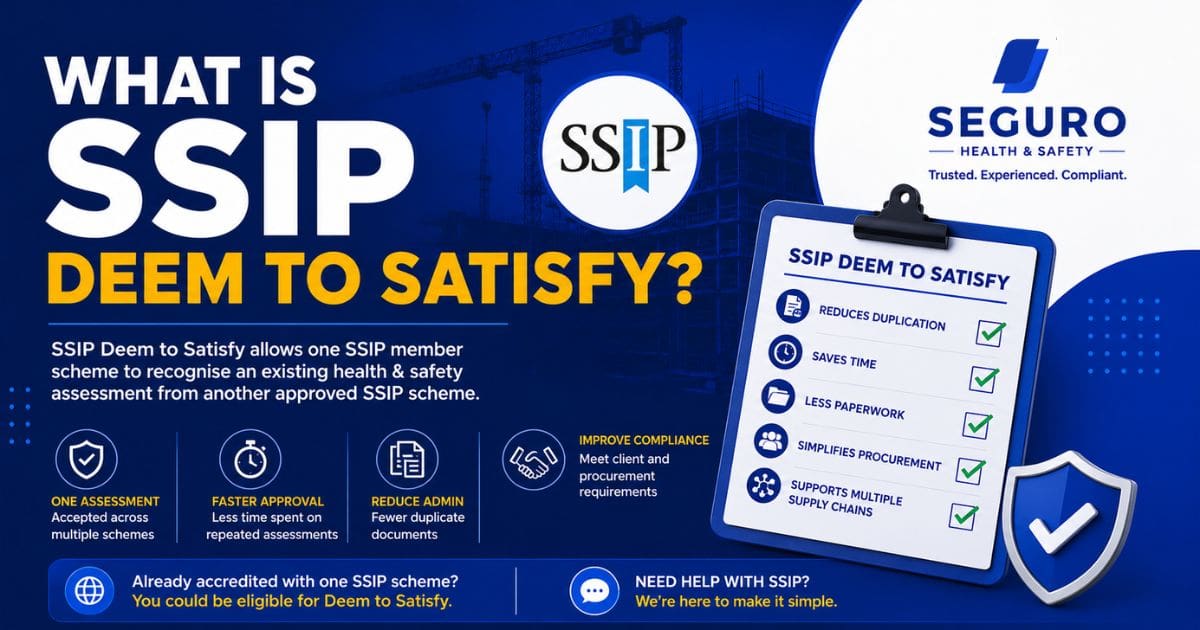
SSIP Deem to Satisfy is a process that allows one SSIP member scheme to recognise an existing valid SSIP assessment from another approved scheme, helping contractors reduce duplicated health and safety assessments and simplify procurement compliance.
In simple terms:
If you already hold a valid SSIP accreditation, you may not need to complete the full assessment process again when applying to another SSIP member scheme.
This helps contractors:
- Reduce duplication
- Save time
- Avoid repeating paperwork
- Simplify procurement compliance
For many UK contractors, Deem to Satisfy makes it easier to work with multiple clients who request different SSIP schemes.
What Does SSIP Mean?
SSIP stands for Safety Schemes in Procurement.
It is an umbrella organisation that brings together recognised health and safety accreditation schemes including:
- CHAS
- Constructionline
- SafeContractor
- SMAS
- CQMS
- PQS
All SSIP member schemes assess the same core health and safety standards.
What Is SSIP
How Does SSIP Deem to Satisfy Work?
The process works by allowing one SSIP assessment to be recognised by another member scheme.
For example:
- A contractor holds CHAS accreditation
- Another client requests SMAS
- Instead of starting from scratch, SMAS may accept the existing SSIP assessment through Deem to Satisfy
The second scheme may:
- Reduce the amount of information required
- Skip duplicated assessment sections
- Fast-track approval
However, some additional checks may still apply depending on the scheme.
Why Was Deem to Satisfy Created?
Before SSIP Deem to Satisfy, contractors often had to:
- Complete multiple health and safety applications
- Submit the same documents repeatedly
- Pay for repeated assessments
- Waste time duplicating compliance work
Deem to Satisfy was introduced to:
- Reduce unnecessary duplication
- Simplify procurement
- Improve consistency across schemes
- Support contractors working across multiple supply chains
Which SSIP Schemes Use Deem to Satisfy?
Many SSIP member schemes participate in the process, including:
- CHAS
- SafeContractor
- SMAS
- Constructionline
- CQMS
- PQS
Acceptance can vary depending on:
- Accreditation level
- Scope of work
- Expiry dates
- Additional scheme requirements
SSIP Schemes Comparison
Is CHAS Deem to Satisfy?
CHAS itself is an SSIP member scheme and may participate in the Deem to Satisfy process.
This means:
- Existing SSIP accreditations may support a CHAS application
- CHAS accreditation may support applications to other SSIP schemes
However, CHAS may still request:
- Additional evidence
- Further compliance checks
- Scheme-specific requirements
This is especially common with:
- CHAS Advanced
- CHAS Elite
- Common Assessment Standard (CAS)
SSIP vs CHAS
What Information Is Usually Required?
Even with Deem to Satisfy, contractors may still need to provide:
- Existing accreditation details
- Valid certification
- Insurance
- Company information
- Additional supporting evidence
Some schemes may also review:
- Environmental policies
- Quality systems
- Financial information
- Modern slavery compliance
Benefits of SSIP Deem to Satisfy
1. Reduces Duplicate Assessments
You avoid repeating the same health and safety assessment multiple times.
2. Saves Time
Applications can often be completed faster.
3. Reduces Administration
Less paperwork and fewer repeated uploads.
4. Supports Procurement Compliance
Makes it easier to work for:
- Main contractors
- Local authorities
- Public sector clients
- Large commercial organisations
5. Improves Scalability
Helpful for contractors working across multiple frameworks or supply chains.
Does Deem to Satisfy Mean Automatic Approval?
No.
This is one of the biggest misunderstandings.
Deem to Satisfy does NOT guarantee automatic approval.
The receiving scheme may still:
- Review documents
- Request updates
- Ask additional questions
- Require extra compliance evidence
The process simply reduces duplicated assessment where possible.
Common Problems With Deem to Satisfy Applications
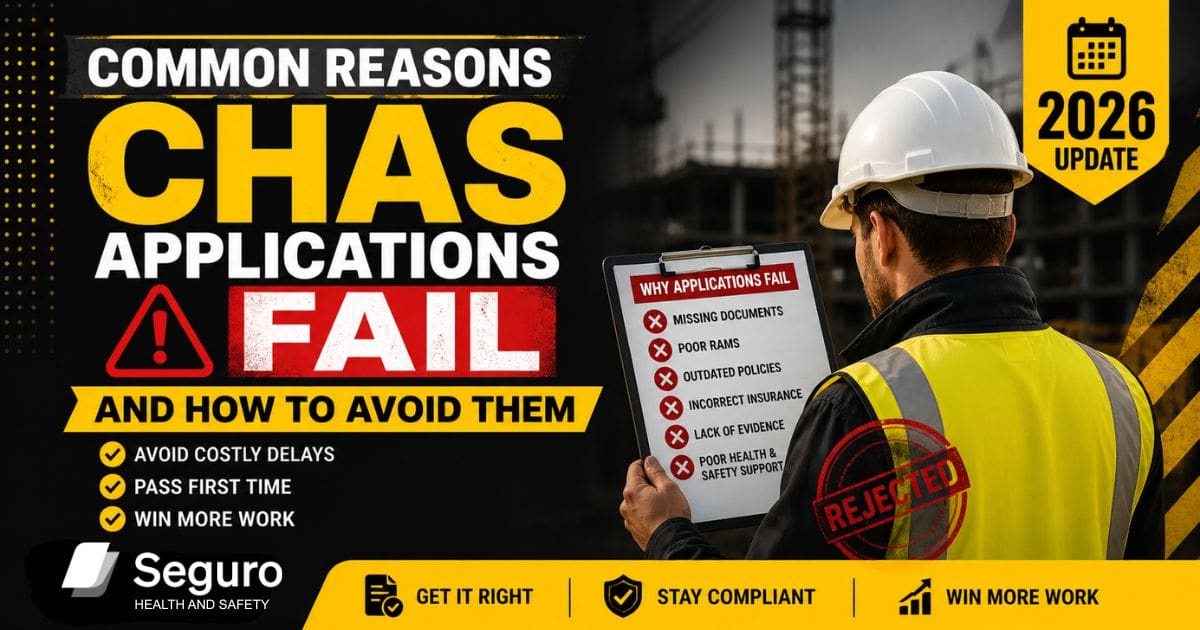
Applications may still fail due to:
- Expired accreditation
- Incorrect company information
- Missing insurance
- Inconsistent documents
- Weak RAMS
- Outdated health & safety policies
- Scheme-specific requirements not being met
Why SSIP Applications Fail
Is Deem to Satisfy Suitable for Small Contractors?
Yes.
Small contractors often benefit significantly because it:
- Reduces admin
- Saves time
- Simplifies onboarding
- Helps meet procurement requirements faster
This is particularly useful for:
- Subcontractors
- Sole traders
- Small construction businesses
- Growing contractors
SSIP for Small Contractors
How to Improve Your Chances of Approval
To improve approval success:
- Keep documents updated
- Ensure company information matches across all documents
- Use tailored RAMS
- Maintain valid insurance
- Provide clear evidence of competence
- Use professional health & safety support if needed
Done-for-You SSIP Support
Many contractors choose professional support to:
- Handle applications
- Prepare documents
- Upload evidence
- Manage assessor responses
- Reduce delays and rejection risk
At Seguro Health and Safety, we support contractors with:
- CHAS
- Constructionline
- SafeContractor
- SMAS
- PQS
- SSIP applications and renewals
Done for You SSIP
Need Help With SSIP Accreditation?
If you need support with:
- SSIP applications
- CHAS accreditation
- RAMS
- Health & safety documentation
- Procurement compliance
CALL Amanda on 0800 031 5404 to get started


Frequently Asked Questions
What is SSIP Deem to Satisfy?
SSIP Deem to Satisfy is a process that allows one SSIP member scheme to recognise an existing valid health and safety assessment completed through another approved SSIP scheme. This can reduce duplication and make procurement compliance easier.
Does SSIP Deem to Satisfy mean automatic approval?
No. SSIP Deem to Satisfy does not guarantee automatic approval. The receiving scheme may still check your company details, insurance, accreditation status and any additional scheme-specific requirements.
Which schemes accept SSIP Deem to Satisfy?
Many SSIP member schemes may use the Deem to Satisfy process, including CHAS, Constructionline, SafeContractor, SMAS, CQMS and PQS. Acceptance can depend on the scheme, accreditation level, expiry date and scope of work.
Can CHAS be used for SSIP Deem to Satisfy?
Yes. CHAS is an SSIP member scheme, so a valid CHAS accreditation may help support a Deem to Satisfy application with another SSIP scheme. However, additional checks may still be required.
Can another SSIP accreditation be used to apply for CHAS?
Yes. In some cases, an existing valid SSIP accreditation from another member scheme may support a CHAS application through Deem to Satisfy. CHAS may still request additional evidence depending on the level of accreditation required.
What information is needed for SSIP Deem to Satisfy?
You may need to provide your existing SSIP certificate, accreditation details, company information, insurance documents and any extra evidence requested by the receiving scheme.
What are the benefits of SSIP Deem to Satisfy?
The main benefits are reduced duplication, less paperwork, faster applications, lower administration time and easier compliance with different client procurement requirements.
Why can Deem to Satisfy applications still fail?
Deem to Satisfy applications can still fail if the accreditation has expired, company information is inconsistent, insurance is missing or incorrect, documents are outdated, or additional scheme-specific requirements are not met.
Is SSIP Deem to Satisfy useful for small contractors?
Yes. SSIP Deem to Satisfy can be very useful for small contractors because it reduces repeated paperwork and helps them meet different client or main contractor requirements more efficiently.
Can Seguro help with SSIP Deem to Satisfy applications?
Yes. Seguro Health and Safety can help contractors with SSIP Deem to Satisfy, CHAS, Constructionline, SafeContractor, SMAS, PQS and other SSIP applications by preparing documents, managing submissions and responding to assessor queries.